
North Africa (688–699 CE) Fall of …
Years: 688 - 699
North Africa (688–699 CE)
Fall of Carthage, Berber Uprisings, and Consolidation of Umayyad Rule
Between 688 and 699 CE, the Arab-Islamic conquest of North Africa reaches a pivotal stage, marked by the final fall of the Byzantine stronghold of Carthage, intensified Berber resistance, and the broader consolidation of the Umayyad Caliphate in the region.
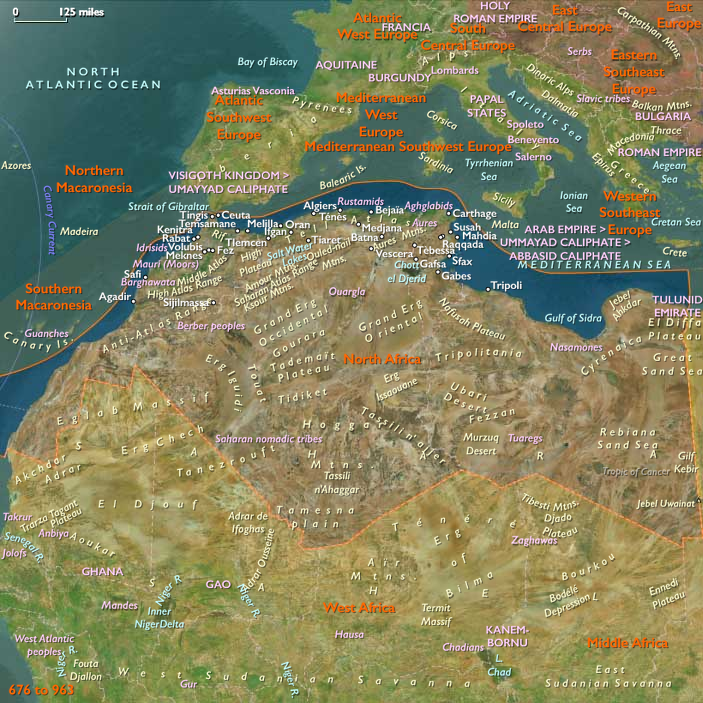
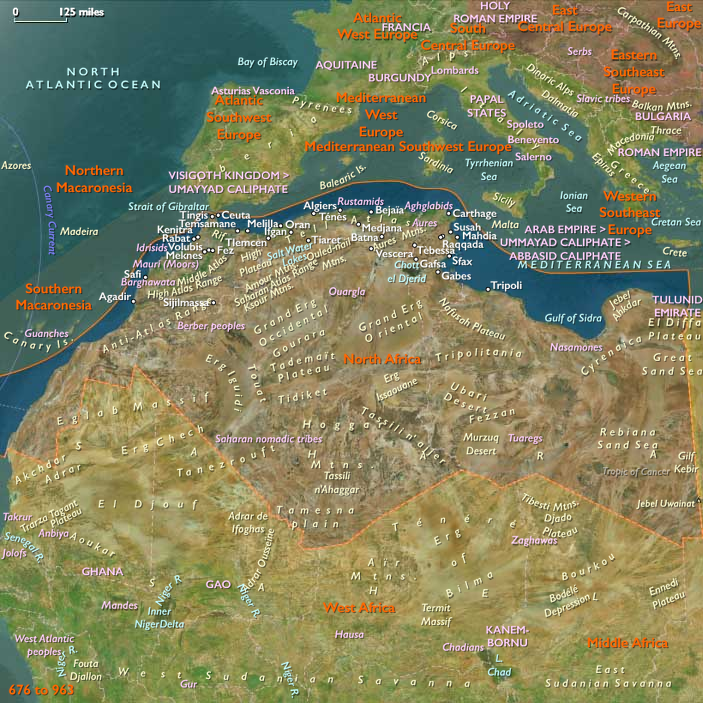
In 695 CE, after multiple earlier sieges and fierce resistance, Umayyad forces under commander Hassan ibn al-Nu'man launch a decisive assault on Carthage. The city, historically symbolic of Roman and Byzantine dominance in North Africa, falls definitively by 698 CE, marking the formal end of Byzantine rule in the region. The Umayyads systematically dismantle Carthage's defenses, transferring its administrative and commercial functions to the Arab-established city of Tunis, near the old Punic town site.
Yet despite this significant Arab victory, widespread Berber opposition continues unabated. The period witnesses major Berber-led revolts against Umayyad domination, notably spearheaded by Kusaila, the Berber leader previously allied with the Arabs. Kusaila repudiates his earlier allegiance due to perceived injustices and heavy taxation. Under his leadership, Berber forces successfully push Arab armies temporarily eastward, briefly reclaiming territories around Kairouan in 689 CE.
However, the Arabs regroup, leveraging alliances with recently converted Berber tribes in eastern regions such as Tripolitania, and successfully reassert their dominance by 693 CE, ultimately defeating and killing Kusaila. This shifting alliance demonstrates the complex dynamics between Arab conquerors and indigenous Berbers, with tribal groups frequently switching loyalties based on immediate interests and grievances.
Continuing Berber resistance remains formidable in mountainous and inland areas, notably the Aurès, home to fiercely independent tribes, and among groups such as the Austoriani, Leutae, and the aggressive Laguatan confederation. The pastoralist Arzuges tribes also persistently challenge Arab territorial consolidation efforts.
Despite such continued indigenous resistance, by 699 CE, the Umayyads firmly establish their political and military authority over the region, administratively organizing it as the province of Ifriqiya, governed from Kairouan. This administration becomes the cornerstone for further Arab expansion and cultural integration.
By the end of 699 CE, North Africa has entered a new historical era, characterized by the definitive end of Byzantine dominance, sustained Berber resistance, and the establishment of a robust Arab-Islamic administrative and cultural framework, which significantly reshapes the region’s future trajectory.
People
Groups
- Polytheism (“paganism”)
- Arab people
- Berber people (also called Amazigh people or Imazighen, "free men", singular Amazigh)
- Tuaregs, or Touareg, people
- Africa proconsularis (Roman province)
- Laguatan (Libyan tribal confederation)
- Africa Byzacena (Roman province)
- Christianity, Chalcedonian
- Africa, praetorian prefecture of
- Roman Empire, Eastern: Heraclian dynasty
- Islam
- Muslims, Sunni
- Muslims, Kharijite
- Umayyad Caliphate (Damascus)
- Muslims, Ibadi
- Roman Empire, Eastern: Non-dynastic
- Ifriqiya, Ummayad
Topics
Subjects
Regions
Subregions
Related Events
Showing 10 events out of 55975 total
Years: 688 - 699
People
Groups
- Polytheism (“paganism”)
- Arab people
- Berber people (also called Amazigh people or Imazighen, "free men", singular Amazigh)
- Tuaregs, or Touareg, people
- Africa proconsularis (Roman province)
- Laguatan (Libyan tribal confederation)
- Africa Byzacena (Roman province)
- Christianity, Chalcedonian
- Africa, praetorian prefecture of
- Roman Empire, Eastern: Heraclian dynasty
- Islam
- Muslims, Sunni
- Muslims, Kharijite
- Umayyad Caliphate (Damascus)
- Muslims, Ibadi
- Roman Empire, Eastern: Non-dynastic
- Ifriqiya, Ummayad
Topics
Subjects
Regions
Subregions