
North Africa (609–598 BCE) Consolidation, Punic …
Years: 609BCE - 598BCE
North Africa (609–598 BCE)
Consolidation, Punic Culture, and Emerging Rivalries
Continued Ascendancy of Carthage
From 609 to 598 BCE, Carthage continues its trajectory of expansion and economic prosperity along the North African coast. The city further enhances its naval dominance, leveraging increasingly sophisticated maritime technology to maintain and expand trade networks across the Mediterranean. Trade flourishes with regions such as Sicily, Iberia, and various Greek colonies, reinforcing Carthage's critical role as a commercial hub.
By the end of the seventh century BCE, Phoenician colonial culture acquires a distinctly "Punic" character, marking the emergence of a unique cultural identity in the Western Mediterranean. Around 650 BCE, Carthage itself had founded colonies, and within fifty years it engages in conflicts independently with Greek city-states, emphasizing its growing autonomy and regional power. Carthage's strategy differs from contemporaneous powers like Rome in that it prioritizes maritime trade and overseas dominance over immediate territorial expansion inland, partly influenced by strong Libyan tribes restricting local expansion.
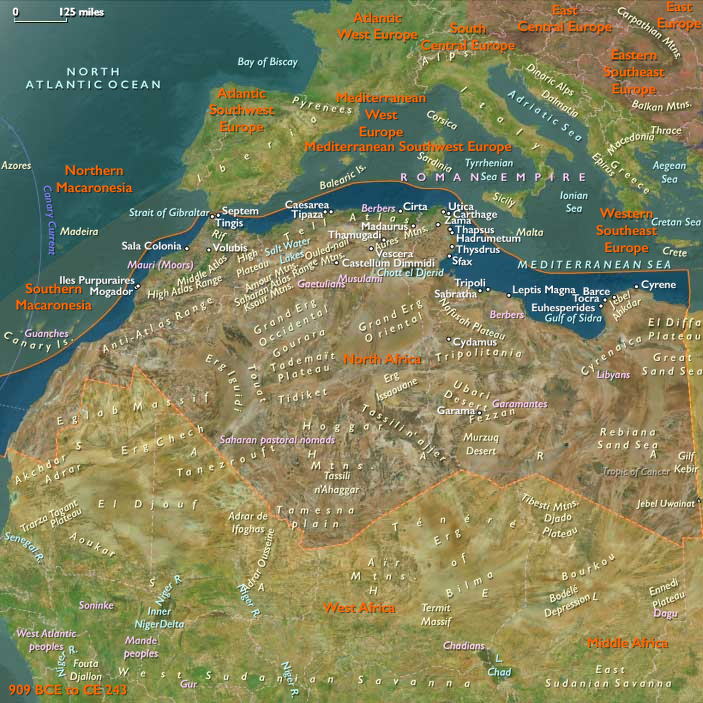
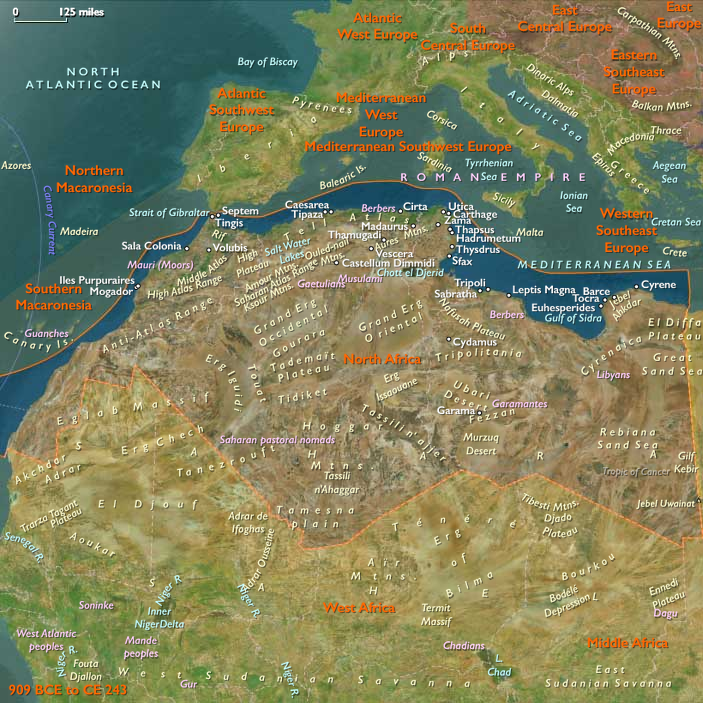
During this period, Carthage also colonizes the Syrtis region, extending from Thapsus in Tunisia to Sabratha in Libya, consolidating its control over existing Phoenician colonies along the North African coast. Details of these territorial incorporations remain scarce, but the establishment of regional hegemony is clear.
Significant urban and civic development within Carthage occurs, including improvements to city fortifications, residential expansion, and growth in artisanal crafts and industries, underpinning its economic and military capabilities.
Cyrene's Growth and Internal Stability
Cyrene, benefiting from a fertile hinterland and advantageous geographical position, continues to prosper. The Greek colony deepens its agricultural output, increasing exports of grain, olives, and livestock, further enhancing its economic prominence. Continued Greek migration bolsters its population, strengthening cultural and economic ties to mainland Greece and other Hellenic colonies.
Emergence of Strategic Rivalries
While Carthage and Cyrene largely maintain peaceful coexistence due to clearly delineated zones of influence and mutually beneficial trade, tensions occasionally surface over competing commercial interests and territorial ambitions. Carthage's increasing assertiveness in maritime commerce begins to create underlying competitive dynamics, especially regarding access to lucrative trading markets and maritime routes, setting the stage for potential future conflicts.
Berber Societal Developments
During this period, Berber communities experience continued evolution driven by interactions with Carthaginian and Greek settlers. Coastal Berber populations adopt advanced agricultural methods and maritime techniques from Phoenician traders, further integrating economically with coastal city-states. However, interior Berber societies around the Atlas Mountains and desert regions remain predominantly independent, preserving distinct cultural identities and tribal structures.
Cultural Synthesis and Artistic Expression
Cultural exchanges between Berber, Greek, and Carthaginian communities intensify, fostering a dynamic synthesis of artistic, religious, and technological traditions. Hybrid cultural forms become increasingly prominent in pottery, textiles, and metalwork, demonstrating the creative adaptation of external influences into local Berber contexts. Religious syncretism continues, blending Phoenician and Greek religious traditions with indigenous Berber beliefs, enhancing regional cultural complexity.
Setting Foundations for Future Dynamics
By 598 BCE, North Africa is characterized by robust economic growth, intricate cultural interactions, and nascent geopolitical rivalries. Carthage and Cyrene remain pivotal regional powers, their interactions and competitive dynamics shaping the historical and cultural landscape of North Africa for generations to come.
People
Groups
- Phoenicians
- Berber people (also called Amazigh people or Imazighen, "free men", singular Amazigh)
- Carthage, Kingdom of
- Greeks, Classical
- Magna Graecia
- Cyrene
Topics
Commodoties
Subjects
Regions
Subregions
Related Events
Showing 10 events out of 10 total
Years: 609BCE - 598BCE
People
Groups
- Phoenicians
- Berber people (also called Amazigh people or Imazighen, "free men", singular Amazigh)
- Carthage, Kingdom of
- Greeks, Classical
- Magna Graecia
- Cyrene
Topics
Commodoties
Subjects
Regions
Subregions