
North Africa (585–574 BCE) Expansion, Cultural …
Years: 585BCE - 574BCE
North Africa (585–574 BCE)
Expansion, Cultural Integration, and Regional Stability
Carthage's Continued Maritime Expansion
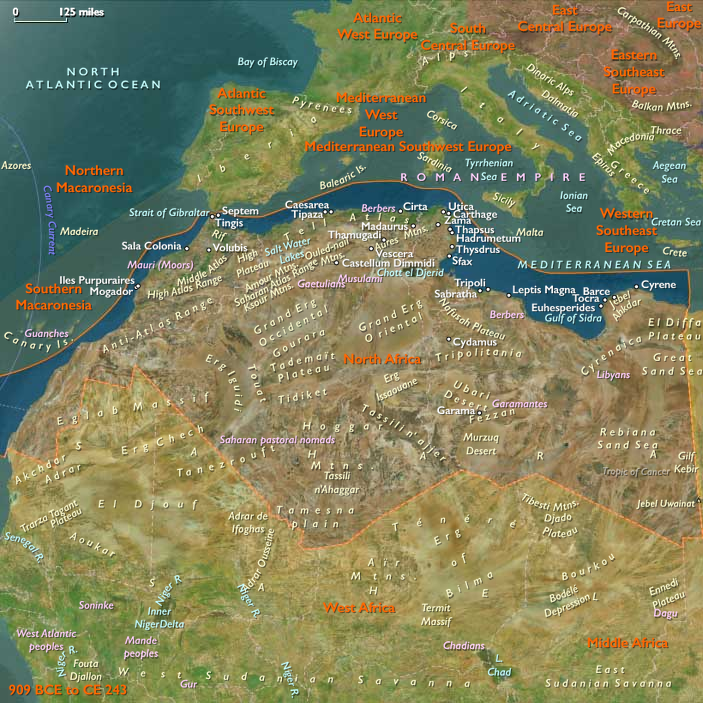
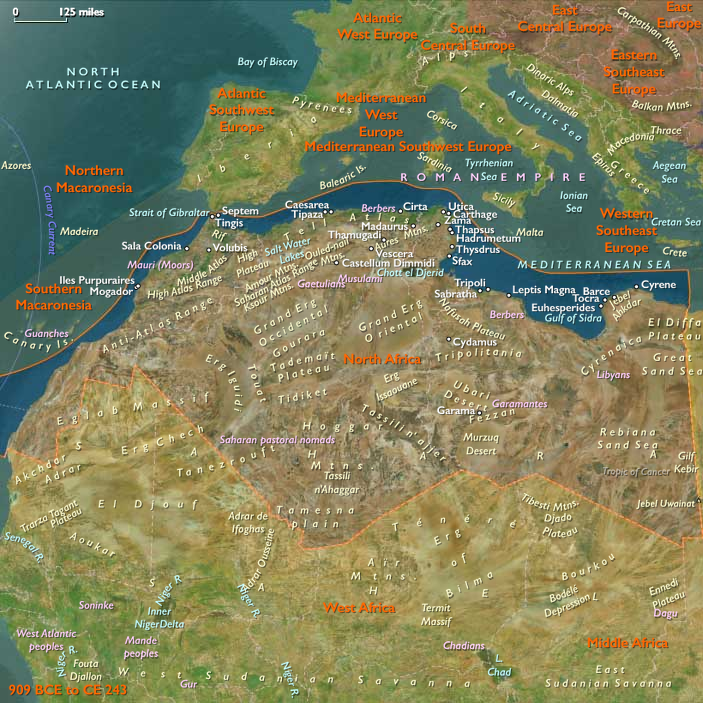
Between 585 and 574 BCE, Carthage significantly advances its maritime and commercial expansion, becoming the Phoenicians' largest western colony after 580 BCE due to its exceptional harbor facilities and strategic central location. Now only nominally under Tyrean control, Carthage aggressively expands its influence across the western Mediterranean, establishing colonies in western Sicily, parts of North Africa, Sardinia, the Balearic Islands, and regions of Spain. Its sophisticated harbor infrastructure and powerful naval capabilities bolster trade connections and firmly secure its position as a premier Mediterranean economic power.
Relations with Cyrene and Greek Settlements
Carthage maintains mostly peaceful but increasingly competitive relations with the Greek colony of Cyrene. Clearly established spheres of influence help minimize direct conflicts. However, intensified competition over maritime trade routes and access to valuable resources leads to ongoing diplomatic maneuvering and occasional minor confrontations, indicating underlying tensions that foreshadow future rivalries.
Cyrene continues to thrive economically, benefiting from robust agricultural exports and sustained Hellenic migration. Its growing prosperity and strategic importance strengthen cultural and economic connections with mainland Greece, positioning it as a key regional actor.
Berber Communities and Economic Integration
Coastal Berber communities increasingly integrate with Carthaginian trade networks, adopting advanced Phoenician agricultural practices, maritime commerce techniques, and artisanal crafts. This economic cooperation fosters prosperity while allowing Berber societies to maintain essential cultural identities.
Inland Berbers maintain significant autonomy, preserving traditional lifestyles in regions like the Atlas Mountains and Sahara. Their relative isolation helps sustain distinct tribal identities and social structures, though indirect trade interactions with coastal areas enhance economic stability.
Cultural Synthesis and Hybridization
During this period, intensified cultural exchange among Berber, Carthaginian, and Greek communities results in vibrant hybrid cultural forms. This blending is evident in local pottery, textiles, and metalwork, showcasing a dynamic fusion of traditions. Religious practices also exhibit pronounced syncretism, combining indigenous Berber beliefs with Phoenician and Greek spiritual traditions.
Establishing Regional Stability
By 574 BCE, North Africa is characterized by significant stability founded on robust economic prosperity, dynamic cultural integration, and established regional alliances. Carthage's expansive maritime influence and Cyrene's flourishing economy reinforce their positions as central powers, while Berber communities adeptly navigate cultural and economic integration. These developments lay a solid foundation for the region's ongoing geopolitical and cultural evolution.
People
Groups
- Phoenicians
- Tyre, Kingdom of (Phoenicia)
- Berber people (also called Amazigh people or Imazighen, "free men", singular Amazigh)
- Carthage, Kingdom of
- Greeks, Classical
- Magna Graecia
- Cyrene
Topics
Commodoties
Subjects
Regions
Subregions
Related Events
Showing 2 events out of 2 total
Years: 585BCE - 574BCE
People
Groups
- Phoenicians
- Tyre, Kingdom of (Phoenicia)
- Berber people (also called Amazigh people or Imazighen, "free men", singular Amazigh)
- Carthage, Kingdom of
- Greeks, Classical
- Magna Graecia
- Cyrene
Topics
Commodoties
Subjects
Regions
Subregions