
North Africa (33–22 BCE) Roman Provincial …
Years: 33BCE - 22BCE
North Africa (33–22 BCE)
Roman Provincial Development, Juba II and Mauretanian Flourishing, Cyrenaic Continuity, Berber Integration, and Saharan Networks
Roman Governance and Continued Provincial Integration
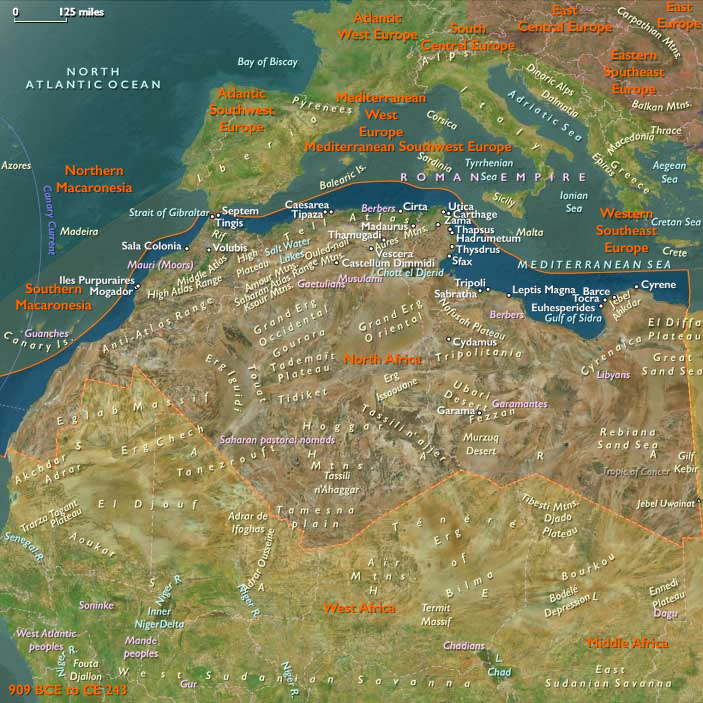
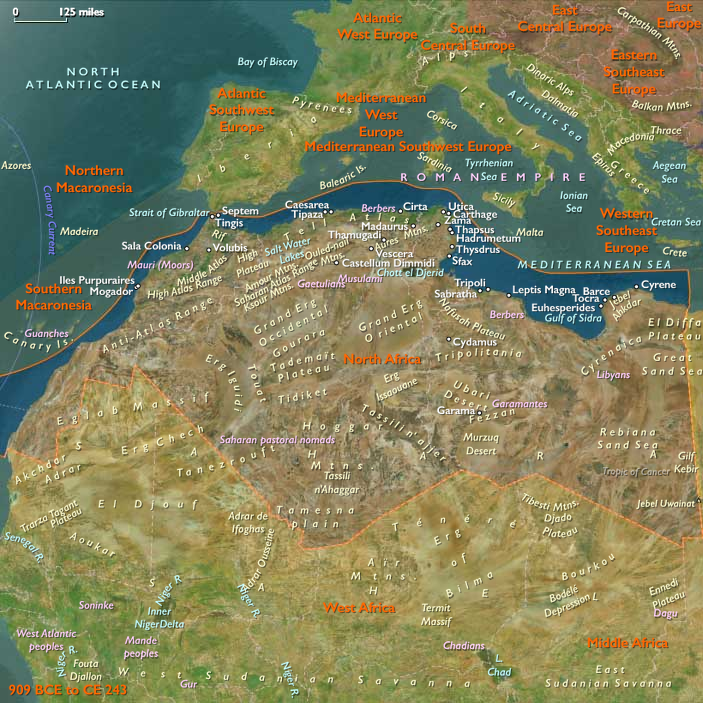
Between 33 and 22 BCE, Rome further consolidates and enhances administrative control over Africa Proconsularis, continuing significant investments in infrastructure, agriculture, and urbanization. Strategic cities like Utica sustain their prominence as administrative and commercial hubs, fostering regional prosperity through expanded trade networks and efficient governance.
Numidia: Ongoing Integration and Stability
Having been fully integrated as a Roman province since 46 BCE, Numidia continues to flourish under structured Roman administration. Agricultural productivity and regional trade efficiency improve steadily, bolstered by Roman infrastructural projects and administrative reforms. Numidian society, while closely integrated within Roman provincial frameworks, retains distinctive local customs and traditions, contributing to regional stability.
Mauretania: Juba II’s Flourishing Client-Kingdom
In 33 BCE, Rome transitions Mauretania from direct provincial governance to a client-kingdom, placing it under the rule of King Juba II. Juba II, an educated and culturally refined ruler, rapidly develops Iol—a small Carthaginian port located in present-day Cherchell, Algeria—renaming it Caesarea in honor of Augustus Caesar. Under Juba's leadership, Caesarea thrives due to its strategic position on Atlantic and Mediterranean trade routes.
Juba II significantly embellishes Caesarea, constructing baths, a theater, and filling the city with high-quality replicas of classical Greek and Hellenistic sculptures. Mauretania thus becomes a prosperous, culturally vibrant client-kingdom, effectively sharing responsibilities in regional security and defense, thereby substantially contributing to the stability of Roman North Africa.
Cyrenaica: Sustained Economic and Cultural Prosperity
Cyrenaica maintains its economic prosperity and cultural prominence under continued stable governance. The Greek Pentapolis—Cyrene, Barce (Al Marj), Euhesperides (Benghazi), Teuchira (Tukrah), and Apollonia (Susah)—remains prosperous through extensive trade in grain, wine, wool, livestock, and particularly the valued medicinal herb Silphium.
Cyrene preserves its reputation as an intellectual and cultural center, attracting scholars, philosophers, and medical experts. Its educational institutions, medical schools, and significant architectural heritage sustain its importance within the broader Mediterranean cultural networks.
Berber Communities: Cultural Resilience and Economic Integration
Berber communities remain deeply involved in regional economic networks, integrated within Roman and Mediterranean trade systems. Coastal economic centers, particularly Oea (Tripoli), continue vibrant trade, indirectly benefiting inland Berber tribes.
Inland Berber communities sustain traditional governance and cultural practices, supported by prosperous coastal commerce. This ongoing interplay ensures regional cohesion, fostering sustained Berber resilience and economic continuity.
Garamantes and Saharan Networks
The Garamantes persist in their crucial role as facilitators of trans-Saharan trade, enhancing regional prosperity through extensive commercial connections with Roman and coastal markets. Their innovative agricultural practices sustain significant Saharan settlements, reinforcing trade routes and cultural exchanges across vast desert expanses.
Musulami, Gaetulians, Mauri (Moors), and Saharan Pastoral Nomads
The Musulami, inhabiting frontier areas between Numidia and the Sahara, continue active participation in agriculture and pastoral activities, regularly interacting commercially and culturally with Roman and Numidian communities.
The semi-nomadic Gaetulians sustain their significant pastoral and trading roles, their movements facilitating cultural exchanges and enhancing economic linkages between coastal and inland territories.
The Mauri (Moors), dominant in western regions adjoining Mauretania, actively engage in regional diplomacy and economic activities, maintaining stability and prosperity in their territories.
Saharan pastoral nomads remain crucial in connecting various ecological and economic zones. Their transhumant practices support trade, cultural exchanges, and knowledge dissemination, further enriching North Africa’s interconnected societies.
Cultural Syncretism and Richness
Cultural interactions among Berber, Roman, Greek, Garamantian, Musulami, Gaetulian, Mauri, and Saharan pastoral communities continue to enrich local traditions in crafts, art, and artisanal practices. Religious syncretism remains vibrant, harmonizing indigenous beliefs with Roman, Greek, Phoenician, and Saharan religious customs, enhancing the region's diverse cultural fabric.
Stable Foundations and Regional Flourishing
By 22 BCE, North Africa enjoys continued prosperity and stability, underpinned by Roman administrative strength, Numidian integration, Juba II's flourishing Mauretania, sustained Cyrenaic prosperity, resilient Berber communities, dynamic Saharan trade networks, and the strategic contributions of indigenous groups. Collectively, these factors secure North Africa's lasting importance within the Mediterranean geopolitical landscape.
People
Groups
- Berber people (also called Amazigh people or Imazighen, "free men", singular Amazigh)
- Roman Republic
- Garamantes
- Gaetuli
- Tripolitania (Roman province)
- Africa proconsularis (Roman province)
- Mauretania, Kingdom of
- Roman Principate (Rome)
Commodoties
- Fish and game
- Gem materials
- Grains and produce
- Fibers
- Textiles
- Ceramics
- Strategic metals
- Salt
- Slaves
- Beer, wine, and spirits
Subjects
- Commerce
- Architecture
- Sculpture
- Faith
- Government
- Scholarship
- Custom and Law
- Metallurgy
- Medicine
- Philosophy and logic
Regions
Subregions
Years: 33BCE - 22BCE
People
Groups
- Berber people (also called Amazigh people or Imazighen, "free men", singular Amazigh)
- Roman Republic
- Garamantes
- Gaetuli
- Tripolitania (Roman province)
- Africa proconsularis (Roman province)
- Mauretania, Kingdom of
- Roman Principate (Rome)
Commodoties
- Fish and game
- Gem materials
- Grains and produce
- Fibers
- Textiles
- Ceramics
- Strategic metals
- Salt
- Slaves
- Beer, wine, and spirits
Subjects
- Commerce
- Architecture
- Sculpture
- Faith
- Government
- Scholarship
- Custom and Law
- Metallurgy
- Medicine
- Philosophy and logic
Regions
Subregions