
North Africa (448–459 CE) Vandal Expansion, …
Years: 448 - 459
North Africa (448–459 CE)
Vandal Expansion, Maritime Dominance, and Religious Persecution
Between 448 and 459 CE, the Vandal Kingdom under Genseric firmly establishes itself as a significant Mediterranean power, marking a distinct shift from Roman influence toward Vandal dominance.
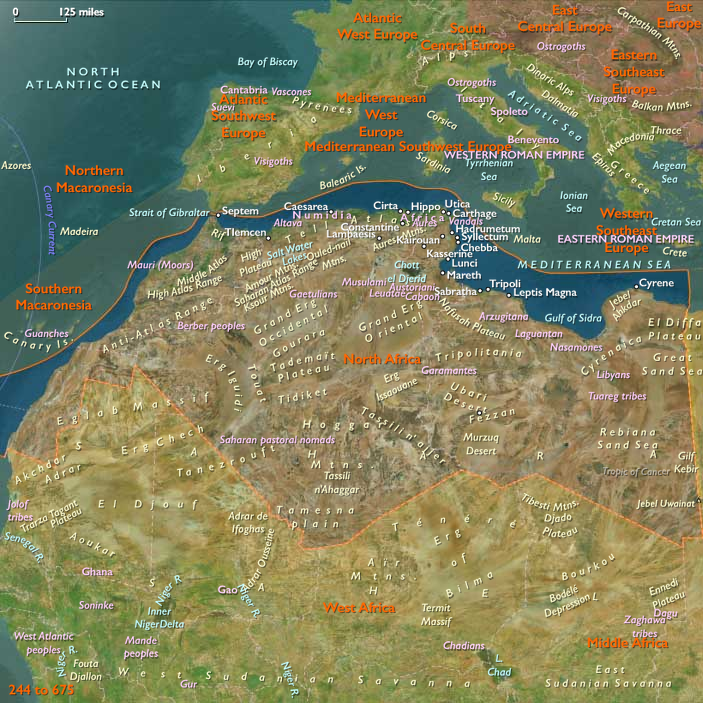
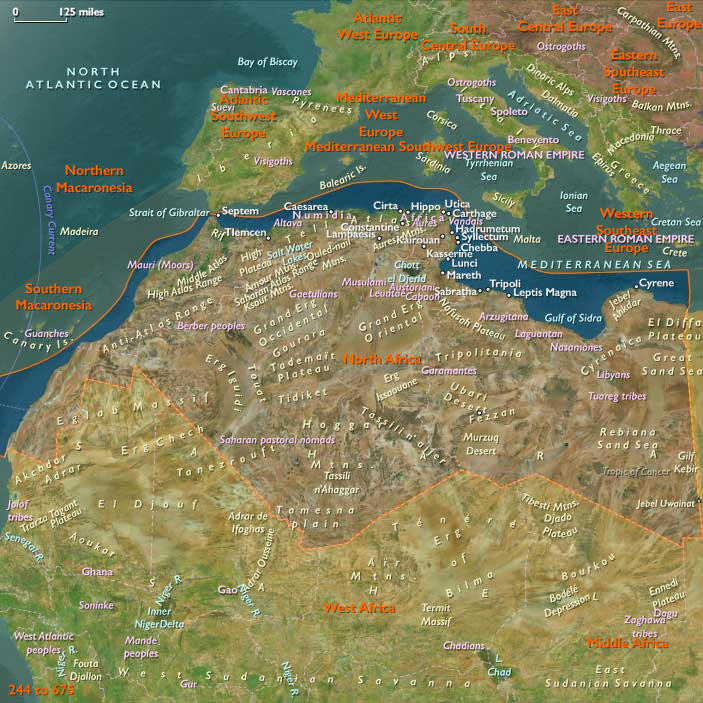
During this era, Genseric skillfully consolidates Vandal authority throughout North Africa, strategically reorganizing the region's economy and governance. Carthage, now the capital of the Vandal Kingdom, thrives under his control, serving as a vibrant maritime and commercial hub. From this advantageous position, Genseric launches maritime expeditions across the Mediterranean, significantly disrupting Roman maritime communications, commerce, and security. The Vandals extend their influence to the islands of Sicily, Sardinia, Corsica, and the Balearics, demonstrating formidable naval strength and challenging Roman dominance at sea.
Religious tensions escalate further during these years. As a committed adherent of Arian Christianity, Genseric intensifies persecution of the orthodox Christian population. Orthodox clergy face severe suppression, including exile, confiscation of property, imprisonment, and forced conversions to Arianism. Nevertheless, orthodox Christian communities remain resilient, often maintaining secret worship and quietly preserving their doctrinal traditions despite harsh repression.
Economically, the Vandals increasingly integrate North African agricultural production—especially grain and olive oil exports—into their broader Mediterranean commercial network. Yet, this integration involves harsh measures: lands formerly held by Roman aristocrats are extensively expropriated and redistributed to Vandal elites and their supporters, profoundly altering the social fabric of the region.
Urban centers such as Leptis Magna and Caesarea (Cherchell) adapt to new political realities, maintaining local commerce and cultural life under more direct Vandal oversight. Though economically resilient, these cities experience significant demographic and social transformations as Vandal authority reshapes their governance structures and elite composition.
Rural and frontier areas continue experiencing fragmented control and periodic instability. Local Berber tribes, leveraging weakened central authority and security, assert increasing autonomy or outright independence, causing persistent disruptions and complicating Vandal territorial administration.
By the close of 459 CE, North Africa is fully integrated into the expanding Vandal Kingdom. Roman political authority is effectively extinguished, religious persecution reshapes social dynamics, and regional governance now firmly reflects the Vandals' political and military objectives. Despite ongoing tensions and disruptions, this period decisively cements North Africa’s transformation from a Roman province to a distinct and influential Vandal domain.
People
Groups
- Berber people (also called Amazigh people or Imazighen, "free men", singular Amazigh)
- Numidians
- Africa proconsularis (Roman province)
- Vandals (East Germanic tribe)
- Mauretania Caesariensis (Roman province)
- Mauretania Tingitana (Roman province)
- Africa Byzacena (Roman province)
- Libya Superior, or Cyrenaica (Roman province)
- Christianity, Arian
- Christianity, Nicene
- Roman Empire: Theodosian dynasty (Constantinople)
- Vandals and the Alans, Kingdom of the
- Christianity, Chalcedonian
- Sardinia, Vandal
Topics
Commodoties
Subjects
Regions
Subregions
Related Events
Showing 10 events out of 58768 total
Years: 448 - 459
People
Groups
- Berber people (also called Amazigh people or Imazighen, "free men", singular Amazigh)
- Numidians
- Africa proconsularis (Roman province)
- Vandals (East Germanic tribe)
- Mauretania Caesariensis (Roman province)
- Mauretania Tingitana (Roman province)
- Africa Byzacena (Roman province)
- Libya Superior, or Cyrenaica (Roman province)
- Christianity, Arian
- Christianity, Nicene
- Roman Empire: Theodosian dynasty (Constantinople)
- Vandals and the Alans, Kingdom of the
- Christianity, Chalcedonian
- Sardinia, Vandal
Topics
Commodoties
Subjects
Regions
Subregions