
North Africa (417–406 BCE) Carthaginian Consolidation, …
Years: 417BCE - 406BCE
North Africa (417–406 BCE)
Carthaginian Consolidation, Cyrenaic Adaptability, and Cultural Integration
Continued Maritime Supremacy and Territorial Stability
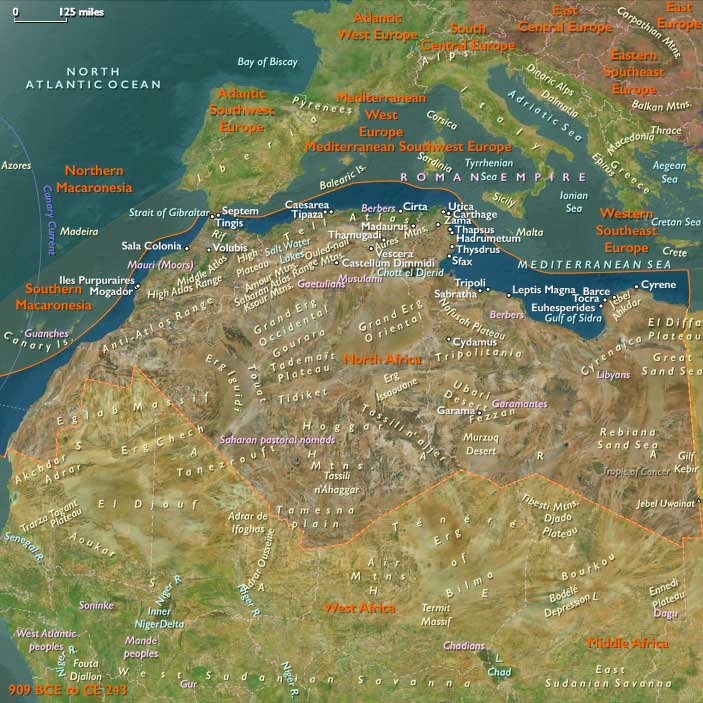
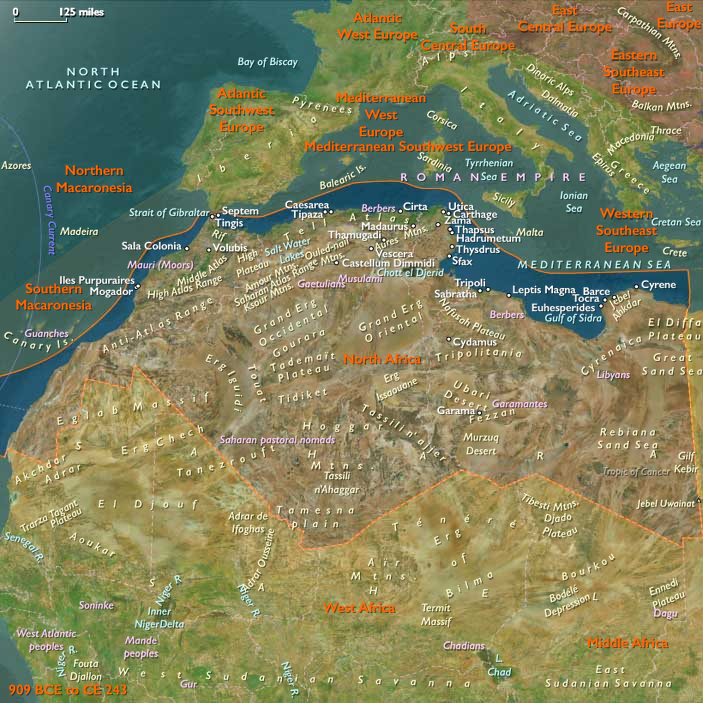
From 417 to 406 BCE, Carthage maintains its robust maritime supremacy, fortifying naval defenses and securing critical Mediterranean trade routes, notably around western Sicily, Sardinia, and coastal regions toward Cyrenaica. Following disruptions caused by the Iberian colonies' secession—resulting in the loss of crucial silver and copper supplies—Carthage increasingly focuses on consolidating control over North African territories. It notably conquers the fertile northern half of modern-day Tunisia and strengthens strategic colonies such as Leptis and Oea (modern Tripoli).
Carthage reinforces productive diplomatic and economic relations with interior Berber tribes, ensuring consistent access to vital regional resources. Thriving colonial cities like Tangier continue facilitating robust economic exchanges and fostering greater integration between coastal settlements and inland Berber communities.
Carthage also continues supporting significant exploratory missions, including Mago Barca’s remarkable journey across the Sahara Desert to Cyrenaica and further voyages by Hanno the Navigator down the African coast.
Diplomatic Strategy and Continued Regional Rivalries
Carthaginian diplomacy remains central in managing persistent rivalry with Greek city-states, particularly those in Sicily, which have experienced periods of internal strife and prosperity following the decisive Battle of Himera, where Syracuse emerged dominant over Carthage. Despite ongoing minor military skirmishes, strategic diplomacy effectively contains broader Greek expansionist ambitions. While maintaining cautious vigilance, Carthage continues leveraging diplomatic channels, potentially including Persian connections, to maintain regional balance and safeguard its interests.
Cyrenaica’s Economic Stability and Political Resilience
The Greek Pentapolis—Cyrene, Barce (Al Marj), Euhesperides (Benghazi), Teuchira (Tukrah), and Apollonia (Susah)—maintains significant economic prosperity through sustained exports of grain, fruit, horses, and notably, the medicinal plant Silphium. Cyrene continues investing in impressive civic and religious infrastructure projects, reflecting ongoing economic success and political stability.
Despite pressures from Carthaginian, Egyptian, and Persian influences, Cyrenaica skillfully employs internal governance and strategic diplomacy to uphold regional autonomy, successfully preserving Greek cultural identity and political independence.
Enhanced Berber Economic Integration and Autonomy
Coastal Berber populations further integrate economically and culturally with Carthaginian trade networks, adopting sophisticated agricultural techniques, maritime innovations, and artisanal expertise. Cities such as Oea (Tripoli) remain critical commercial hubs, supporting economic integration and sustained regional cooperation.
Inland Berber tribes retain substantial autonomy, effectively preserving their traditional governance structures and cultural practices. Indirect participation in thriving coastal economies ensures ongoing economic stability and cultural resilience.
Deepened Cultural Exchange and Syncretic Developments
The period sees continued vibrant cultural exchanges among Berber, Carthaginian, and Greek communities. This sustained interaction results in flourishing artistic traditions—particularly in pottery, textiles, and metalwork—demonstrating advanced cultural synthesis. Religious syncretism further deepens, harmoniously blending indigenous Berber beliefs with Phoenician and Greek religious elements, enhancing regional cultural diversity.
Foundations for Continued Regional Strength
By 406 BCE, North Africa demonstrates continued political stability, economic prosperity, and dynamic cultural interactions. Carthaginian maritime strength, Cyrenaic diplomatic resilience, and integrated Berber economies collectively reinforce a strong, cohesive regional structure, ensuring ongoing prominence and geopolitical influence within the Mediterranean sphere.
People
Groups
- Phoenicians
- Tyre, Kingdom of (Phoenicia)
- Berber people (also called Amazigh people or Imazighen, "free men", singular Amazigh)
- Sicily, classical
- Carthage, Kingdom of
- Greeks, Classical
- Magna Graecia
- Syracuse, Corinthian city-state of
- Etruria
- Cyrene
- Achaemenid, or First Persian, Empire
- Roman Republic
Topics
Commodoties
Subjects
Regions
Subregions
Related Events
Showing 10 events out of 65105 total
Years: 417BCE - 406BCE
People
Groups
- Phoenicians
- Tyre, Kingdom of (Phoenicia)
- Berber people (also called Amazigh people or Imazighen, "free men", singular Amazigh)
- Sicily, classical
- Carthage, Kingdom of
- Greeks, Classical
- Magna Graecia
- Syracuse, Corinthian city-state of
- Etruria
- Cyrene
- Achaemenid, or First Persian, Empire
- Roman Republic
Topics
Commodoties
Subjects
Regions
Subregions