
North Africa (405–394 BCE) Carthaginian Resurgence, …
Years: 405BCE - 394BCE
North Africa (405–394 BCE)
Carthaginian Resurgence, Cyrenaic Stability, and Berber Integration
Renewed Carthaginian Maritime Power and Territorial Consolidation
Between 405 and 394 BCE, Carthage revitalizes its maritime strength and economic networks, recovering from the disruptions caused by the Iberian colonies' earlier secession. The city further consolidates territorial control in the northern fertile half of modern-day Tunisia and bolsters its strategic colonies, including Leptis and Oea (modern Tripoli). Carthage’s strengthened naval power and strategic fortifications effectively secure critical Mediterranean trade routes, notably around western Sicily, Sardinia, and coastal regions toward Cyrenaica.
Continued diplomatic relations and trade with interior Berber tribes ensure a steady supply of essential regional resources, further fostering mutual economic prosperity. Prominent colonies like Tangier thrive, serving as key hubs that facilitate economic integration between coastal settlements and inland Berber communities.
Diplomatic Maneuvering and Renewed Rivalries
Carthaginian diplomacy remains central in addressing ongoing tensions with Greek city-states, particularly over influence in Sicily. The strategic rivalry with Greek powers, notably Syracuse, leads to periodic conflicts, underscoring the continuing importance of both military preparedness and diplomatic engagement. Carthage strategically manages these tensions to limit Greek expansion, leveraging diplomatic channels to maintain regional stability and balance.
Cyrenaica’s Ongoing Economic and Political Stability
The Greek Pentapolis—Cyrene, Barce (Al Marj), Euhesperides (Benghazi), Teuchira (Tukrah), and Apollonia (Susah)—continues to enjoy robust economic health, driven by sustained exports of grain, fruit, horses, and the medicinal plant Silphium. Cyrene remains central to this prosperity, maintaining significant investment in civic and religious infrastructure that reflects economic vitality and political stability.
Cyrenaica continues skillfully balancing external pressures from Carthaginian, Egyptian, and Persian interests through effective internal governance and astute diplomacy. This approach enables the region to preserve Greek cultural identity and political autonomy.
Deepened Economic Integration and Berber Autonomy
Coastal Berber communities enhance their economic and cultural integration within Carthaginian trade networks, increasingly adopting sophisticated agricultural practices, maritime technologies, and artisanal skills. Important commercial centers such as Oea (Tripoli) play crucial roles in fostering regional economic cooperation and sustained prosperity.
Inland Berber populations retain their substantial autonomy, successfully maintaining traditional governance structures and cultural identities. Their indirect engagement with prosperous coastal economies supports ongoing regional economic stability and cultural resilience.
Cultural Synthesis and Religious Syncretism
Cultural interactions among Berber, Carthaginian, and Greek populations intensify further, promoting an even richer exchange of traditions. Flourishing hybrid artistic practices, especially in pottery, textiles, and metalwork, reflect heightened cultural synthesis. Religious syncretism deepens, integrating indigenous Berber traditions with Phoenician and Greek beliefs, significantly enriching regional cultural diversity.
Continued Regional Influence and Stability
By 394 BCE, North Africa maintains a high degree of political stability and economic prosperity, underscored by Carthage's maritime resurgence, Cyrenaic diplomatic resilience, and robust Berber economic integration. Collectively, these elements reinforce the region’s influential position, ensuring sustained prominence within the broader Mediterranean geopolitical landscape.
People
Groups
- Phoenicians
- Tyre, Kingdom of (Phoenicia)
- Berber people (also called Amazigh people or Imazighen, "free men", singular Amazigh)
- Sicily, classical
- Carthage, Kingdom of
- Greeks, Classical
- Magna Graecia
- Syracuse, Corinthian city-state of
- Etruria
- Cyrene
- Achaemenid, or First Persian, Empire
- Roman Republic
Topics
Commodoties
Subjects
Regions
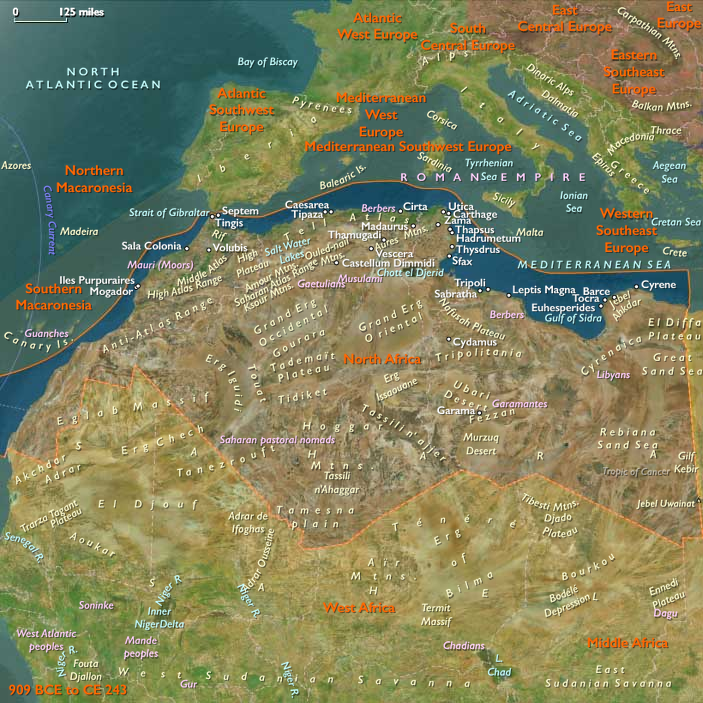
Subregions
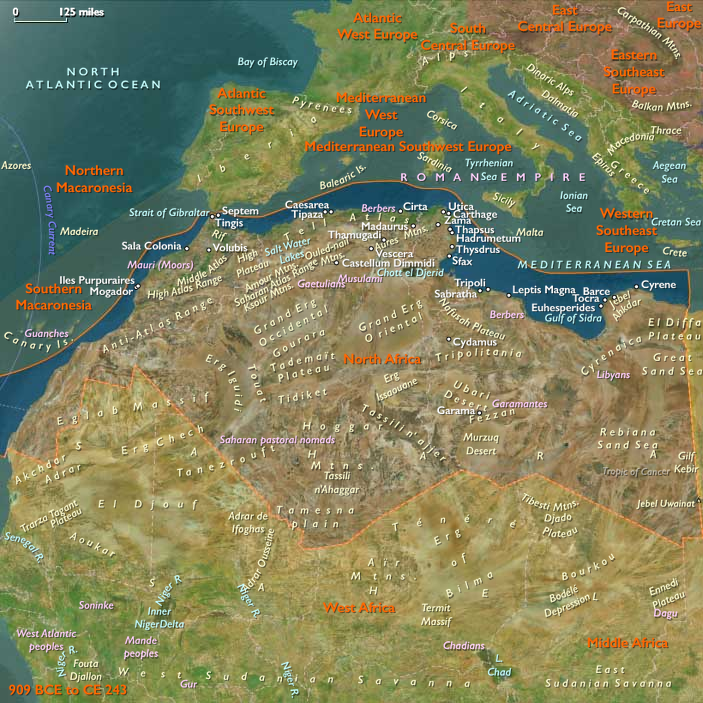
Related Events
Showing 10 events out of 65030 total
Years: 405BCE - 394BCE
People
Groups
- Phoenicians
- Tyre, Kingdom of (Phoenicia)
- Berber people (also called Amazigh people or Imazighen, "free men", singular Amazigh)
- Sicily, classical
- Carthage, Kingdom of
- Greeks, Classical
- Magna Graecia
- Syracuse, Corinthian city-state of
- Etruria
- Cyrene
- Achaemenid, or First Persian, Empire
- Roman Republic
Topics
Commodoties
Subjects
Regions
Subregions