
North Africa (52–63 CE) Roman Consolidation, …
Years: 52 - 63
North Africa (52–63 CE)
Roman Consolidation, Urban Development, and the Extinction of Silphium
Roman Provincial Administration and Stability
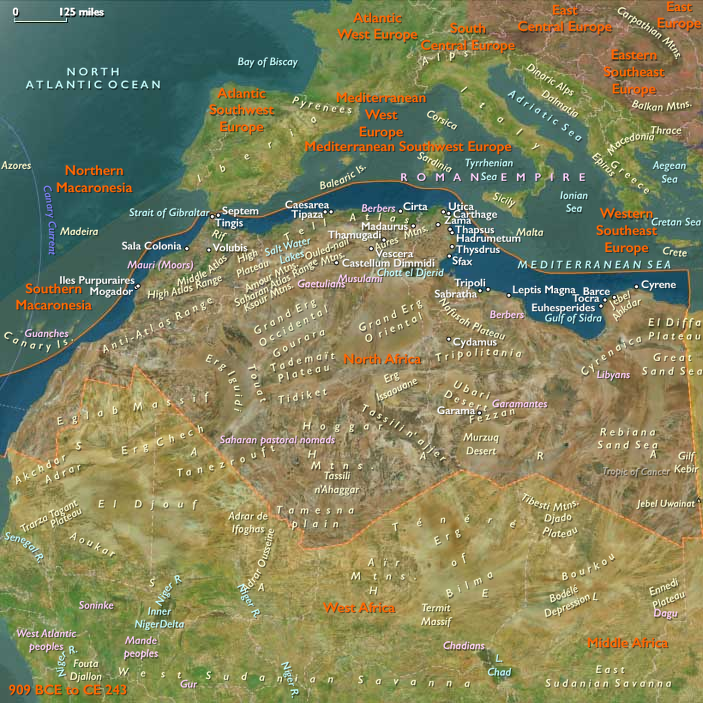
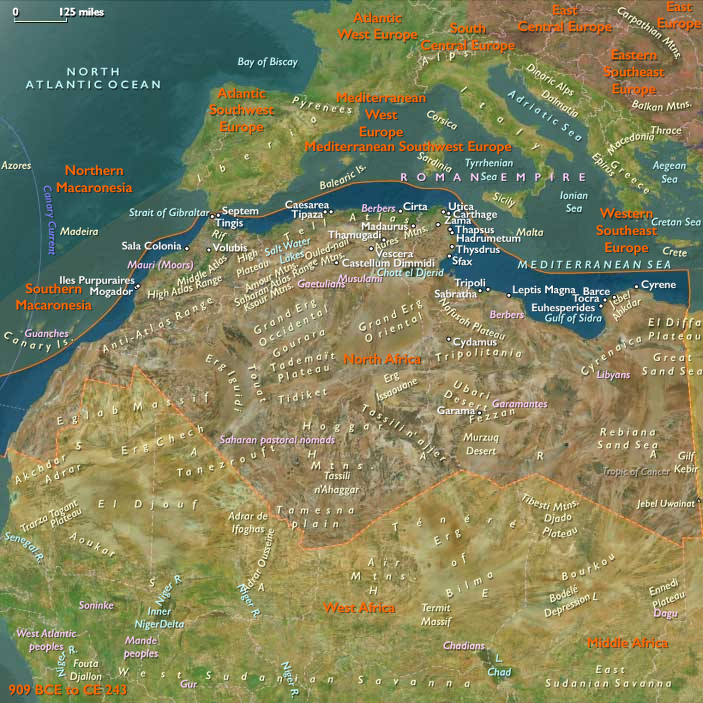
From 52 to 63 CE, Roman governance in Africa Proconsularis reinforces regional stability and economic prosperity through continued investments in infrastructure and governance reforms. Major cities including Utica, Leptis Magna, and Caesarea (Cherchell) flourish, benefiting from expanded trade networks and integrated administrative policies that strengthen their roles as essential Roman Mediterranean hubs.
Numidia: Continued Economic Growth and Cultural Integration
Numidia sustains its prosperity under effective Roman administration, which promotes agricultural productivity, trade enhancement, and social cohesion. Numidian communities harmoniously integrate indigenous traditions with Roman governance, ensuring ongoing economic stability and cultural resilience.
Mauretania: Client-Kingdom Prosperity and Urban Expansion
Under the rule of the client king Ptolemy of Mauretania, grandson of Cleopatra and Mark Antony, Mauretania experiences a period of notable economic prosperity. Caesarea, renamed and developed extensively by his father, King Juba II, continues to thrive as a significant center of commerce and culture, drawing wealth from vibrant trade in grain, olive oil, and luxury goods. The city's enhanced infrastructure, including new buildings and monuments, reinforces Mauretania’s strategic importance and regional influence within the Roman Empire.
Cyrenaica: Decline and the Extinction of Silphium
Cyrenaica's economic vitality, historically bolstered by commerce in grain, wine, wool, and livestock, faces a significant turning point. The Greek Pentapolis—Cyrene, Barce, Euhesperides, Teuchira, and Apollonia—remains active but increasingly dependent on Roman administrative and economic structures. By this time, silphium, once integral to Cyrenaica's economy and prominently depicted on local coinage, has reached extinction due to relentless overharvesting and the inability to cultivate it. The Roman historian Pliny notes that the last known stalk of silphium was presented to Emperor Nero as a curiosity, symbolically marking the end of an economic era in the region.
Berber Communities: Economic Participation and Cultural Resilience
Berber populations remain economically active, particularly through prosperous coastal cities such as Oea (Tripoli). Inland Berber tribes continue to preserve traditional governance systems and cultural practices, benefiting indirectly from thriving coastal trade, reinforcing regional economic integration and cultural continuity.
Garamantes: Saharan Trade and Economic Connectivity
The Garamantes maintain their critical role in trans-Saharan trade, effectively managing caravan routes and employing sophisticated agricultural practices to sustain oasis settlements. Their strategic control supports robust economic exchanges linking sub-Saharan Africa with Mediterranean markets, ensuring continued prosperity and cultural integration.
Mauri (Moors) and Saharan Pastoral Nomads
The Mauri (Moors) uphold their regional prominence through diplomatic relations and dynamic economic activities, significantly contributing to the ongoing stability and prosperity of western North Africa.
Saharan pastoral nomads remain pivotal in facilitating extensive trade networks, cultural exchanges, and information flows, thereby reinforcing the interconnectedness and resilience of the region.
Cultural Syncretism and Regional Integration
Ongoing interactions among Berber, Roman, Greek, Garamantian, Musulami, Gaetulian, Mauri, and Saharan pastoral groups enrich the region’s artistic, craft, and religious traditions. Religious syncretism remains robust, blending indigenous Berber beliefs harmoniously with Roman, Greek, Phoenician, and Saharan spiritual practices, reflecting North Africa’s enduring cultural diversity.
Foundation for Long-Term Stability and Prosperity
By 63 CE, North Africa continues to display significant economic strength, cultural vitality, and regional stability. Effective Roman provincial governance, sustained urban growth, vibrant Berber communities, enduring Saharan trade networks, and the symbolic extinction of silphium collectively affirm the region's lasting importance within the Mediterranean geopolitical framework.
People
Groups
- Berber people (also called Amazigh people or Imazighen, "free men", singular Amazigh)
- Numidians
- Roman Republic
- Garamantes
- Tripolitania (Roman province)
- Africa proconsularis (Roman province)
- Crete and Cyrenaica (Roman province)
- Roman Empire (Rome): Julio-Claudian dynasty
- Mauretania Tingitana (Roman province)
- Mauretania Caesariensis (Roman province)
Commodoties
- Fish and game
- Gem materials
- Grains and produce
- Fibers
- Textiles
- Ceramics
- Strategic metals
- Salt
- Slaves
- Beer, wine, and spirits
Subjects
- Commerce
- Architecture
- Sculpture
- Faith
- Government
- Scholarship
- Custom and Law
- Metallurgy
- Medicine
- Philosophy and logic
Regions
Subregions
Related Events
Showing 10 events out of 61744 total
Years: 52 - 63
People
Groups
- Berber people (also called Amazigh people or Imazighen, "free men", singular Amazigh)
- Numidians
- Roman Republic
- Garamantes
- Tripolitania (Roman province)
- Africa proconsularis (Roman province)
- Crete and Cyrenaica (Roman province)
- Roman Empire (Rome): Julio-Claudian dynasty
- Mauretania Tingitana (Roman province)
- Mauretania Caesariensis (Roman province)
Commodoties
- Fish and game
- Gem materials
- Grains and produce
- Fibers
- Textiles
- Ceramics
- Strategic metals
- Salt
- Slaves
- Beer, wine, and spirits
Subjects
- Commerce
- Architecture
- Sculpture
- Faith
- Government
- Scholarship
- Custom and Law
- Metallurgy
- Medicine
- Philosophy and logic
Regions
Subregions