
North Africa (376–387 CE) Imperial Challenges, …
Years: 376 - 387
North Africa (376–387 CE)
Imperial Challenges, Regional Resilience, and Cultural Continuity
Imperial Turmoil and Regional Stability
Between 376 and 387 CE, North Africa experiences imperial instability due to broader crises within the Roman Empire, including tensions arising from the Battle of Adrianople (378 CE). Despite these upheavals, the region maintains considerable administrative stability, relying on established governance systems and resilient economic structures.
Military Defense and Frontier Vigilance
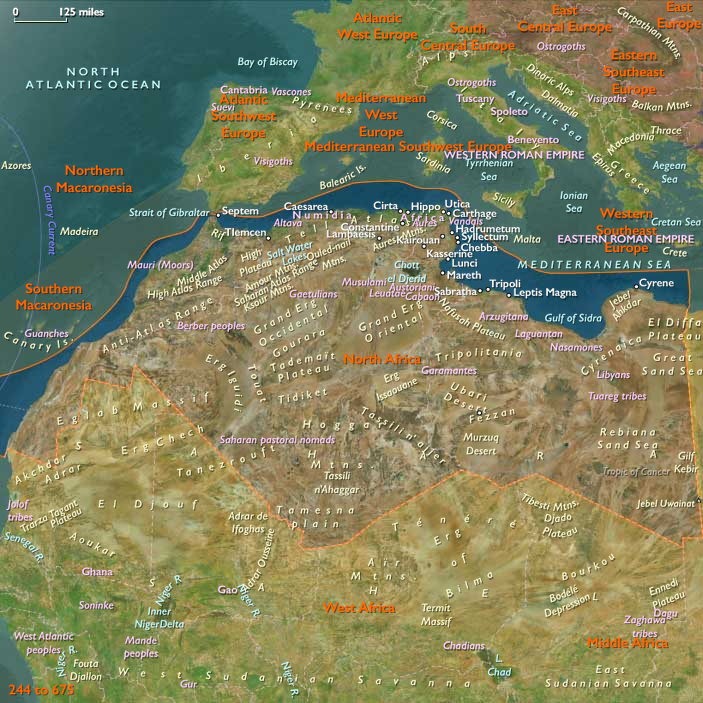
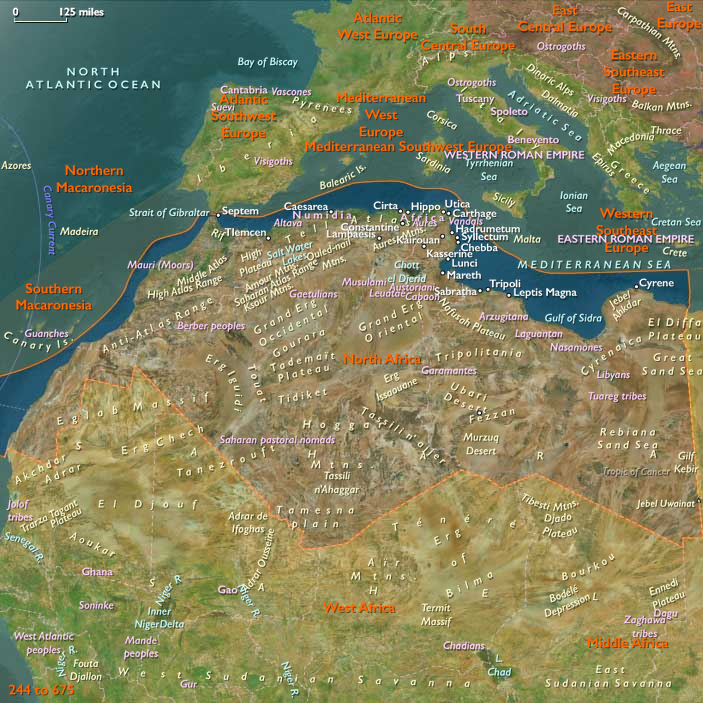
Roman military units stationed along the strategic frontier, particularly from Vescera (Biskra) to Ad Majores (Hennchir Besseriani), continue vigilant defense against persistent threats from Berber incursions and Saharan nomadic groups. Effective military oversight ensures the ongoing security of vital agricultural and trade activities.
Sustained Economic Strength and Agricultural Productivity
North Africa sustains its robust economic activity, notably in grain and olive oil production, which remain essential commodities within the Roman economy. Prominent trade cities including Utica, Leptis Magna, and Caesarea (Cherchell) continue thriving, leveraging active Mediterranean commerce despite broader imperial uncertainties.
Numidia and Mauretania: Economic Stability and Cultural Integration
Numidia maintains economic stability and social cohesion through sustained Roman infrastructural investments and effective governance. The integration of indigenous traditions within the Roman administrative framework continues to support regional stability.
Mauretania remains prosperous through dynamic trade activities, notably in grain, olive oil, and luxury goods. The city of Caesarea consistently reinforces its status as an influential economic and cultural center, benefiting from continued Roman support and investment.
Cyrenaica: Cultural Continuity and Economic Stability
Cyrenaica preserves its intellectual prominence and economic strength. The Greek Pentapolis—Cyrene, Barce (Al Marj), Euhesperides (Benghazi), Teuchira (Tukrah), and Apollonia (Susah)—remains actively engaged in Mediterranean commerce and scholarly activities, contributing significantly to regional stability and cultural vitality.
Tripolitania: Ongoing Prosperity and Cultural Heritage
Tripolitania continues its economic prosperity through robust olive oil production and active trans-Saharan commerce facilitated by the Garamantes. Punic cultural heritage remains vibrant, especially in cities such as Leptis Magna, sustaining their distinctive identity within the broader Roman context.
Berber, Garamantian, and Saharan Communities
Berber communities remain economically engaged through vibrant coastal cities, particularly Oea (Tripoli). Inland Berber tribes sustain traditional governance systems and benefit indirectly from coastal prosperity.
The Garamantes retain their essential role as trans-Saharan trade facilitators, ensuring sustained economic and cultural exchanges between sub-Saharan Africa and Mediterranean markets.
Pastoral communities including the Mauri (Moors) continue serving as critical intermediaries, reinforcing inland and coastal trade networks and significantly enhancing regional economic stability.
Christianity: Continued Influence and Social Resilience
Christianity maintains its influential role, supporting regional cohesion and identity despite broader imperial instability. Christian communities remain resilient, adapting effectively to changing political and social dynamics, and continue to expand their influence within North African society.
Cultural Syncretism and Continued Vibrancy
Persistent interactions among diverse cultural and religious communities—including Berber, Roman, Greek, Jewish, Garamantian, Mauri, and Saharan nomads—continue enriching North Africa’s cultural fabric. Ongoing cultural syncretism ensures adaptability and vibrancy, blending indigenous Berber customs with Roman, Greek, Phoenician, and Saharan traditions.
Regional Resilience and Strategic Importance
By 387 CE, North Africa demonstrates impressive resilience, maintaining robust economic productivity, vigilant frontier defenses, and dynamic cultural interactions despite broader imperial uncertainties. The region’s sustained stability underscores its enduring strategic importance within the Roman Empire.
Groups
- Polytheism (“paganism”)
- Berber people (also called Amazigh people or Imazighen, "free men", singular Amazigh)
- Numidians
- Garamantes
- Jews
- Tripolitania (Roman province)
- Africa proconsularis (Roman province)
- Mauretania Tingitana (Roman province)
- Mauretania Caesariensis (Roman province)
- Africa Byzacena (Roman province)
- Libya Superior, or Cyrenaica (Roman province)
- Africa, Diocese of (Roman imperial diocese)
- Mauretania Sitifensis (Roman province)
- Roman Empire: Constantinian dynasty (Nicomedia)
- Christianity, Nicene
- Roman Empire: Constantinian dynasty (Constantinople)
- Roman Empire: Valentinian dynasty (Rome)
Topics
Commodoties
Subjects
Regions
Subregions
Related Events
Showing 10 events out of 59617 total
Years: 376 - 387
Groups
- Polytheism (“paganism”)
- Berber people (also called Amazigh people or Imazighen, "free men", singular Amazigh)
- Numidians
- Garamantes
- Jews
- Tripolitania (Roman province)
- Africa proconsularis (Roman province)
- Mauretania Tingitana (Roman province)
- Mauretania Caesariensis (Roman province)
- Africa Byzacena (Roman province)
- Libya Superior, or Cyrenaica (Roman province)
- Africa, Diocese of (Roman imperial diocese)
- Mauretania Sitifensis (Roman province)
- Roman Empire: Constantinian dynasty (Nicomedia)
- Christianity, Nicene
- Roman Empire: Constantinian dynasty (Constantinople)
- Roman Empire: Valentinian dynasty (Rome)
Topics
Commodoties
Subjects
Regions
Subregions