
North Africa (477–334 BCE) Carthaginian Dominance, …
Years: 477BCE - 334BCE
North Africa (477–334 BCE)
Carthaginian Dominance, Cyrenaic Stability, and Berber Integration
Emergence of Berber Civilization and Phoenician Expansion
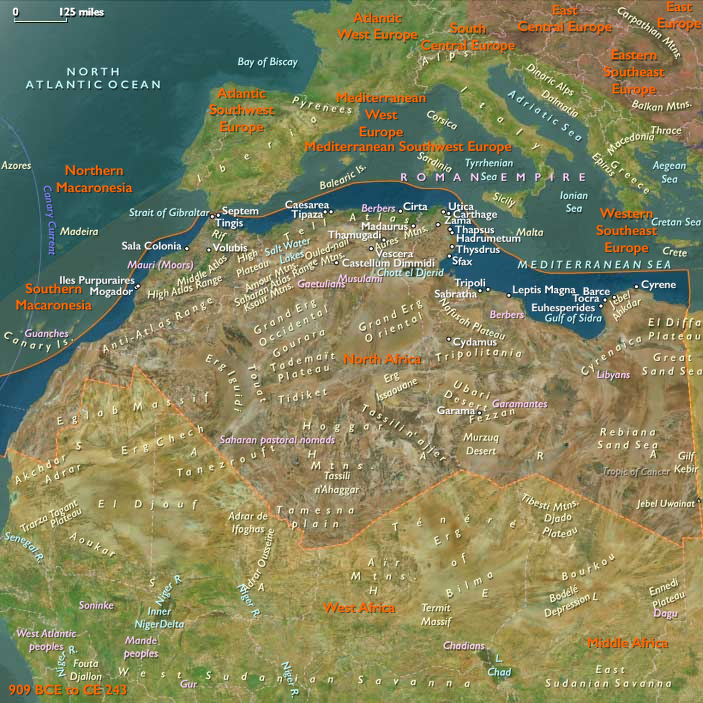
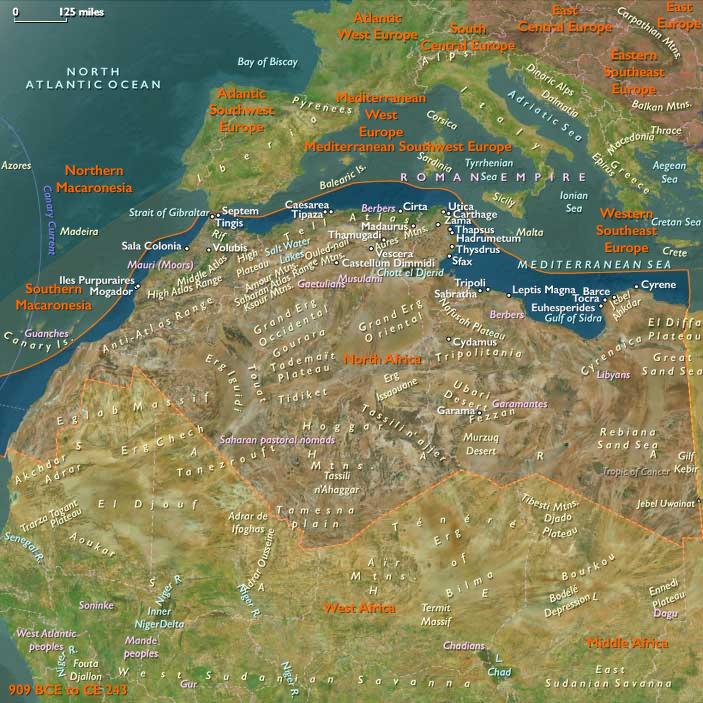
By the Iron Age, the diverse peoples of North Africa had coalesced into a distinct native population known as the Berbers. Unlike Egypt, which had been part of the historic record since the Bronze Age, the Maghreb remained in a largely prehistoric state until Phoenician traders from Tyre (present-day Lebanon) established extensive maritime networks along the North African coast. These traders established numerous depots and trading posts, creating vital links in a chain stretching from the Levant to Spain, eventually fostering treaties and robust commercial relations with Berber tribes.
Carthage’s Maritime Supremacy and Economic Consolidation
From 477 to 334 BCE, Carthage consistently reinforces its maritime power, expanding naval capabilities and safeguarding essential Mediterranean trade routes. Strategic dominance over northern Tunisia and key colonies such as Leptis, Oea (modern Tripoli), and Tangier ensures sustained regional economic growth and political influence. By the fifth century BCE, Carthage had extended its hegemony across much of North Africa, fostering a distinctive civilization known as Punic. Punic settlements on the Libyan coast included Oea, Labdah (later Leptis Magna), and Sabratah, collectively known as Tripolis (Three Cities).
Strategic Diplomacy and Military Balance
Throughout this era, Carthage expertly navigates its rivalry with Greek city-states, especially Syracuse, employing balanced diplomatic strategies alongside military readiness to manage tensions and maintain regional equilibrium. Diplomatic engagements extend to managing relations with Greek, Egyptian, and potentially Persian interests, ensuring stable geopolitical dynamics in the Mediterranean.
Cyrenaica’s Economic Prosperity and Diplomatic Skill
The Greek Pentapolis—Cyrene, Barce (Al Marj), Euhesperides (Benghazi), Teuchira (Tukrah), and Apollonia (Susah)—maintains economic vitality, driven by robust exports of grain, fruit, horses, and notably the medicinal plant Silphium. Cyrene’s sustained investment in infrastructure and religious institutions highlights enduring regional prosperity and political stability, adeptly managing pressures from external Carthaginian, Egyptian, and Persian influences.
Deepening Berber Integration and Economic Stability
As Carthaginian power grows, its impact on indigenous Berber populations dramatically increases. Berber civilization, already advanced in agriculture, manufacturing, trade, and political organization, experiences intensified integration with Carthaginian trade networks. Important commercial hubs like Oea (Tripoli) facilitate regional prosperity and stable economic integration. Trade links strengthen between Carthage and interior Berber tribes, though territorial expansion also leads to the enslavement or military recruitment of some Berbers and the extraction of tribute from others. By the early fourth century BCE, Berbers form the largest contingent within the Carthaginian army.
Cultural Synthesis and Religious Syncretism
Intercultural interactions among Berber, Carthaginian, and Greek populations flourish, significantly advancing artistic developments in pottery, textiles, and metalwork. Religious syncretism continues deepening, harmoniously integrating indigenous Berber traditions with Phoenician and Greek religious elements, enhancing the region's cultural diversity and complexity.
Enduring Foundations for Regional Influence
By 334 BCE, North Africa demonstrates sustained political stability, robust economic growth, and rich cultural integration. The enduring maritime power of Carthage, Cyrenaica’s diplomatic resilience, and cohesive Berber economic integration collectively reinforce a strong regional framework, ensuring ongoing prominence within the broader Mediterranean geopolitical context.
People
Groups
- Phoenicians
- Tyre, Kingdom of (Phoenicia)
- Berber people (also called Amazigh people or Imazighen, "free men", singular Amazigh)
- Sicily, classical
- Carthage, Kingdom of
- Greeks, Classical
- Magna Graecia
- Syracuse, Corinthian city-state of
- Etruria
- Cyrene
- Achaemenid, or First Persian, Empire
- Roman Republic
Topics
Commodoties
Subjects
Regions
Subregions
Related Events
Showing 10 events out of 65541 total
Years: 477BCE - 334BCE
People
Groups
- Phoenicians
- Tyre, Kingdom of (Phoenicia)
- Berber people (also called Amazigh people or Imazighen, "free men", singular Amazigh)
- Sicily, classical
- Carthage, Kingdom of
- Greeks, Classical
- Magna Graecia
- Syracuse, Corinthian city-state of
- Etruria
- Cyrene
- Achaemenid, or First Persian, Empire
- Roman Republic
Topics
Commodoties
Subjects
Regions
Subregions