
North Africa (280–291 CE) Imperial Recovery, …
Years: 280 - 291
North Africa (280–291 CE)
Imperial Recovery, Localized Stability, and Cultural Dynamism
Partial Stabilization and Regional Adaptation
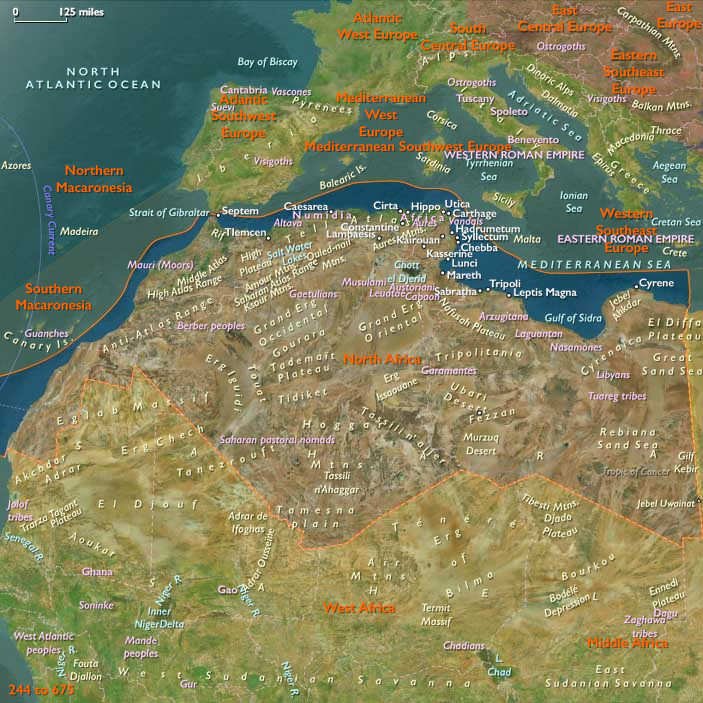
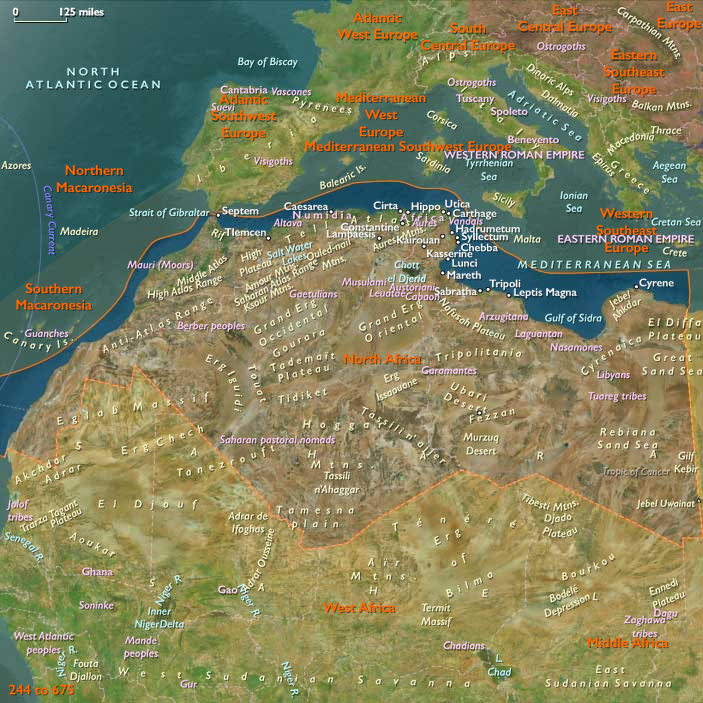
Between 280 and 291 CE, North Africa experiences partial stabilization following the intense pressures of the Crisis of the Third Century. Efforts by Roman emperors to restore central authority yield moderate improvements in administrative efficiency and economic stability. Despite continued vulnerability, North Africa’s resilient governance structures and prosperous urban centers effectively leverage these imperial recovery initiatives to maintain regional stability.
Strengthened Military Defenses and Frontier Vigilance
Roman military presence in Numidia and Mauretania remains focused on frontier defense, effectively countering persistent threats from Berber tribes and Saharan nomadic incursions. Reinforcements of defensive fortifications, particularly along the line extending from Vescera (Biskra) to Ad Majores (Hennchir Besseriani), play a crucial role in safeguarding agricultural and commercial activities vital to regional prosperity.
Renewed Economic Activity and Sustained Prosperity
Despite continuing uncertainties, North Africa experiences renewed economic vigor. Agricultural productivity, notably in grain and olive oil, remains robust and essential to imperial sustenance. Trading cities such as Utica, Leptis Magna, and Caesarea (Cherchell) retain their significance as thriving commercial hubs, reinforcing North Africa’s indispensable role within the Mediterranean trade network.
Numidia and Mauretania: Stability and Integration
Numidia continues benefiting from ongoing Roman infrastructural investments, supporting agriculture and enhancing regional stability. The integration of local traditions within Roman administrative structures ensures sustained economic resilience and social cohesion.
Mauretania similarly thrives through active commerce, particularly in grain and olive oil. The consistent economic and infrastructural reinforcement of Caesarea further solidifies its prominent role as a regional economic and cultural center.
Cyrenaica: Scholarly Continuity and Economic Stability
Cyrenaica retains its economic vitality and scholarly reputation. The Greek Pentapolis—Cyrene, Barce (Al Marj), Euhesperides (Benghazi), Teuchira (Tukrah), and Apollonia (Susah)—continues active trade and intellectual endeavors, reinforcing the region’s cultural prominence despite broader imperial challenges.
Tripolitania: Sustained Cultural and Economic Prosperity
Tripolitania maintains its economic prosperity, notably through substantial olive oil exports and active trans-Saharan trade managed by the Garamantes. Cities such as Leptis Magna preserve their distinctive Punic heritage, remaining vibrant cultural and economic centers amid broader Roman cultural influences.
Berber, Garamantian, and Saharan Communities
Berber communities remain economically engaged through coastal urban centers like Oea (Tripoli), with inland Berber tribes preserving traditional governance structures and indirectly benefiting from coastal commerce.
The Garamantes sustain their critical role in trans-Saharan trade, facilitating economic exchanges between sub-Saharan Africa and Mediterranean markets.
Pastoral groups such as the Mauri (Moors) persist as essential intermediaries, maintaining key inland and coastal trade routes, thus significantly contributing to regional stability.
Expansion and Influence of Christian Communities
Christianity continues to expand significantly, solidifying its influence across North Africa. Christian communities reinforce social cohesion, becoming integral to regional identity and resilience amidst broader imperial fluctuations.
Cultural Syncretism and Vibrant Integration
Continued interactions among Berber, Roman, Greek, Jewish, Garamantian, Musulami, Gaetulian, Mauri, and Saharan nomadic communities further enrich the region’s cultural fabric. Persistent religious and cultural syncretism effectively blends indigenous Berber practices with Roman, Greek, Phoenician, and Saharan traditions, ensuring North Africa's vibrant cultural identity.
Ongoing Resilience and Strategic Importance
By 291 CE, North Africa demonstrates notable resilience and adaptability, effectively navigating a period of partial imperial recovery. Strong local governance, sustained economic activity, vibrant cultural integration, and fortified urban infrastructure collectively reinforce North Africa's enduring strategic importance within the late Roman Empire.
Groups
- Polytheism (“paganism”)
- Berber people (also called Amazigh people or Imazighen, "free men", singular Amazigh)
- Numidians
- Garamantes
- Jews
- Tripolitania (Roman province)
- Africa proconsularis (Roman province)
- Crete and Cyrenaica (Roman province)
- Christians, Early
- Mauretania Tingitana (Roman province)
- Mauretania Caesariensis (Roman province)
- Roman Empire (Rome): Non-dynastic
- Roman Empire: Tetrarchy
Topics
Commodoties
- Fish and game
- Gem materials
- Grains and produce
- Fibers
- Textiles
- Ceramics
- Strategic metals
- Salt
- Slaves
- Beer, wine, and spirits
Subjects
- Commerce
- Architecture
- Sculpture
- Faith
- Government
- Scholarship
- Custom and Law
- Metallurgy
- Theology
- Philosophy and logic
Regions
Subregions
Related Events
Showing 10 events out of 60185 total
Years: 280 - 291
Groups
- Polytheism (“paganism”)
- Berber people (also called Amazigh people or Imazighen, "free men", singular Amazigh)
- Numidians
- Garamantes
- Jews
- Tripolitania (Roman province)
- Africa proconsularis (Roman province)
- Crete and Cyrenaica (Roman province)
- Christians, Early
- Mauretania Tingitana (Roman province)
- Mauretania Caesariensis (Roman province)
- Roman Empire (Rome): Non-dynastic
- Roman Empire: Tetrarchy
Topics
Commodoties
- Fish and game
- Gem materials
- Grains and produce
- Fibers
- Textiles
- Ceramics
- Strategic metals
- Salt
- Slaves
- Beer, wine, and spirits
Subjects
- Commerce
- Architecture
- Sculpture
- Faith
- Government
- Scholarship
- Custom and Law
- Metallurgy
- Theology
- Philosophy and logic
Regions
Subregions