
North Africa (208–219 CE) Roman Stability, …
Years: 208 - 219
North Africa (208–219 CE)
Roman Stability, Economic Prosperity, and Christian Developments
Roman Provincial Stability and Economic Expansion
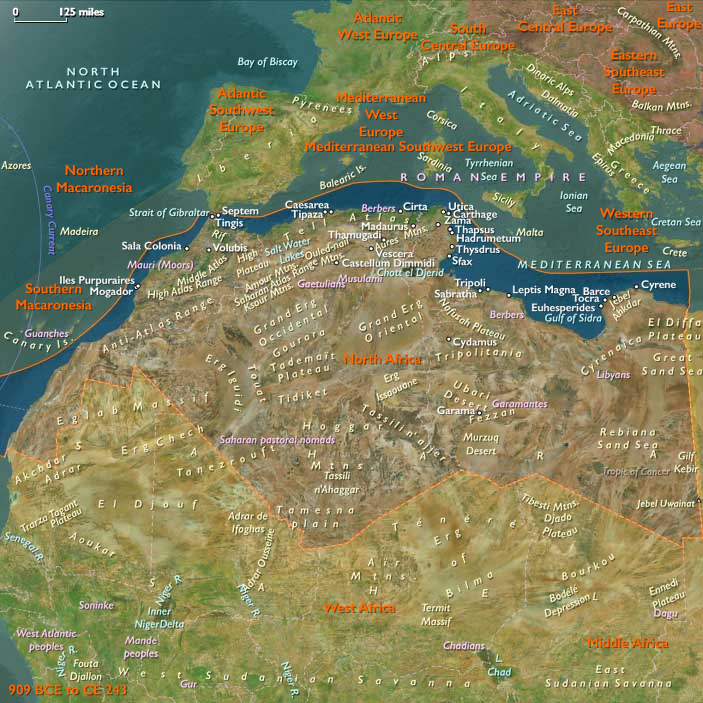
From 208 to 219 CE, Roman administration in Africa Proconsularis maintains a consistent focus on stability and economic prosperity through continued investments in infrastructure, agriculture, and urban development. Major urban centers such as Utica, Leptis Magna, and Caesarea (Cherchell) flourish economically, reinforcing their significance within Rome’s Mediterranean trade and administrative networks.
Numidia: Ongoing Prosperity and Cultural Integration
Numidia continues its trajectory of economic growth, benefiting from ongoing Roman investment in agriculture and infrastructure. Numidian communities successfully integrate traditional practices with Roman administrative structures, promoting regional prosperity, social cohesion, and cultural continuity.
Mauretania: Continued Economic Growth and Cultural Vitality
Mauretania sustains robust economic performance and cultural dynamism. Caesarea remains pivotal for commerce, notably in grain, olive oil, and luxury commodities, further supported by continuous Roman infrastructure improvements. This sustained economic activity underscores Mauretania’s strategic importance within Roman North Africa.
Cyrenaica: Economic Stability and Scholarly Influence
Cyrenaica remains economically vibrant and culturally influential. The Greek Pentapolis—Cyrene, Barce (Al Marj), Euhesperides (Benghazi), Teuchira (Tukrah), and Apollonia (Susah)—continues significant trade, particularly in grain, wine, wool, and livestock. Cyrene maintains its role as a Mediterranean center of scholarship, attracting prominent intellectuals and reinforcing regional academic prominence.
Berber Communities: Economic Engagement and Cultural Resilience
Berber communities actively participate in regional commerce through thriving coastal trade centers such as Oea (Tripoli). Inland Berber tribes continue their traditional governance and cultural practices, indirectly benefiting from coastal trade prosperity. This sustained integration promotes regional stability, cultural resilience, and economic prosperity.
Garamantes: Persistent Dominance in Saharan Trade
The Garamantes continue their critical role in managing trans-Saharan trade, employing advanced agricultural techniques and efficiently managing caravan routes. Their dominance facilitates extensive economic exchanges between sub-Saharan Africa and Mediterranean markets, enhancing regional economic stability and cultural integration.
Mauri (Moors) and Saharan Pastoral Nomads
The Mauri (Moors) retain their regional influence through diplomatic activities and dynamic economic participation, contributing significantly to western North Africa’s stability and prosperity.
Saharan pastoral nomads sustain their pivotal roles in trade, cultural exchanges, and information dissemination, effectively connecting diverse ecological and economic regions and reinforcing North Africa’s interconnectedness.
Christian Developments: Tertullian and the Tertullianists
During this era, the influential theologian Tertullian, now in his mid-fifties, breaks from the Montanists and establishes his own faction, known as the Tertullianists. An extremist by nature, Tertullian, having previously experienced a period of licentiousness, now ardently advocates severe asceticism and rigorous discipline, challenging even his own followers. A passionate polemicist, he engages intensely with pagans, Jews, heretics, and orthodox Christians. His influential writings, notably Apologeticum, De carne Christi, and De praescriptione haereticorum, significantly shape Christian theology and discourse through sharp rhetoric and incisive satire.
Cultural Syncretism and Regional Integration
Continued cultural interactions among Berber, Roman, Greek, Garamantian, Musulami, Gaetulian, Mauri, and Saharan pastoral groups enhance regional traditions in arts, crafts, and religious practices. Religious syncretism remains robust, blending indigenous Berber beliefs harmoniously with Roman, Greek, Phoenician, and Saharan spiritual customs, enriching North Africa’s diverse cultural landscape.
Foundation for Continued Stability and Prosperity
By 219 CE, North Africa continues to exhibit strong economic stability, cultural resilience, and regional prosperity. Effective Roman provincial governance, sustained urban growth, vibrant Berber communities, enduring Saharan trade networks, and significant developments in Christian thought collectively affirm North Africa’s continued strategic importance within the broader Mediterranean geopolitical context.
People
Groups
- Polytheism (“paganism”)
- Berber people (also called Amazigh people or Imazighen, "free men", singular Amazigh)
- Numidians
- Garamantes
- Jews
- Tripolitania (Roman province)
- Africa proconsularis (Roman province)
- Crete and Cyrenaica (Roman province)
- Christians, Early
- Mauretania Tingitana (Roman province)
- Mauretania Caesariensis (Roman province)
- Montanism
- Roman Empire (Rome): Severan dynasty
Commodoties
- Fish and game
- Gem materials
- Grains and produce
- Fibers
- Textiles
- Ceramics
- Strategic metals
- Salt
- Slaves
- Beer, wine, and spirits
Subjects
- Commerce
- Architecture
- Sculpture
- Faith
- Government
- Scholarship
- Custom and Law
- Metallurgy
- Philosophy and logic
Regions
Subregions
Related Events
Showing 2 events out of 2 total
Years: 208 - 219
People
Groups
- Polytheism (“paganism”)
- Berber people (also called Amazigh people or Imazighen, "free men", singular Amazigh)
- Numidians
- Garamantes
- Jews
- Tripolitania (Roman province)
- Africa proconsularis (Roman province)
- Crete and Cyrenaica (Roman province)
- Christians, Early
- Mauretania Tingitana (Roman province)
- Mauretania Caesariensis (Roman province)
- Montanism
- Roman Empire (Rome): Severan dynasty
Commodoties
- Fish and game
- Gem materials
- Grains and produce
- Fibers
- Textiles
- Ceramics
- Strategic metals
- Salt
- Slaves
- Beer, wine, and spirits
Subjects
- Commerce
- Architecture
- Sculpture
- Faith
- Government
- Scholarship
- Custom and Law
- Metallurgy
- Philosophy and logic
Regions
Subregions