
North Africa (28–39 CE) Roman Governance, …
Years: 28 - 39
North Africa (28–39 CE)
Roman Governance, Mauretanian Reorganization, Cyrenaic Prosperity, Berber Stability, and Saharan Networks
Roman Provincial Expansion and Economic Development
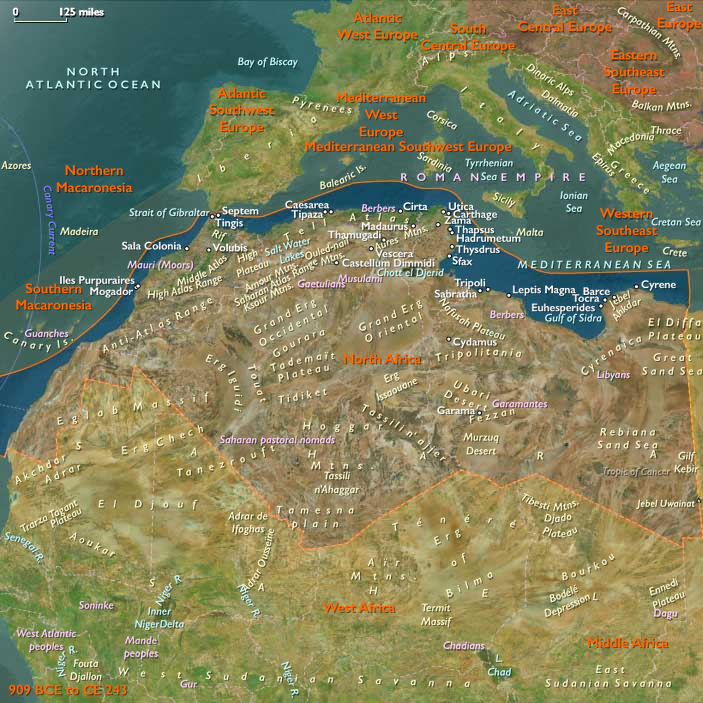
From 28 to 39 CE, Rome further enhances administrative control and economic integration within Africa Proconsularis. Continued improvements in infrastructure, agriculture, and urban development strengthen provincial prosperity. Urban centers, particularly Utica, remain significant commercial and administrative hubs, deeply woven into Rome’s vast Mediterranean economic network.
During this period, Leptis Magna, founded originally by Phoenician colonists around 1100 BCE and historically known by its Lybico-Berber name Lpqy, becomes formally incorporated into the Roman Empire under Emperor Tiberius. Although nominally under Carthaginian control until the end of the Third Punic War (146 BCE) and largely independent afterward, Leptis Magna now emerges as one of the leading cities of Roman Africa and a major Mediterranean trading center.
Numidia: Continued Economic Stability and Provincial Integration
Numidia remains stable and prosperous under consistent Roman governance. Benefiting from enhanced agricultural practices and improved trade networks, the province continues contributing robustly to regional economic vitality. Local traditions persist alongside Roman administrative structures, maintaining Numidia’s cultural uniqueness within the broader Roman provincial framework.
Mauretania: Administrative Reorganization and Continued Growth
Following the transitional period after the deaths of King Juba II and Queen Cleopatra Selene II, Mauretania undergoes significant administrative reorganization. Rome increasingly exerts direct influence, refining local governance structures. Caesarea (modern Cherchell) continues thriving culturally and economically, benefiting from extensive Roman-led infrastructure projects and strategic Mediterranean trade. The province sustains its economic prominence through robust commerce in grain, olive oil, and luxury goods, maintaining its essential role within the Roman economic system.
Cyrenaica: Sustained Economic Prosperity and Cultural Vitality
Cyrenaica continues its longstanding economic and intellectual vitality. The Greek Pentapolis—Cyrene, Barce (Al Marj), Euhesperides (Benghazi), Teuchira (Tukrah), and Apollonia (Susah)—maintains robust trade, particularly in grain, wine, wool, livestock, and the highly prized medicinal herb Silphium. Cyrene remains an influential cultural and academic center, attracting renowned scholars, philosophers, and medical professionals from across the Mediterranean.
Berber Communities: Ongoing Economic Integration and Cultural Resilience
Berber communities persist in active economic participation, especially through dynamic coastal trade hubs like Oea (Tripoli). Inland Berber tribes continue benefiting from vibrant coastal economic activities, retaining traditional governance structures and cultural practices. This ongoing interaction ensures regional economic stability, cultural continuity, and resilience.
Garamantes: Sustained Saharan Connectivity and Commerce
The Garamantes remain pivotal to trans-Saharan trade, effectively linking sub-Saharan Africa with Mediterranean economies. Their sophisticated agricultural methods and careful management of trade routes ensure continued regional prosperity, facilitating vibrant economic and cultural exchanges across vast Saharan territories.
Mauri (Moors) and Saharan Pastoral Nomads
The Mauri (Moors) sustain their influential regional role through diplomatic engagements and vibrant economic activities, ensuring continued stability and prosperity in western North Africa.
Saharan pastoral nomads continue facilitating essential economic, cultural, and informational exchanges between varied ecological and economic regions, further reinforcing regional interconnectedness.
Cultural Syncretism and Dynamic Exchange
Cultural interactions among Berber, Roman, Greek, Garamantian, Mauri, and Saharan pastoral populations continue enriching regional arts, crafts, and traditions. Religious syncretism remains robust, blending indigenous Berber practices with Roman, Greek, Phoenician, and Saharan customs, significantly enhancing North Africa’s diverse cultural landscape.
Foundations for Continued Regional Stability and Prosperity
By 39 CE, North Africa exhibits sustained regional stability and prosperity, driven by robust Roman provincial administration, successful Mauretanian reorganization, sustained Cyrenaic economic and intellectual vitality, resilient Berber communities, and dynamic Saharan trade networks. Collectively, these integrated elements affirm North Africa’s strategic importance within the broader Mediterranean geopolitical landscape.
People
Groups
- Berber people (also called Amazigh people or Imazighen, "free men", singular Amazigh)
- Numidians
- Garamantes
- Africa proconsularis (Roman province)
- Tripolitania (Roman province)
- Mauretania, Kingdom of
- Crete and Cyrenaica (Roman province)
- Roman Empire (Rome): Julio-Claudian dynasty
Commodoties
- Fish and game
- Gem materials
- Grains and produce
- Fibers
- Textiles
- Ceramics
- Strategic metals
- Salt
- Slaves
- Beer, wine, and spirits
Subjects
- Commerce
- Architecture
- Sculpture
- Faith
- Government
- Scholarship
- Custom and Law
- Metallurgy
- Medicine
- Philosophy and logic
Regions
Subregions
Related Events
Showing 10 events out of 61909 total
Years: 28 - 39
People
Groups
- Berber people (also called Amazigh people or Imazighen, "free men", singular Amazigh)
- Numidians
- Garamantes
- Africa proconsularis (Roman province)
- Tripolitania (Roman province)
- Mauretania, Kingdom of
- Crete and Cyrenaica (Roman province)
- Roman Empire (Rome): Julio-Claudian dynasty
Commodoties
- Fish and game
- Gem materials
- Grains and produce
- Fibers
- Textiles
- Ceramics
- Strategic metals
- Salt
- Slaves
- Beer, wine, and spirits
Subjects
- Commerce
- Architecture
- Sculpture
- Faith
- Government
- Scholarship
- Custom and Law
- Metallurgy
- Medicine
- Philosophy and logic
Regions
Subregions