
North Africa (1684–1827 CE): Alaouite Morocco, Semi-Autonomous …
Years: 1684 - 1827
North Africa (1684–1827 CE): Alaouite Morocco, Semi-Autonomous Regencies, and European Naval Pressure
Geographic & Environmental Context
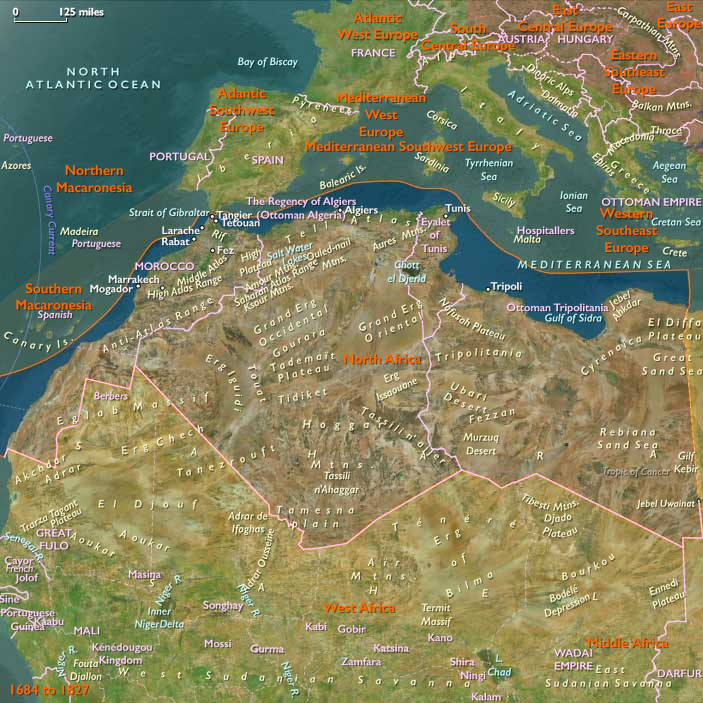
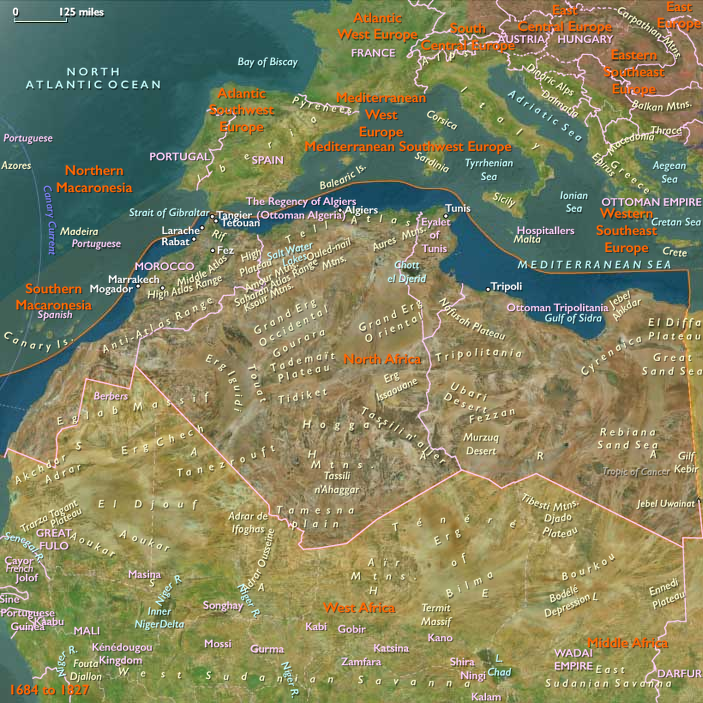
The subregion of North Africa includes Morocco (with the Western Sahara), Algeria, Tunisia, and Libya. Anchors included the Atlas Mountains, the Tell plains, the Western Sahara caravan routes, the Saharan oases, and the Mediterranean ports of Algiers, Tunis, Tripoli, and Moroccan Atlantic harbors like Tangier and Essaouira. The region was divided between Morocco under the Alaouite dynasty and the three Ottoman regencies of Algiers, Tunis, and Tripoli, each increasingly autonomous.
Climate & Environmental Shifts
The later Little Ice Age brought recurring droughts and cold winters, reducing harvests and triggering famines. Grain shortages particularly affected Algeria and Morocco in the early 18th century, worsened by locust swarms. The Western Sahara’s nomads faced shrinking pastures, forcing conflict over wells and caravan routes. Coastal fisheries and piracy revenues often sustained port cities during agricultural crises.
Subsistence & Settlement
-
Morocco: Under Moulay Ismail (1672–1727), the Alaouites centralized authority, fortified Meknes, and secured southern frontiers into the Western Sahara. Agriculture revived through irrigation, and the port of Essaouira was built as a new Atlantic hub.
-
Algeria: The Regency of Algiers operated under Ottoman suzerainty but with de facto independence, ruled by deys. Urban life centered on Algiers, supported by cereal farming and pastoralism inland.
-
Tunisia: From 1705, the Husainid dynasty governed as hereditary beys, balancing agriculture and commerce with increasing European trade ties.
-
Libya: The Karamanli dynasty (1711–1835) established in Tripoli maintained autonomy, combining corsairing with trade in grain and slaves.
-
Western Sahara: Nomadic Sanhaja and Maqil tribes maintained pastoral lifeways and salt-gold trade, though trans-Saharan caravans were in long decline compared to Atlantic shipping.
Technology & Material Culture
Corsair fleets deployed galleys, frigates, and armed xebecs. Fortified kasbahs and citadels rose in Algiers, Tunis, and Meknes. Moroccan architecture flourished in Meknes with monumental stables, aqueducts, and palaces. Urban guilds crafted textiles, ceramics, and leatherwork. Saharan nomads sustained material culture around camel herding, tents, and oral poetry. Firearms spread widely, reshaping tribal warfare.
Movement & Interaction Corridors
-
Corsair networks: Algiers, Tunis, and Tripoli remained centers of Mediterranean piracy, exacting tribute from European powers.
-
Western Sahara routes: Still carried salt, gum, and slaves north, though diminished.
-
Moroccan ports: Linked with Britain, France, and the Netherlands for grain, wool, and leather exports.
-
European navies: Increasingly challenged corsair fleets, with bombardments of Algiers (1816) and growing Anglo-American pressure during the Barbary Wars (1801–1815).
Cultural & Symbolic Expressions
Islamic scholarship thrived in Fez and Tunis; Sufi brotherhoods expanded, binding tribal societies through ritual and pilgrimage. Alaouite legitimacy in Morocco rested on claims of sharifian descent and monumental building. Oral epics and poetry glorified corsair captains and tribal heroes. In European imagination, North Africa symbolized both piracy and exoticism, recorded in captive memoirs and diplomatic reports.
Environmental Adaptation & Resilience
Rural communities intercropped cereals and legumes, supplemented diets with olives and figs, and relied on Sufi zawiyas for famine relief. Nomads shifted grazing routes deeper into the Sahara during drought. Urban populations survived shortages through grain imports and piracy revenues. Moroccan rulers redistributed grain from coastal ports to famine-stricken hinterlands.
Transition
By 1827 CE, North Africa stood at a threshold. Morocco preserved independence under the Alaouites but faced mounting European trade and military pressure. Algiers, Tunis, and Tripoli operated as semi-autonomous Ottoman regencies, balancing corsairing with tribute diplomacy. The Western Sahara remained tied to Morocco but increasingly marginal in global trade. The bombardment of Algiers by Britain in 1816 and U.S. naval campaigns signaled a new era: European powers were preparing to impose direct colonial rule, beginning with France’s invasion of Algeria in 1830.
People
Groups
- Arab people
- Berber people (also called Amazigh people or Imazighen, "free men", singular Amazigh)
- Tuaregs, or Touareg, people
- Jews
- Sanhaja (Berber tribal confederacy)
- Kutama
- Maghrawa (Zenata Berber tribe)
- Miknasa (Zenata Berber tribe)
- Masmuda (Berber tribal confederacy)
- Islam
- Muslims, Sunni
- Muslims, Kharijite
- Muslims, Shi'a
- Sufism
- Zenata (Berber tribal confederacy)
- Muslims, Ibadi
- Spain, Habsburg Kingdom of
- Ottoman Algeria
- Tripolitania (Regency of Tripoli, Tripoli-in-the-West), Ottoman eyalet of
- Tripoli, Beylik of
- Tunis, Ottoman eyalet of
- Spain, Habsburg Kingdom of
- Tripoli Eyalet
- Alawi dynasty
- Morocco, 'Alawi (Filali) Sultanate of
- Spain, Bourbon Kingdom of
- Tunis, Beylik of
- Tripoli, Pashalik of
- United States of America (US, USA) (Washington DC)
- Spain, Bonapartist Kingdom of
- Spain, Bourbon Kingdom (first restoration) of
- France, constitutional monarchy of
Topics
- Barbary War, First Tripolitan War
- Barbary War, First
- Barbary War, Second
- Secession of Constantine (Algeria)
- French Blockade of Algiers
Commodoties
Subjects
Regions
Subregions
Related Events
Showing 10 events out of 30218 total
Years: 1684 - 1827
People
Groups
- Arab people
- Berber people (also called Amazigh people or Imazighen, "free men", singular Amazigh)
- Tuaregs, or Touareg, people
- Jews
- Sanhaja (Berber tribal confederacy)
- Kutama
- Maghrawa (Zenata Berber tribe)
- Miknasa (Zenata Berber tribe)
- Masmuda (Berber tribal confederacy)
- Islam
- Muslims, Sunni
- Muslims, Kharijite
- Muslims, Shi'a
- Sufism
- Zenata (Berber tribal confederacy)
- Muslims, Ibadi
- Spain, Habsburg Kingdom of
- Ottoman Algeria
- Tripolitania (Regency of Tripoli, Tripoli-in-the-West), Ottoman eyalet of
- Tripoli, Beylik of
- Tunis, Ottoman eyalet of
- Spain, Habsburg Kingdom of
- Tripoli Eyalet
- Alawi dynasty
- Morocco, 'Alawi (Filali) Sultanate of
- Spain, Bourbon Kingdom of
- Tunis, Beylik of
- Tripoli, Pashalik of
- United States of America (US, USA) (Washington DC)
- Spain, Bonapartist Kingdom of
- Spain, Bourbon Kingdom (first restoration) of
- France, constitutional monarchy of
Topics
- Barbary War, First Tripolitan War
- Barbary War, First
- Barbary War, Second
- Secession of Constantine (Algeria)
- French Blockade of Algiers
Commodoties
Subjects
Regions
Subregions