
North Africa (112–123 CE) Roman Provincial …
Years: 112 - 123
North Africa (112–123 CE)
Roman Provincial Consolidation, Urban Prosperity, and Continued Saharan Connectivity
Roman Administration and Economic Stability
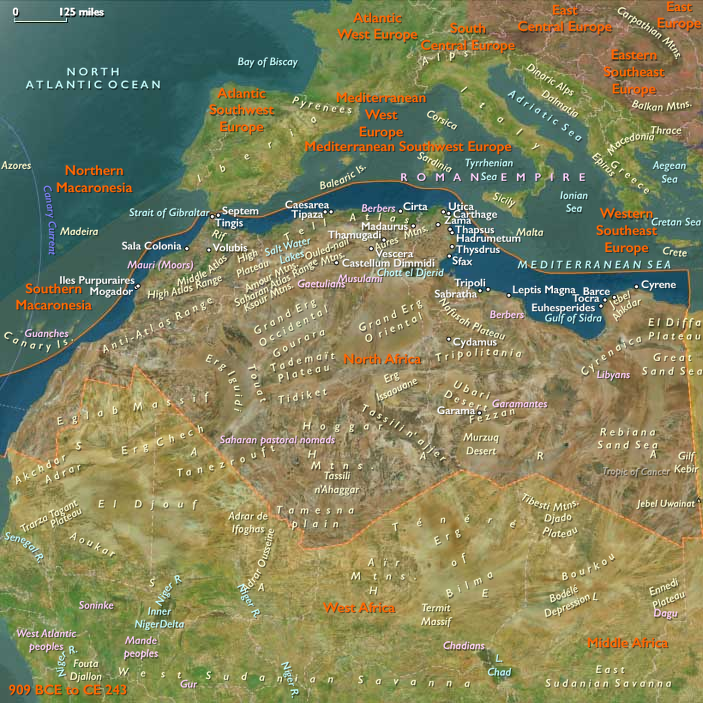
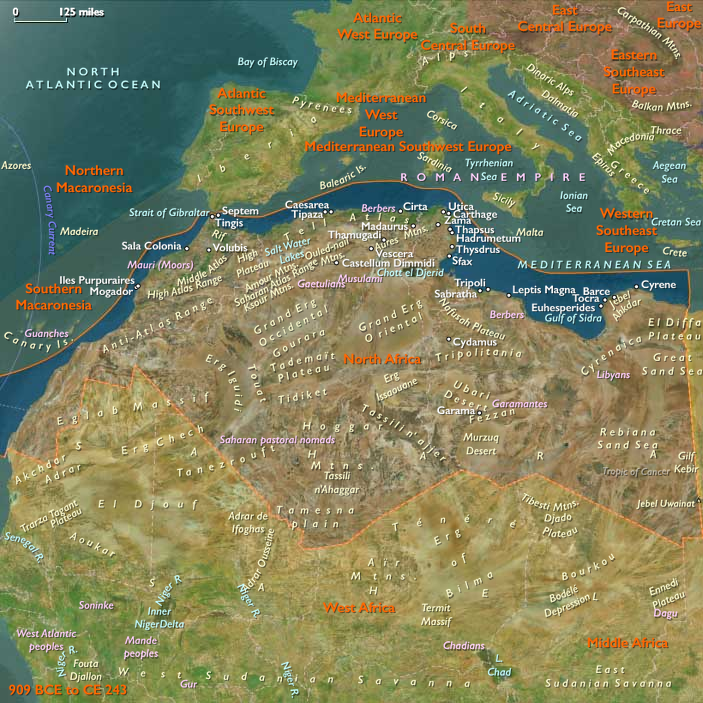
From 112 to 123 CE, Roman governance in Africa Proconsularis further consolidates, maintaining regional stability and economic integration through continued investments in infrastructure, agricultural expansion, and urban development. Major urban centers, such as Utica, Leptis Magna, and Caesarea (Cherchell), continue to thrive, significantly contributing to Rome’s broader Mediterranean economic and administrative network.
Numidia: Sustained Economic Growth and Cultural Integration
Numidia experiences ongoing economic growth under stable Roman provincial governance. Agricultural productivity remains robust, supported by enhanced trade networks and infrastructure projects. Numidian communities successfully integrate traditional cultural practices within the Roman administrative framework, preserving their identity while reinforcing regional cohesion and stability.
Mauretania: Economic Prosperity and Cultural Continuity
Mauretania continues to flourish economically and culturally. The city of Caesarea sustains its prominence as an influential economic hub, benefiting from substantial trade in grain, olive oil, and luxury goods. Ongoing infrastructure developments facilitate increased commerce and cultural exchange, reinforcing Mauretania’s pivotal role in Roman North Africa.
Cyrenaica: Economic Prosperity Marred by Violent Conflict
Cyrenaica, despite sustained economic prosperity and intellectual prominence, experiences severe turmoil due to the outbreak of the second Jewish revolt. Spanning the end of Trajan’s reign and the beginning of Hadrian’s (115–117 CE), the conflict devastates the region. Hundreds of thousands of Greek and Roman citizens are slaughtered in Cyrenaica, as well as in Alexandria, Judea, Mesopotamia, and Cyprus. This violence triggers retaliatory massacres, resulting in the deaths of hundreds of thousands of Jews. Despite this upheaval, Cyrene and the other cities of the Greek Pentapolis—Barce (Al Marj), Euhesperides (Benghazi), Teuchira (Tukrah), and Apollonia (Susah)—manage to slowly recover, maintaining their economic roles in grain, wine, wool, and livestock, and gradually regaining intellectual and cultural stability.
Berber Communities: Economic Engagement and Cultural Resilience
Berber populations persist in their significant economic roles, particularly through coastal trade hubs such as Oea (Tripoli). Inland Berber tribes uphold traditional governance and cultural practices, benefiting from sustained economic relationships with coastal markets. This enduring interaction supports economic stability and cultural resilience throughout the region.
Garamantes: Key Saharan Trade Facilitators
The Garamantes maintain their critical role in managing trans-Saharan commerce, effectively linking sub-Saharan Africa with Mediterranean economies. Their sophisticated agricultural techniques and effective management of caravan routes ensure ongoing regional prosperity and robust economic exchanges.
Mauri (Moors) and Saharan Pastoral Nomads
The Mauri (Moors) uphold their regional influence through active diplomatic relations and robust economic activities, ensuring ongoing stability and prosperity in western North Africa.
Saharan pastoral nomads persist as crucial facilitators of trade, cultural exchanges, and information dissemination across diverse ecological and economic regions, reinforcing North Africa’s interconnected societies.
Cultural Syncretism and Integration
Continuous interactions among Berber, Roman, Greek, Garamantian, Musulami, Gaetulian, Mauri, and Saharan pastoral communities enrich regional cultural traditions in arts, crafts, and religious practices. Religious syncretism remains vibrant, blending indigenous Berber beliefs harmoniously with Roman, Greek, Phoenician, and Saharan spiritual customs, significantly enhancing North Africa’s cultural diversity.
Foundations of Stability Amidst Challenges
By 123 CE, North Africa sustains robust economic stability and regional prosperity despite significant challenges, notably the second Jewish revolt’s impact on Cyrenaica. Under effective Roman provincial administration, ongoing urban development, resilient Berber communities, and vibrant Saharan trade networks, North Africa continues to reinforce its enduring strategic importance within the Mediterranean geopolitical context.
Groups
- Berber people (also called Amazigh people or Imazighen, "free men", singular Amazigh)
- Numidians
- Garamantes
- Jews
- Tripolitania (Roman province)
- Africa proconsularis (Roman province)
- Crete and Cyrenaica (Roman province)
- Mauretania Tingitana (Roman province)
- Mauretania Caesariensis (Roman province)
- Roman Empire (Rome): Nerva-Antonine dynasty
Topics
Commodoties
- Fish and game
- Gem materials
- Grains and produce
- Fibers
- Textiles
- Ceramics
- Strategic metals
- Salt
- Slaves
- Beer, wine, and spirits
Subjects
- Commerce
- Architecture
- Sculpture
- Conflict
- Mayhem
- Faith
- Government
- Scholarship
- Custom and Law
- Metallurgy
- Philosophy and logic
Regions
Subregions
Years: 112 - 123
Groups
- Berber people (also called Amazigh people or Imazighen, "free men", singular Amazigh)
- Numidians
- Garamantes
- Jews
- Tripolitania (Roman province)
- Africa proconsularis (Roman province)
- Crete and Cyrenaica (Roman province)
- Mauretania Tingitana (Roman province)
- Mauretania Caesariensis (Roman province)
- Roman Empire (Rome): Nerva-Antonine dynasty
Topics
Commodoties
- Fish and game
- Gem materials
- Grains and produce
- Fibers
- Textiles
- Ceramics
- Strategic metals
- Salt
- Slaves
- Beer, wine, and spirits
Subjects
- Commerce
- Architecture
- Sculpture
- Conflict
- Mayhem
- Faith
- Government
- Scholarship
- Custom and Law
- Metallurgy
- Philosophy and logic
Regions
Subregions