
The Growing Threat to Normandy and the …
Years: 1109 - 1109
The Growing Threat to Normandy and the Conflict Between Louis VI and Henry I (1108–1109 CE)
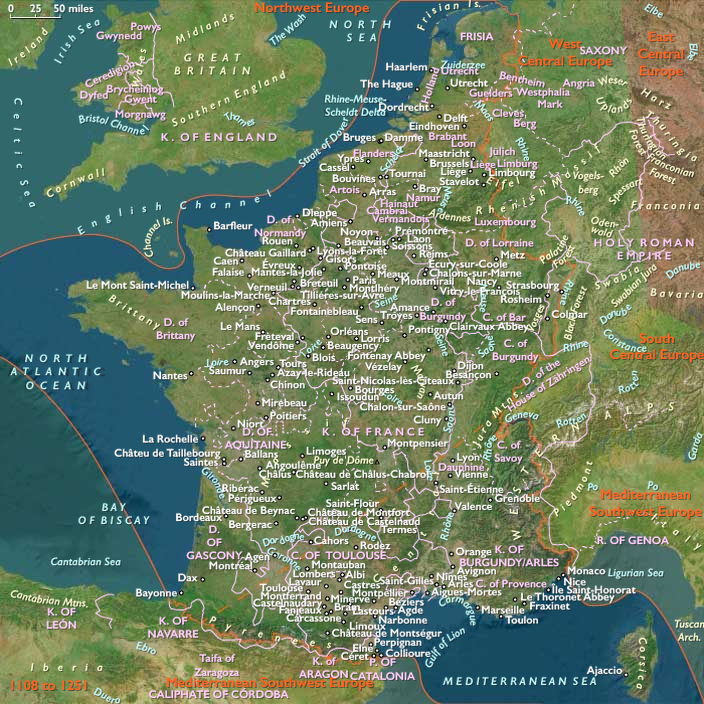
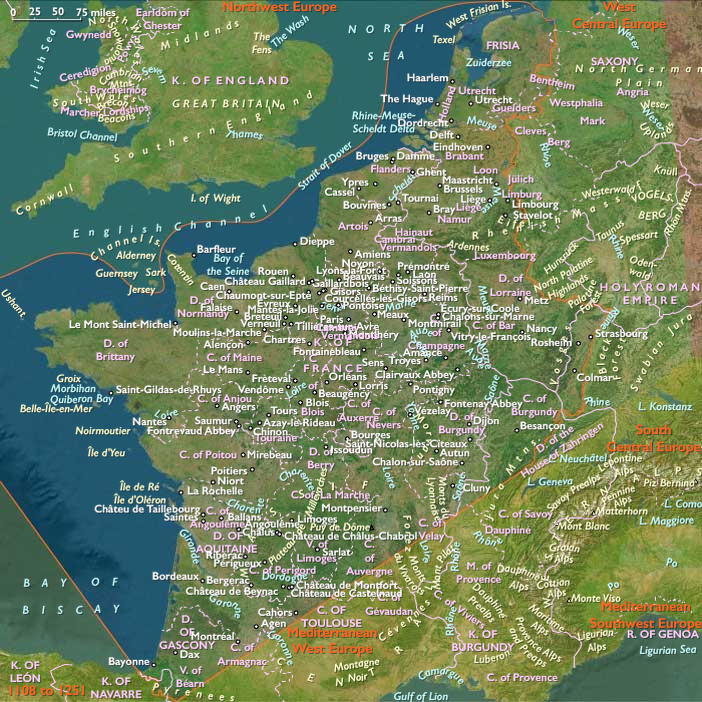
Following the accession of Louis VI of France in 1108, the Duchy of Normandy faced increased pressure from a coalition of France, Anjou, and Flanders, as the new king sought to reassert royal authority over his vassals. Unlike his father, Philip I, whose influence had been limited to the Île-de-France, Louis VI pursued a more aggressive policy against the Anglo-Norman realm, directly challenging the authority of Henry I of England, Duke of Normandy.
Louis VI’s Demands and Henry I’s Defiance
Soon after taking the throne, Louis VI asserted his overlordship by demanding that Henry I pay homage for Normandy. Additionally, he insisted that two disputed castles along the Normandy border be placed under the control of neutral castellans, effectively reducing Henry’s control over these contested frontier strongholds.
Henry I, who had consolidated power in England and Normandy following his victory over Robert Curthose at the Battle of Tinchebray (1106), refused to acknowledge Louis’s authority in such matters. His response was outright defiance, rejecting both the homage and the demand to relinquish control of the castles.
Military Posturing and Diplomatic Stalemate
In response, Louis VI mobilized an army, preparing for a potential military campaign against Normandy. However, despite the show of force, neither side was eager to engage in open conflict at this stage. After heated negotiations, the two kings reached a truce, agreeing to withdraw without battle, yet leaving the core disputes unresolved.
This diplomatic impasse marked the beginning of a long-standing rivalry between the Capetian and Norman-Angevin realms. Though open war was avoided in 1109, tensions between Louis VI and Henry I would continue to escalate in the following years, culminating in further confrontations over Normandy’s borders, feudal allegiances, and the balance of power in Western France
Locations
People
Groups
Topics
Commodoties
Subjects
Regions
Subregions
Related Events
Showing 10 events out of 49542 total
Years: 1109 - 1109
Locations
People
Groups
Topics
Commodoties
Subjects
Regions
Subregions