The Magyars, the last of the migrating …
Years: 1108 - 1251
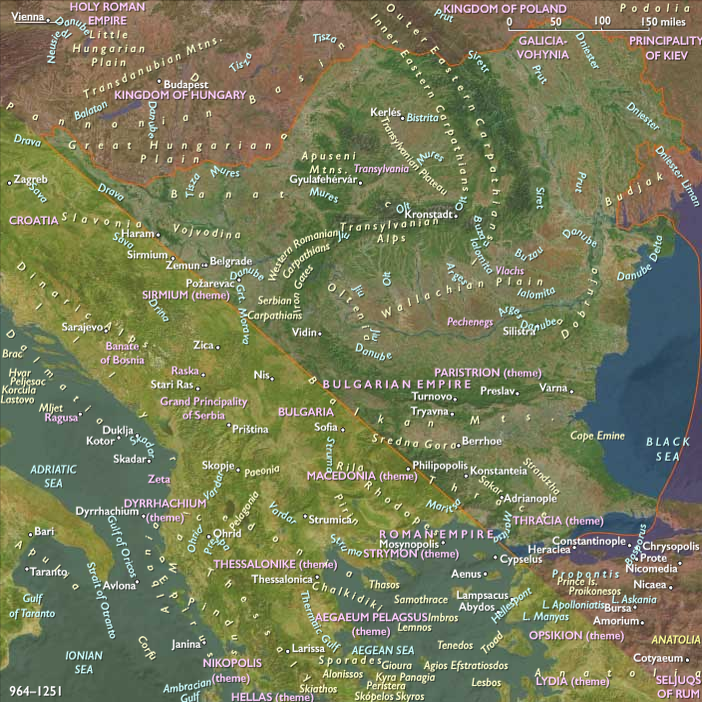
The Magyars, the last of the migrating tribes to establish a state in Europe, had settled in the Pannonian Basin in 896.
A century later their king, Stephen I, had integrated Transylvania into his Hungarian kingdom.
The Hungarians had construct fortresses, founded a Roman Catholic bishopric, and begun proselytizing Transylvania's indigenous people.
There is little doubt that these include some Romanians who remain faithful to the Eastern Orthodox Church after the East-West Schism.
Stephen and his successors recruit foreigners to join the Magyars in settling the region.
The foreign settlers include people from as far off as Flanders; Szeklers, a Magyar ethnic group; and even Teutonic Knights returned from Palestine, who found the town of Brașov before a conflict with the king prompts their departure for the Baltic region in 1225.
Hungary's kings reinforce the foreigners' loyalty by granting them land, commercial privileges, and considerable autonomy.
Nobility is restricted to Roman Catholics and, while some Romanian noblemen convert to the Roman rite to preserve their privileges, most of the Orthodox Romanians become serfs.
Years: 1108 - 1251
Locations
Groups
- Transylvania, region of
- Hungarian people
- Christianity, Chalcedonian
- Flemish people
- Romanians
- Christians, Eastern Orthodox
- Christians, Roman Catholic
- Székelys
- Teutonic Knights of Acre (House of the Hospitalers of Saint Mary of the Teutons in Jerusalem)
Subjects
Regions
Subregions