
William II of Holland: Anti-King and the …
Years: 1253 - 1253
William II of Holland: Anti-King and the Struggle for Zeeland
In 1247, the nineteen-year-old William II, Count of Holland, was elected King of Germany (anti-king) with the backing of Henry II, Duke of Brabant, and the Archbishop of Cologne. His election came in the wake of the excommunication of Emperor Frederick II, as part of the ongoing struggle between the Papacy and the Hohenstaufen dynasty.
To consolidate his rule, William had to secure Aachen, the traditional coronation site of German kings. After a five-month siege, he captured the city in 1248, allowing him to be formally crowned King of Germany. However, his authority remained contested, as many German princes continued to recognize the Hohenstaufen claimant, Conrad IV.
William strengthened his position with a politically advantageous marriage in 1252 to Elizabeth of Brunswick-Lüneburg, daughter of Otto the Child, Duke of Brunswick-Lüneburg. This alliance brought him nominal support from several northern German princes, though his actual power remained limited.
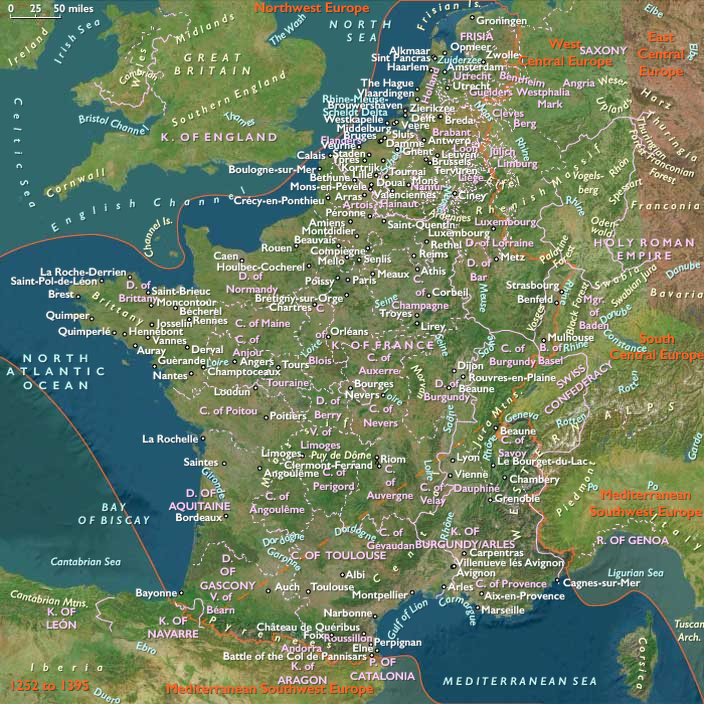
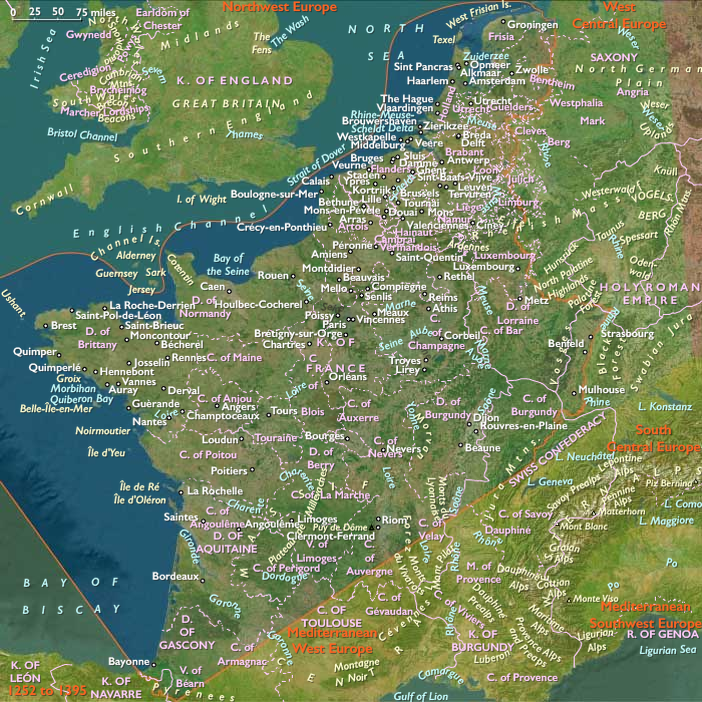
Beyond imperial politics, William was embroiled in a territorial conflict with Flanders over Zeeland, a strategically vital region controlling access to the Scheldt River and North Sea trade routes. As King of Germany, he asserted his authority by declaring himself Count of Zeeland. His claim led to direct military confrontation with the Flemish forces.
In July 1253, at the Battle of Westkapelle, William decisively defeated the Flemish army, strengthening his control over Zeeland. However, the conflict remained unresolved, leading to a ceasefire in 1254.
Despite his military success, William’s reign was precarious. His rule remained largely symbolic in Germany, as he struggled to assert true imperial authority. His eventual death in 1256, while campaigning against the West Frisians, cut short his efforts to consolidate power in both Germany and the Low Countries.
Locations
People
Groups
- Germans
- Flemish people
- Flanders, County of
- Cologne, Electorate of
- Holy Roman Empire
- Holland, County of
- Brabant, Duchy of
Topics
Commodoties
Subjects
Regions
Subregions
Years: 1253 - 1253
Locations
People
Groups
- Germans
- Flemish people
- Flanders, County of
- Cologne, Electorate of
- Holy Roman Empire
- Holland, County of
- Brabant, Duchy of
Topics
Commodoties
Subjects
Regions
Subregions