
Niccolò Paganini's first break comes from an …
Years: 1813 - 1813
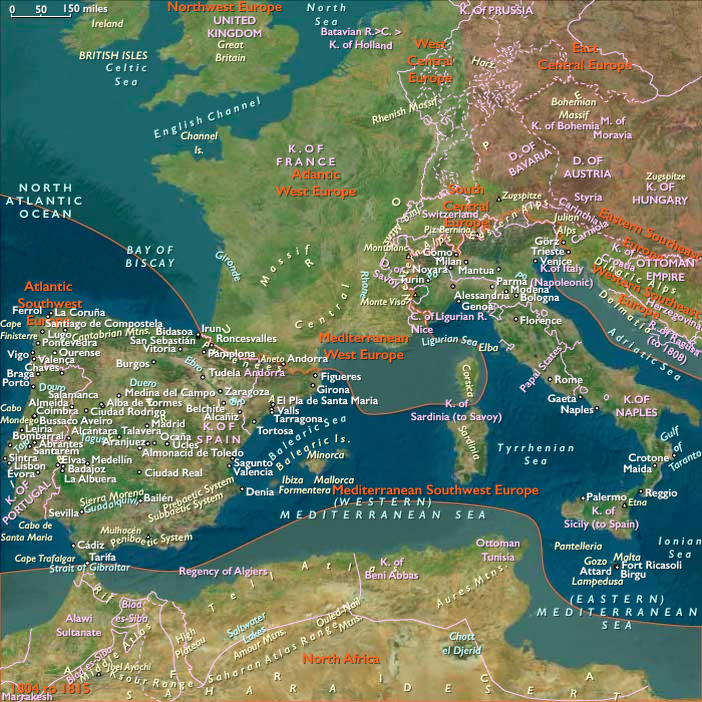
Niccolò Paganini's first break comes from an 1813 concert that takes place at La Scala in Milan.
The concert is a great success, and as a result, Paganini begins to attract the attention of other prominent, albeit more conservative, musicians across Europe.
His early encounters with Charles Philippe Lafont and Louis Spohr create intense rivalry.
His concert activities, however, will still be limited to Italy for the next few years.
Paganini was born in 1782 Genoa, Italy, the third of the six children of Antonio and Teresa (née Bocciardo) Paganini.
Paganini's father is an unsuccessful trader, but he has managed to supplement his income through playing music on the mandolin.
At the age of five, Paganini had started learning the mandolin from his father, and moved to the violin by the age of seven.
His musical talents were quickly recognized, earning him numerous scholarships for violin lessons.
The young Paganini had studied under various local violinists, including Giovanni Servetto and Giacomo Costa, but his progress had quickly outpaced their abilities.
Paganini and his father had then traveled to Parma to seek further guidance from Alessandro Rolla.
But upon listening to Paganini's playing, Rolla immediately referred him to his own teacher, Ferdinando Paer and, later, Paer's own teacher, Gasparo Ghiretti.
Though Paganini did not stay long with Paer or Ghiretti, the two had considerable influence on his composition style.
The French had invaded northern Italy in March 1796, and Genoa was not spared.
The Paganinis sought refuge in their country property in Romairone, near Bolzaneto.
By 1800, Paganini and his father had traveled to Livorno, where Paganini had played in concerts and his father had resumed his maritime work.
In 1801, Paganini, aged 18 at the time, had won an appointment as first violin of the Republic of Lucca, but a substantial portion of his income came from freelancing.
His fame as a violinist is matched only by his reputation as a gambler and womanizer.
In 1805, Lucca had been annexed by Napoleonic France, and the region was ceded to Napoleon's sister, Elisa Baciocchi.
Paganini had then become a violinist for the Baciocchi court, while giving private lessons to her husband, Felice.
In 1807, Baciocchi had become the Grand Duchess of Tuscany and her court was transferred to Florence.
Paganini was part of the entourage, but, towards the end of 1809, he had left Baciocchi to resume his freelance career.
Paganini had returned to touring in the areas surrounding Parma and Genoa for the past few years,
He is very popular with the local audience, but he is still not very well known in Europe.
Locations
People
Groups
Topics
Subjects
Regions
Subregions
Related Events
Showing 10 events out of 21229 total
Years: 1813 - 1813
Locations
People
Groups
Topics
Subjects
Regions
Subregions