
News of the discovery of the Comet …
Years: 1730 - 1730
January
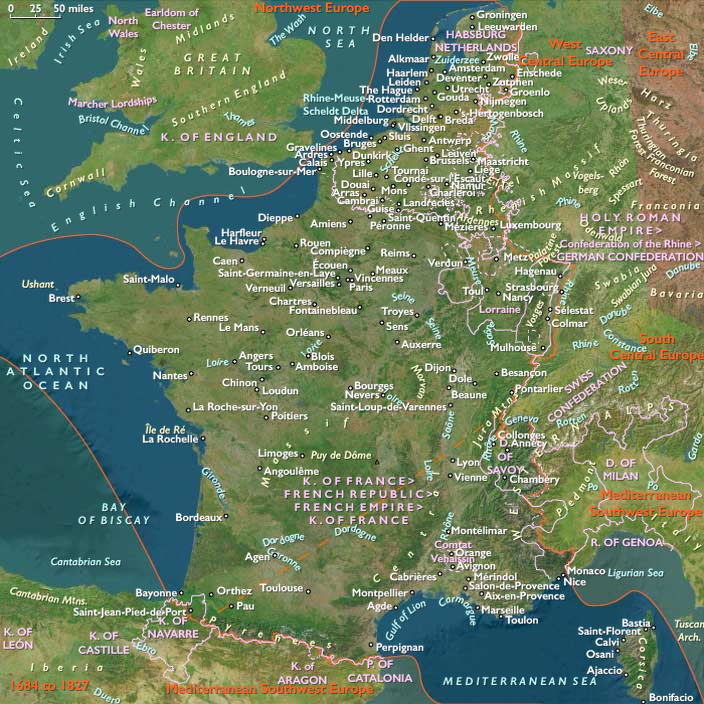
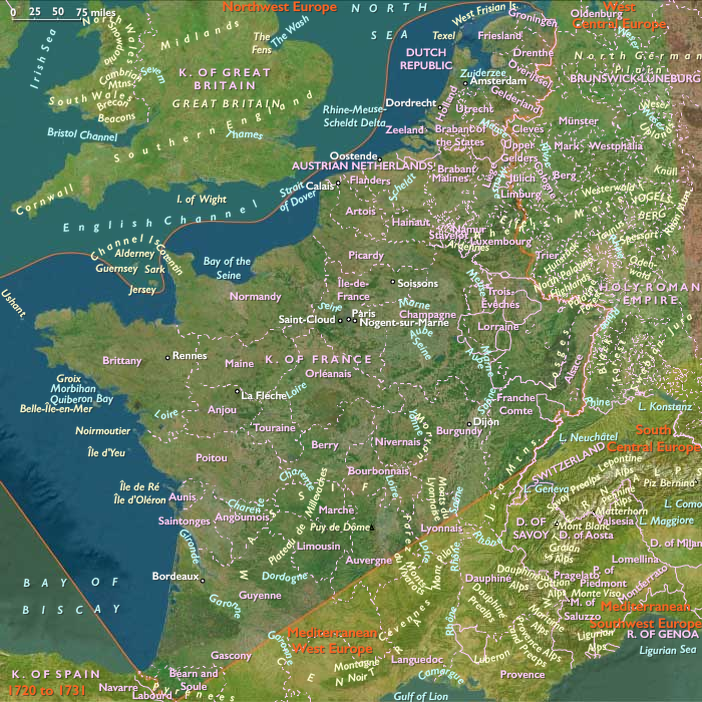
News of the discovery of the Comet of 1729 had been passed to Jacques Cassini in Paris.
He is able to confirm the comet's position, though with extreme surprise at how little it had moved since the first observation nearly a month previously.
Cassini is able to continue observation until January 18, 1730, by which time the comet is located in Vulpecula.
This is an extraordinarily long period for observation of a comet, though it never rises above apparent magnitude 3-4.
The comet’s orbit, later computed by John Russell Hind, shows a perihelion distance (closest approach to the Sun) of 4.05054 AU which is just within the orbit of Jupiter.
However despite this it became visible, although faintly, to the naked eye, and indeed remains visible for six months in total.
This suggests that its absolute magnitude or intrinsic brightness is unusually high, possibly as high as -3.0.
It is therefore likely that the Comet of 1729 was an exceptionally large object, with a cometary nucleus of the order of one hundred kilometers in diameter.
The JPL small-body database only uses three observations, a two-body model, and an assumed epoch to compute the orbit of this parabolic comet.
Locations
People
Groups
Commodoties
Subjects
Regions
Subregions
Related Events
Showing 10 events out of 27675 total
Years: 1730 - 1730
January
Locations
People
Groups
Commodoties
Subjects
Regions
Subregions