
The Petit Trianon is built on the …
Years: 1767 - 1767
The Petit Trianon is built on the site of a botanical garden developed about a decade earlier by Louis XV, within the grounds of the Grand Trianon, Louis XIV's retreat from the Palace of Versailles to the southeast.
It is designed by Ange-Jacques Gabriel by the order of Louis XV for his long-term mistress, Madame de Pompadour, and is constructed between 1762 and 1768.
Madame de Pompadour dies four years before its completion, and the Petit Trianon will subsequently be occupied by her successor, Madame du Barry.
The château of the Petit Trianon is a celebrated example of the transition from the Rococo style of the earlier part of the eighteenth century, to the more sober and refined Neoclassical style of the 1760s and onward.
Essentially an exercise on a cube, the Petit Trianon attracts interest by virtue of its four facades, each thoughtfully designed according to that part of the estate it would face.
The Corinthian order predominates, with two detached and two semi-detached pillars on the side of the formal French garden, and pilasters facing both the courtyard and the area once occupied by Louis XV's greenhouses.
Overlooking the former botanical garden of the king, the remaining facade is left bare.
The subtle use of steps compensates for the differences in level of the château's inclined location.
It is designed by Ange-Jacques Gabriel by the order of Louis XV for his long-term mistress, Madame de Pompadour, and is constructed between 1762 and 1768.
Madame de Pompadour dies four years before its completion, and the Petit Trianon will subsequently be occupied by her successor, Madame du Barry.
The château of the Petit Trianon is a celebrated example of the transition from the Rococo style of the earlier part of the eighteenth century, to the more sober and refined Neoclassical style of the 1760s and onward.
Essentially an exercise on a cube, the Petit Trianon attracts interest by virtue of its four facades, each thoughtfully designed according to that part of the estate it would face.
The Corinthian order predominates, with two detached and two semi-detached pillars on the side of the formal French garden, and pilasters facing both the courtyard and the area once occupied by Louis XV's greenhouses.
Overlooking the former botanical garden of the king, the remaining facade is left bare.
The subtle use of steps compensates for the differences in level of the château's inclined location.
Locations
People
- Ange-Jacques Gabriel
- Louis XV of France
- Louis XVI of France
- Madame de Pompadour
- Madame du Barry
- Marie Antoinette
Groups
Topics
Subjects
Regions
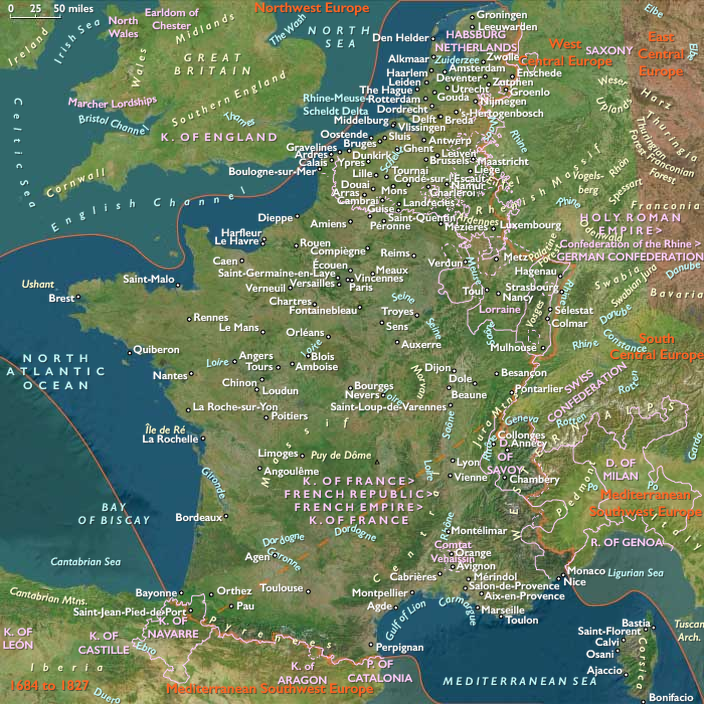
Subregions
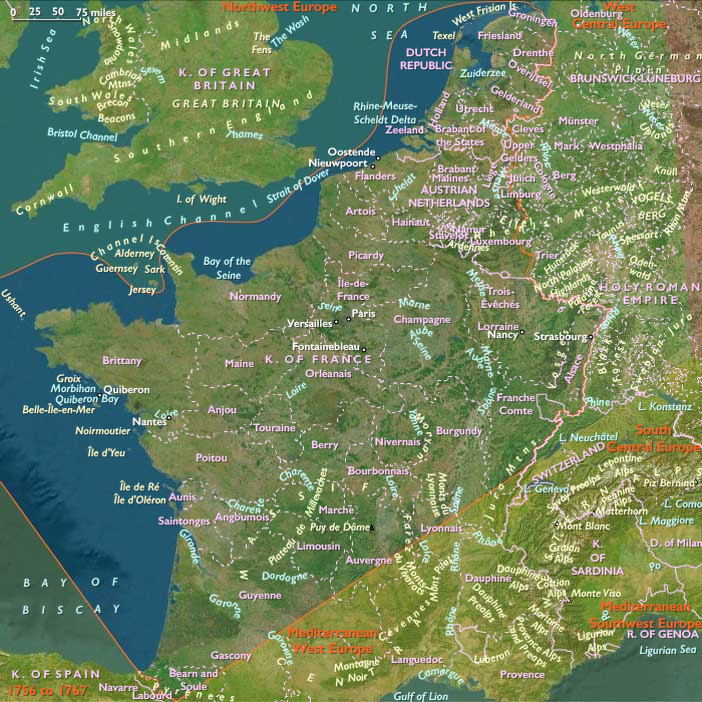
Related Events
Showing 10 events out of 26141 total
Years: 1767 - 1767
Locations
People
- Ange-Jacques Gabriel
- Louis XV of France
- Louis XVI of France
- Madame de Pompadour
- Madame du Barry
- Marie Antoinette
Groups
Topics
Subjects
Regions
Subregions