New Zealand’s Liberal party is elected to …
Years: 1890 - 1890
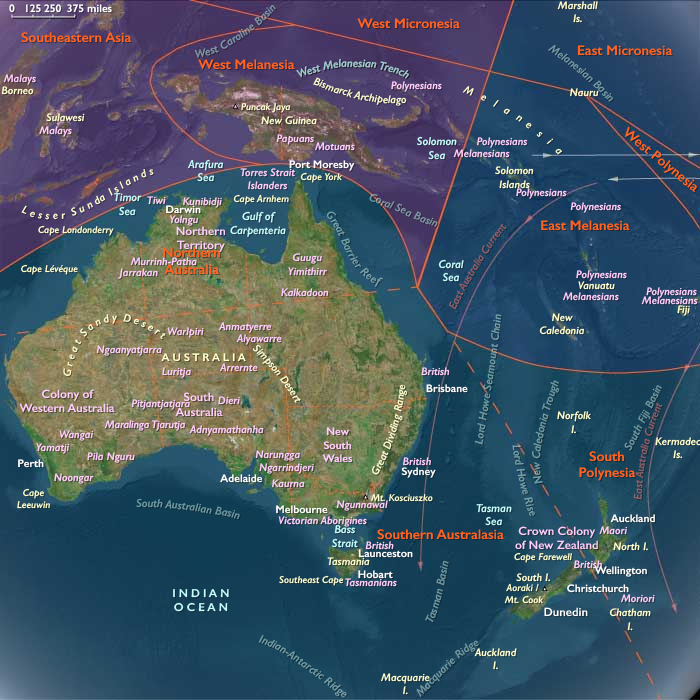
New Zealand’s Liberal party is elected to majority control in 1890.
Locations
Groups
Subjects
Regions
Subregions
Related Events
Filter results
Showing 10 events out of 9935 total
Washington State University is established by the Washington Legislature on March 28, 1890, less than five months after statehood as a land-grant college created under the Morrill Act, signed into law by President Abraham Lincoln in 1862.
For the government, the stated mission of land-grant colleges is to teach practical disciplines “related to agriculture and the mechanic arts” for the nation's industrial and working classes had been supplemented by the Hatch Act of 1887, which called for the establishment of federally-supported agriculture experiment stations.
In light of this goal, the Washington legislature passes an act for the creation of the Agricultural College, Experiment Station and School of Science of the State of Washington and is then signed into law by the Governor, Elisha P. Ferry.
However, a second act of legislature will expand the school educational mission to include general arts and sciences.
The university and the experiment station will aid enterprise by improving farm management, conducting research, and teaching the skills needed to be better farmers.
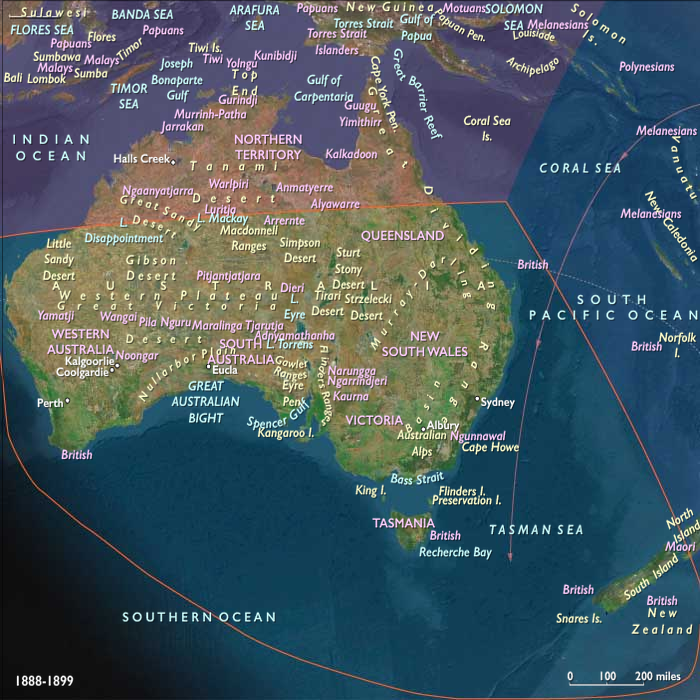
Western Australia becomes a state in 1890.
Ahad Ha'am's deep mistrust of the gentile world informs the cultural Zionism he espouses.
He rejects Herzl's notion that the nations of the world will encourage Jews to move and establish a Jewish state.
He believes that only through Jewish self-reliance and careful preparation will the Zionist enterprise succeed.
Ahad Ha'am's concept of a vanguard cultural elite establishing a foothold in Palestine will prove quixotic, but his idea of piecemeal settlement in Palestine and the establishment of a Zionist infrastructure will become an integral part of the Zionist movement.
Edvard Munch soon outgrows the prevailing naturalist aesthetic in Kristiania, partly as a result of his assimilation of French Impressionism after a trip to Paris in 1889 and his contact from about 1890 with the work of Paul Gauguin and Henri de Toulouse-Lautrec.
In some of his paintings from this period he adopts the Impressionists' open brushstrokes, but Gauguin's use of the bounding line proves more congenial to him, as is the Synthetist artists' ambition to go beyond the depiction of external nature and give form to an inner vision.
His friend the Danish poet Emanuel Goldstein introduces him to French Decadent Symbolist poetry during this period, which helps him formulate a new philosophy of art, imbued with a pantheistic conception of sexuality.
Hibbat Ziyyon (later Hovevei Ziyyon [”Lovers of Zion”]) has been crippled by lack of funds, but with the backing of Baron Edmond James de Rothschild it had eventually established a few colonies in Palestine and in 1890, founds the Society for the Support of Jewish Agriculturists and Handicraftsmen in Syria and Palestine.
Leon Pinsker, as one of the founders and a chairman of the Hovevei Zion movement, heads this charity organization, known as the Odessa Committee.
Disagreements between various Jewish religious and secular factions, an internal movement crisis and the ban by the Ottoman Empire on Jewish immigration in the 1890s will cause Pinsker to doubt whether Eretz Israel will ever become the solution.
Standard Oil purchases the German-American Petroleum Company, known as Deutsch-Amerikanische Petroleum Gesellschaft, in 1890.
Wilhelm II of Germany opposes Otto von Bismarck's attempt to renew the law outlawing the Social Democratic Party.
Wilhelm forces Bismarck to resign as Chancellor in 1890.
The new emperor allows the Reinsurance Treaty between Germany, Austria-Hungary and Russia to fall apart.
The Reinsurance Treaty, a top secret agreement signed in 1887 between Germany and Russia—only a handful of top officials in Berlin and St. Petersburg know of its existence—is a critical component of German chancellor Otto von Bismarck's extremely complex and ingenious network of alliances and agreements, designed to keep the peace in Europe, and to maintain Germany's economic, diplomatic, and political dominance.
As part of Bismarck's system of "periphery diversion", the treaty, which is highly dependent on Bismarck's personal reputation, provides that each party will remain neutral if the other becomes involved in a war with a third great power, though this will not apply if Germany attacks France or if Russia attacks Austria.
Germany pays for Russian friendship by agreeing to the Russian sphere of influence in Bulgaria and Eastern Rumelia (now part of southern Bulgaria) and by agreeing to support Russian action to keep the Black Sea as its own preserve.
After the dismissal of Bismarck in 1890, his successor Kaiser Wilhelm II feels unable to obtain success in keeping this policy, while the German Foreign Office under Friedrich von Holstein has already prepared a renunciation toward the Dual Alliance with Austria–Hungary.
When, in 1890, Russia asks for a renewal of the treaty, Germany refuses persistently.
The Kaiser believes his own personal relationship with Tsar Alexander III will be sufficient to ensure further genial diplomatic ties and feels that maintaining a close bond with Russia would act to the detriment of his aims to attract Britain into the German sphere.
Like the ongoing Austro-Russian conflict, the Anglo-Russian relations too are strained at this point due to the gaining influence of Russia in the Balkans and their aims to open up the Straits of the Dardanelles, which would threaten British colonial interests in the Middle East.

Those of Prince Alexander’s supporters who remain in power use the failure of Russia and the other great powers to recognize Ferdinand as rightful prince of Bulgaria as a weapon against the policies of Ferdinand and Stambolov.
A widespread plot against the government is discovered in 1890.
As before, the basis of the plot is dissatisfaction with Stambolov's refusal to intercede with the Turks on behalf of Macedonian independence.
In a masterful diplomatic stroke, Stambolov represents the insurrection to the Turks as an example of potential chaos that can be avoided by minor concessions.
Fearing the Balkan instability that would follow an overthrow of Ferdinand, the Turks then cede three major Macedonian dioceses to the Bulgarian exarchate.
Stambolov thus gains solid church support and an overwhelming victory in the 1890 election, which legitimizes his government among all Bulgarian factions and reduces the threat of radical plots.
'Abd Allah, allowed to return to Riyadh, had been named governor of the city in 1889 but died in the same year, leaving his weakened realm to his youngest brother, 'Abd ar-Rahman, who is soon embroiled in hostilities with the Rashidis.