
Filters:
The VOC had in 1619 seized Jayakerta …
Years: 1540 - 1683
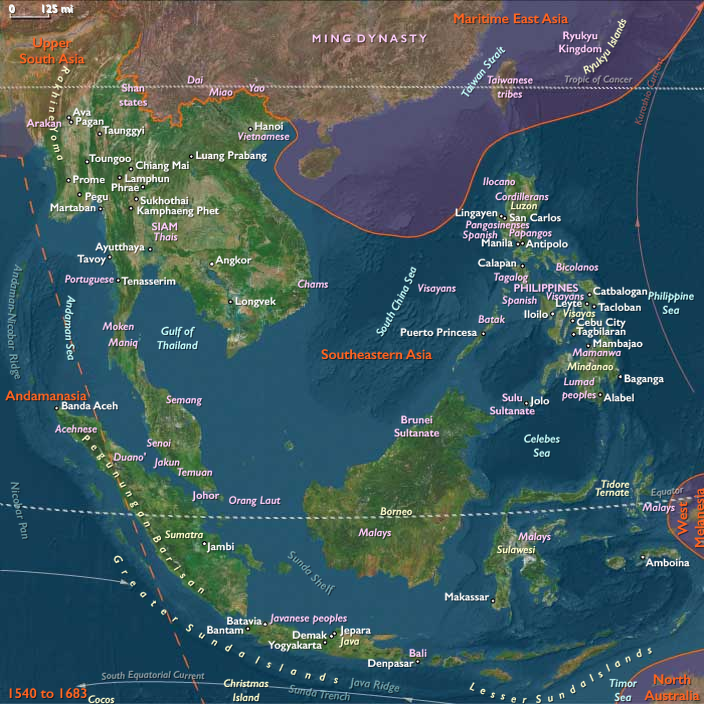
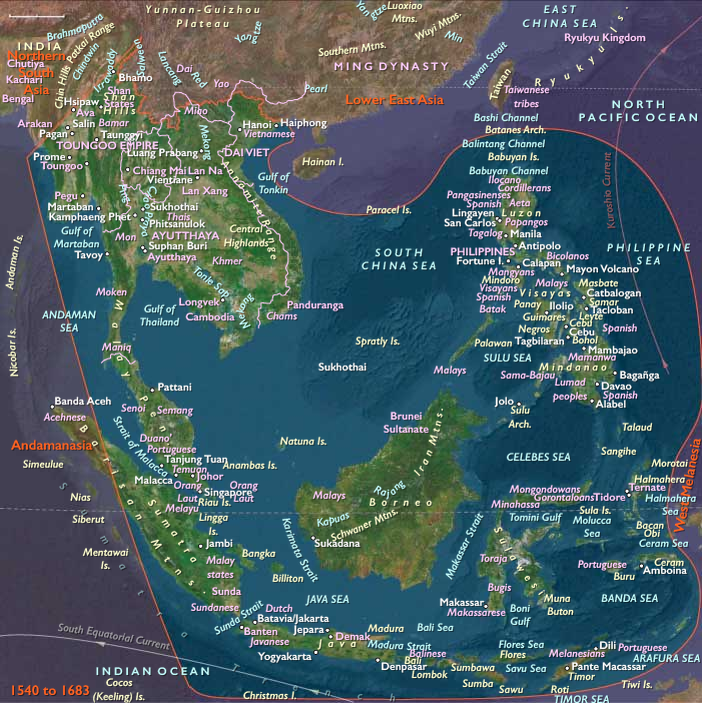
The VOC had in 1619 seized Jayakerta (Sunda Kelapa), a small but well-protected west Javanese port it had originally contracted from a disgruntled vassal of the sultanate of Banten, renaming it Batavia, forerunner of today's Jakarta.
The resolute Governor General Jan Pieterszoon Coen (in office 1619-23 and 1627-29) had conceived of this port as a kind of fulcrum of the company's far-flung Asian enterprise, and he defends it vigorously against both Banten (allied briefly with England's East India Company) and, in 1628-29, the powerful land and sea forces of the expanding central Javanese state that had taken the name of Mataram, after the ninth-century kingdom.
Mataram's ruler, Sultan Agung (r. 1613-46), is Java's greatest warrior king since Kertanagara nearly four centuries earlier.
Using iron force and a keen sense of traditional diplomatic opportunities, Sultan Agung assembles a realm that consists of all of Java and Madura (including the powerful kingdom of Surabaya) except Banten in the far west and the Hindu-Buddhist kingdom of Blambangan in the far east.
Sukadana and Banjarmasin on Kalimantan also fall under his sway.
He is not, however, able to dislodge the VOC, and after the failed campaign of 1628-29 he appears to have accepted the Dutch presence as a minor irritant.
Contemporaneous Javanese historical works treat the company more as a potential ally than as a serious threat, a view that will persist among many in court circles for another century or more.
And, indeed, at the time the VOC is neither interested in nor capable of tackling the full force of Mataram, which, despite the destruction and political tensions wrought by nearly forty years of expansion, remains a formidable military power.
The company sees itself as a maritime power, a rival for the control of produce and trade rather than territory, and it seeks stable conditions for its activities rather than upheaval.
The resolute Governor General Jan Pieterszoon Coen (in office 1619-23 and 1627-29) had conceived of this port as a kind of fulcrum of the company's far-flung Asian enterprise, and he defends it vigorously against both Banten (allied briefly with England's East India Company) and, in 1628-29, the powerful land and sea forces of the expanding central Javanese state that had taken the name of Mataram, after the ninth-century kingdom.
Mataram's ruler, Sultan Agung (r. 1613-46), is Java's greatest warrior king since Kertanagara nearly four centuries earlier.
Using iron force and a keen sense of traditional diplomatic opportunities, Sultan Agung assembles a realm that consists of all of Java and Madura (including the powerful kingdom of Surabaya) except Banten in the far west and the Hindu-Buddhist kingdom of Blambangan in the far east.
Sukadana and Banjarmasin on Kalimantan also fall under his sway.
He is not, however, able to dislodge the VOC, and after the failed campaign of 1628-29 he appears to have accepted the Dutch presence as a minor irritant.
Contemporaneous Javanese historical works treat the company more as a potential ally than as a serious threat, a view that will persist among many in court circles for another century or more.
And, indeed, at the time the VOC is neither interested in nor capable of tackling the full force of Mataram, which, despite the destruction and political tensions wrought by nearly forty years of expansion, remains a formidable military power.
The company sees itself as a maritime power, a rival for the control of produce and trade rather than territory, and it seeks stable conditions for its activities rather than upheaval.
Locations
People
Groups
- Bugis
- Hinduism
- Buddhism
- Indian people
- Malays, Ethnic
- Javanese people
- Acehnese people
- Osing people
- Dutch people
- Islam
- Bali, Kingdom of
- English people
- Tidore, Sultanate of
- Aceh, or Atjeh, Sultanate
- Blambangan, Kingdom of
- Ternate, Sultanate of
- Balinese
- Makassar people
- Banjarmasin, Sultanate of
- Banten Sultanate
- Mataram, Sultanate of
- Netherlands, United Provinces of the (Dutch Republic)
- East India Company, British (The Company of Merchants of London Trading into the East Indies)
- Dutch East India Company in Indonesia
- Dutch East India Company (Vereenigde Oostindische Compagnie or VOC in Dutch, literally "United East Indies Company")
- England, (Stuart) Kingdom of
Topics
Commodoties
Subjects
Regions
Subregions
Years: 1540 - 1683
Locations
People
Groups
- Bugis
- Hinduism
- Buddhism
- Indian people
- Malays, Ethnic
- Javanese people
- Acehnese people
- Osing people
- Dutch people
- Islam
- Bali, Kingdom of
- English people
- Tidore, Sultanate of
- Aceh, or Atjeh, Sultanate
- Blambangan, Kingdom of
- Ternate, Sultanate of
- Balinese
- Makassar people
- Banjarmasin, Sultanate of
- Banten Sultanate
- Mataram, Sultanate of
- Netherlands, United Provinces of the (Dutch Republic)
- East India Company, British (The Company of Merchants of London Trading into the East Indies)
- Dutch East India Company in Indonesia
- Dutch East India Company (Vereenigde Oostindische Compagnie or VOC in Dutch, literally "United East Indies Company")
- England, (Stuart) Kingdom of
Topics
Commodoties
Subjects
Regions
Subregions