
Neuschwanstein Castle (German: lit. "new swanstone"), a …
Years: 1866 - 1866
Neuschwanstein Castle (German: lit. "new swanstone"), a Romanesque Revival palace on a rugged hill above the village of Hohenschwangau near Füssen in southwest Bavaria, Germany, had been commissioned by Ludwig II of Bavaria as a retreat and as an homage to Richard Wagner.
Ludwig had paid for the palace out of his personal fortune and extensive borrowing, not with Bavarian public funds.
Designed as the romantic ideal of a knight's castle, the effect of the Neuschwanstein ensemble is highly theatrical, both externally and internally.
The palace had been intended as a personal refuge for the reclusive king, but it is opened to the paying public immediately after his death in 1886.
In the one hundred and twenty-five years since its opening, over sixty million people have visited Neuschwanstein Castle.
More than thirteen hundred thousand people visit annually, with up to six thousand per day in the summer.
The palace has appeared prominently in several movies and was the inspiration for Disneyland's Sleeping Beauty Castle and later, similar structures.
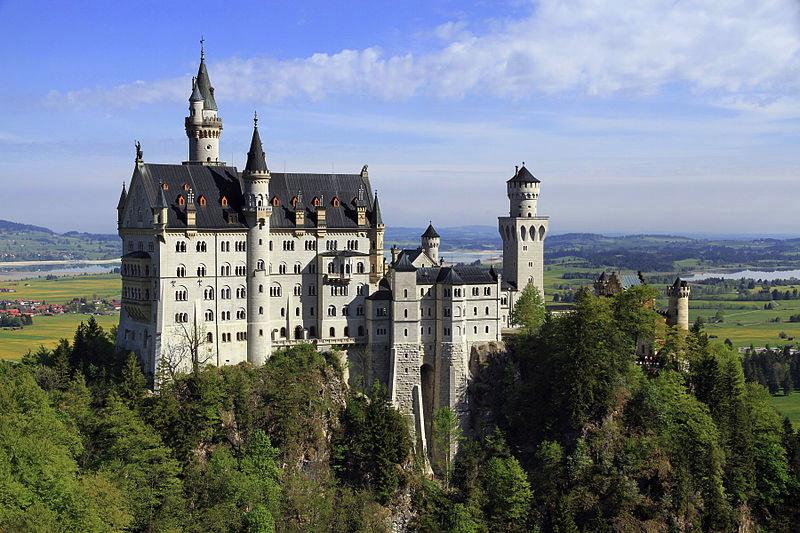
Neuschwanstein Castle, Bavaria, Germany (Image produced 2 May 2011 by Ximonic, Simo Räsänen (post-processing) & Tauno Räsänen (photograph))
Locations
People
Groups
Topics
Subjects
Regions
Subregions
Related Events
Showing 10 events out of 13367 total
Years: 1866 - 1866
Neuschwanstein Castle, Bavaria, Germany (Image produced 2 May 2011 by Ximonic, Simo Räsänen (post-processing) & Tauno Räsänen (photograph))
Locations
People
Groups
Topics
Subjects
Regions
Subregions