
Nero's adviser, Burrus, dies in 6. …
Years: 62 - 62
Nero's adviser, Burrus, dies in 6.
Additionally, Seneca is again faced with embezzlement charges, and asks Nero for permission to retire from public affairs.
Nero divorces and banished Octavia on grounds of infertility, leaving him free to marry the pregnant Poppaea.
After public protests, Nero is forced to allow Octavia to return from exile, but she is executed shortly after her return.
Accusations of treason being plotted against Nero and the Senate first appear in 62.
The Senate rules that Antistius, a praetor, should be put to death for speaking ill of Nero at a party.
Later, Nero orders the exile of Fabricius Veiento, who had slandered the Senate in a book.
Tacitus writes that the roots of the conspiracy led by Gaius Calpurnius Piso began in this year.
Piso leverages senatorial anger with the emperor Nero to gain power.
Already there is talk among those of senatorial rank, in the nobility, and among the equites that Nero is ruining Rome.
For the first eight years of Nero's rule of the Roman Empire, Burrus and Nero's former tutor Seneca have helped maintain a stable government.
Burrus had acquiesced to Nero's murder of Agrippina the Younger but had nevertheless lost his influence over Nero.
He dies in 62, some say from poison.
Gaius Ofonius Tigellinus, a native of Agrigentum, of humble origin and possibly of Greek descent, replaces Burrus as Praetorian prefect.
Banished in 39, during the reign of Caligula, he had been accused of adultery with Agrippina the Younger and Julia Livilla, the two surviving sisters of the Roman Emperor.
He was recalled by Claudius in 41.
Having inherited a fortune, he had bought land in Apulia and Calabria and devoted himself to breeding racehorses.
In this manner he gained the favor of Nero, whom he aids and abets in his vices and cruelties.
In 62, after rumors that Plautus is in negotiations with the eastern general Gnaeus Domitius Corbulo over rebellion, Plautus is executed by Nero.
When his head is given to Nero by a freedman, Nero mockingly notes how frightening the long nose of Plautus was.
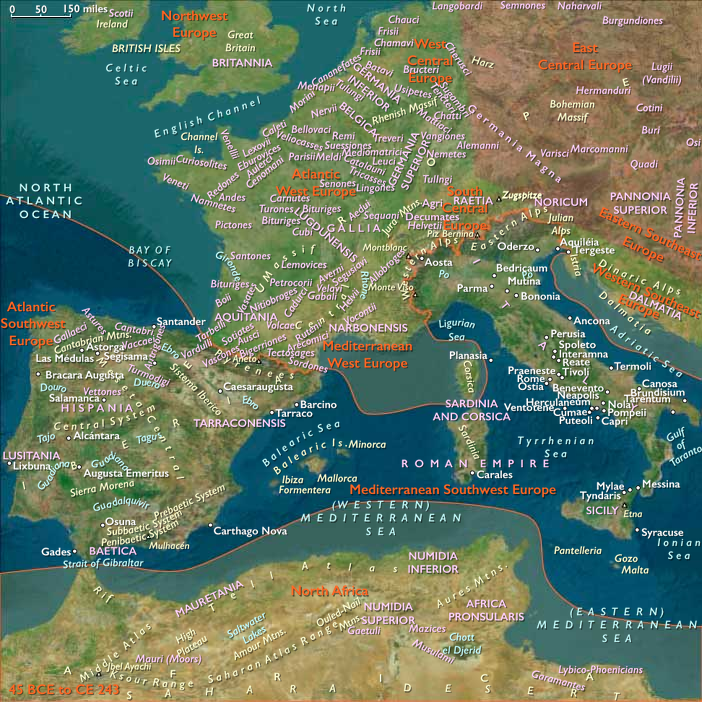
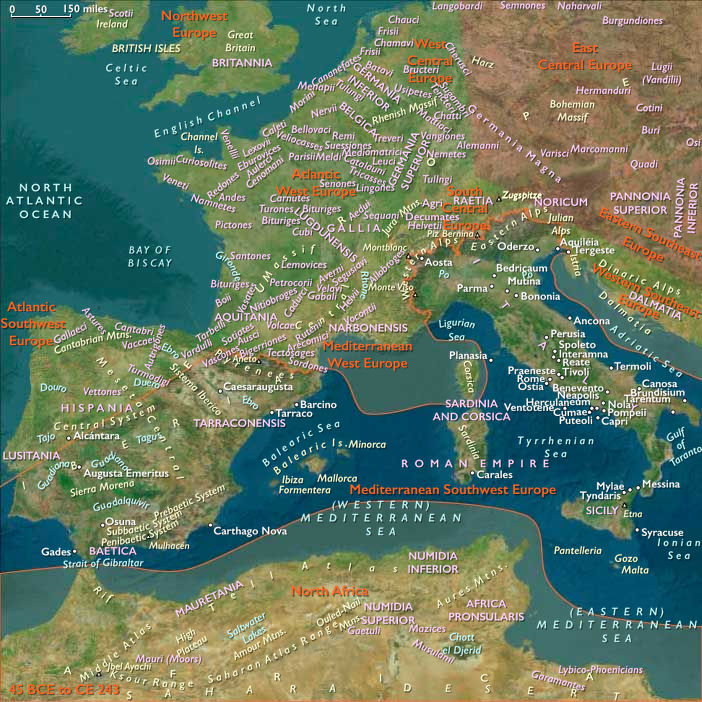
At the same time, Nero's cousin, Faustus Cornelius Sulla Felix (the second husband of Claudia Antonia, daughter of Claudius), is murdered in Gaul.
Tigellinus had sent assassins to murder Faustus, who was slain at dinner, five days after Tigellinus had given his orders.
Faustus' head was transported to the palace.
At times, Nero will tease Faustus's head, due to his baldness and grayness to his hair.
This unfortunate Sulla Felix is Nero's cousin and his brother-in-law (both men once being married to sisters).
Tacitus described Faustus' character as "timid and despicable" and also stated that Faustus was incapable of attempting to plot against Nero.
Locations
People
Groups
Topics
Commodoties
Subjects
Regions
Subregions
Years: 62 - 62
Locations
People
Groups
Topics
Commodoties
Subjects
Regions
Subregions