
The initial British campaign is an attack …
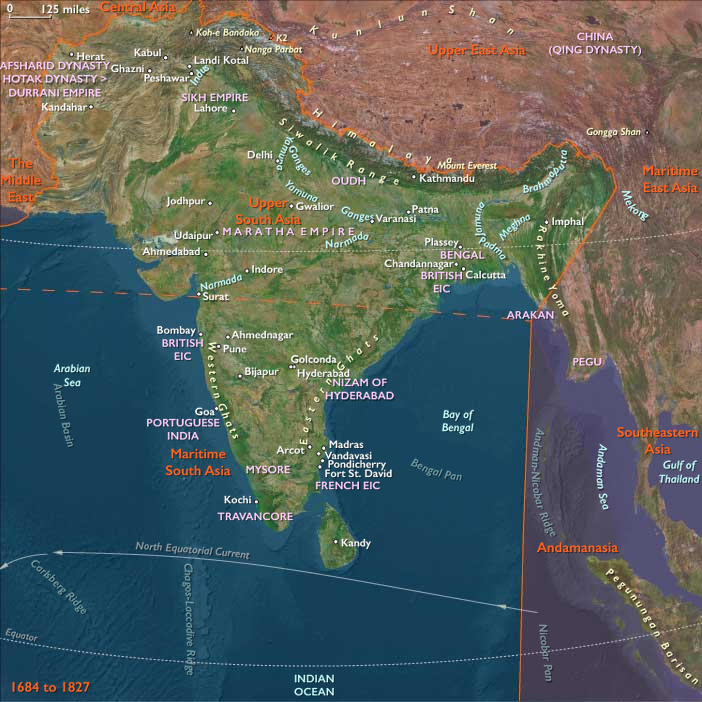
Years: 1684 - 1827
The initial British campaign is an attack on two fronts.
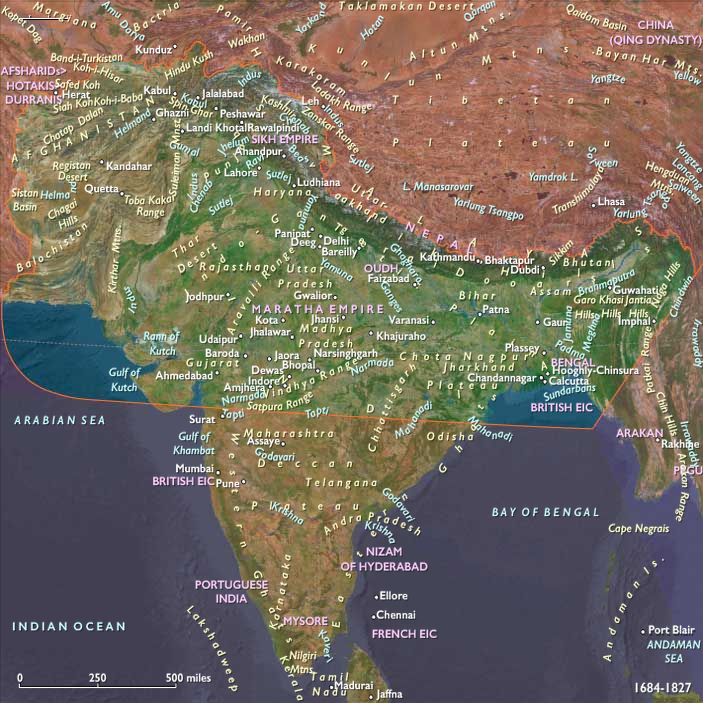
In the eastern theater, two columns totaling about ten thousand troops are supposed to coordinate their attacks in the Makwanpur-Palpa area, but poor leadership and unfamiliarity with hill warfare caused the early collapse of these campaigns.
In the west, another ten thousand troops in two columns are to converge on the forces of Amar Singh Thapa.
One of the western columns fails miserably, but the main force under Ochterlony outmaneuvers the Nepalese army and defeats General Thapa on May 9, 1815, leading to the complete loss of Kumaon by Nepal.
The Nepalese forces have already proved their abilities, so the British East India Company takes no chances the next year, marshaling thirty-five thousand men and more than one hundred artillery pieces under Ochterlony for a thrust toward Makwanpur.
Simultaneous operations by the chogyal, or king, of Sikkim are driving the Nepalese army from the east.
Major battles before Makwanpur in late February 1816 result in the final defeat of Nepalese forces by early March.
Diplomats have already begun preparing a peace treaty, which reached Ochterlony on March 5.
Locations
People
Groups
- Kirat people
- Khas peoples
- Indian people
- Newar people
- Sikhs
- Gurkha
- Sikkim, Kingdom of
- Mughal Empire (Delhi)
- Britain, Kingdom of Great
- East India Company, British (United Company of Merchants of England Trading to the East Indies)
- India, East India Company rule in
- Bengal Presidency
- Nepal, Shah Kingdom of
- Sikh Empire
- Punjab, Sikh Kingdom of the
Topics
Subjects
Regions
Subregions
Years: 1684 - 1827
Locations
People
Groups
- Kirat people
- Khas peoples
- Indian people
- Newar people
- Sikhs
- Gurkha
- Sikkim, Kingdom of
- Mughal Empire (Delhi)
- Britain, Kingdom of Great
- East India Company, British (United Company of Merchants of England Trading to the East Indies)
- India, East India Company rule in
- Bengal Presidency
- Nepal, Shah Kingdom of
- Sikh Empire
- Punjab, Sikh Kingdom of the
Topics
Subjects
Regions
Subregions