
Iamblichus, born at Chalcis (modern Quinnesrin) in …
Years: 325 - 325
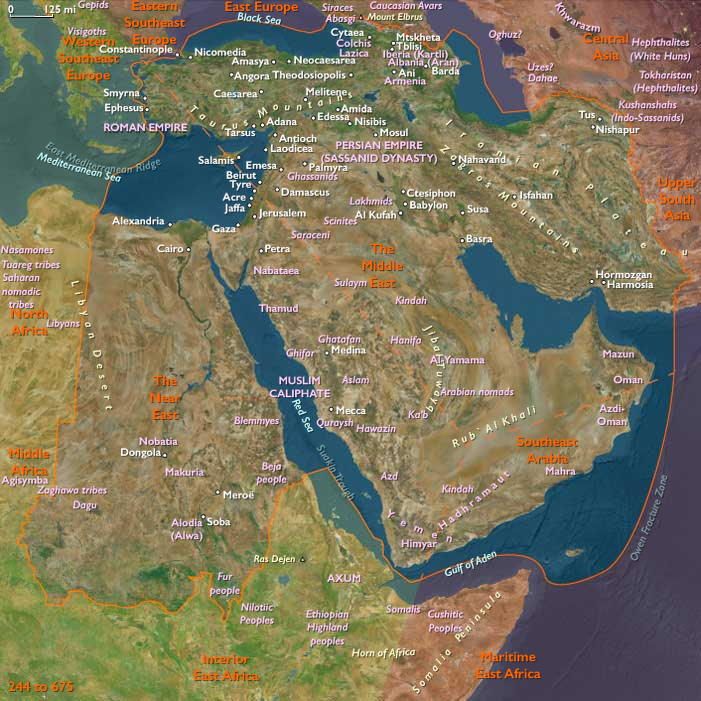
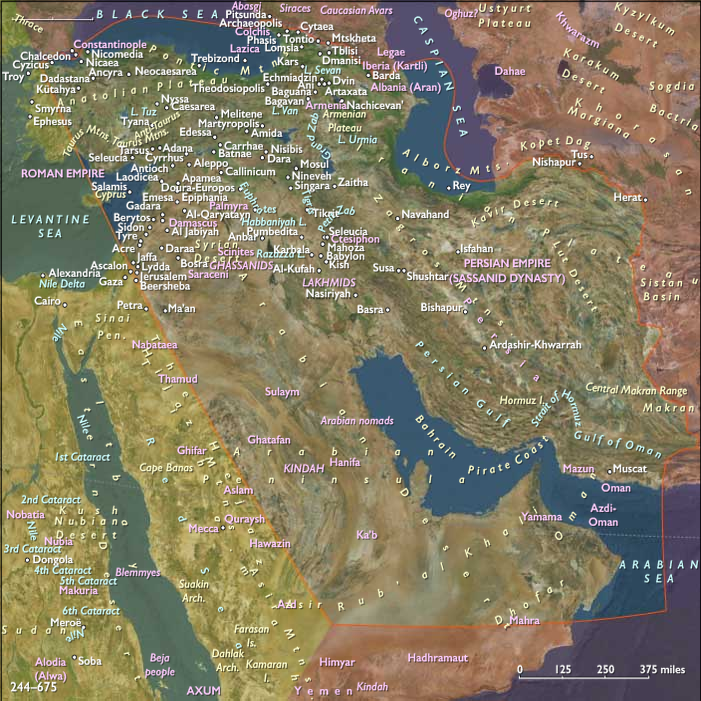
Iamblichus, born at Chalcis (modern Quinnesrin) in Syria, is the chief representative of Assyrian Neoplatonism, though his influence has spread over much of the known world.
Having founded his own school at Apameia (near Antioch) in about 304, he has interpreted Plotinus' and Porphyry's systems of emanations in a mystic and religious sense, rather than an aesthetic or logical sense.
Breaking from Plotinus in his espousal of a level of "ideal numbers" between The One and Mind, Iamblichus has added many levels of Being, arranged triadically, with two extremes and a connecting mean, each level inhabited by gods or demons who mediate between higher and lower orders.
Differing also from Porphyry, Iamblichus maintains that proper religious observance (theurgy) is a virtue higher than that of the intellect and one that can sway the benevolent gods and repel the evil demons.
Called "the divine" by Neoplatonists, Iamblichus dies in 325, leaving several works including Life of Pythagoras; a treatise, On the Egyptian Mysteries; and an essay, The Community of the Mathematical Sciences, as well as (lost) commentaries on Plato and Aristotle.
Locations
People
Groups
- Syria Palæstina, Roman province of (Judea, Samaria, and Idumea)
- Neoplatonists
- Roman Empire: Constantinian dynasty (Nicomedia)
Topics
Subjects
Regions
Subregions
Related Events
Showing 10 events out of 59920 total
Years: 325 - 325
Locations
People
Groups
- Syria Palæstina, Roman province of (Judea, Samaria, and Idumea)
- Neoplatonists
- Roman Empire: Constantinian dynasty (Nicomedia)
Topics
Subjects
Regions
Subregions