
Filters:
The Rise of Sheep Husbandry and the …
Years: 3933BCE - 3790BCE
The Rise of Sheep Husbandry and the Introduction of Wool Textiles in the Linear Pottery Culture
As sheep became more common among the Linear Pottery culture (LBK) peoples, their economic role expanded beyond meat and milk production to include the use of wool as a fiber source for textiles. This development marked a significant technological and cultural shift in early Neolithic Europe.
Sheep and the Emergence of Wool Production
- Early domesticated sheep were primarily raised for meat, hides, and possibly milk, but over time, selection for woolly fleece led to the development of wool-producing breeds.
- Wool provided an alternative to plant fibers, such as flax, which had been the dominant textile material in Neolithic Europe.
- The increase in sheep husbandry suggests a growing reliance on livestock-based economies, complementing crop cultivation.
Impact on Textile Production and Society
- Textile production diversified, with woven woolen fabrics eventually becoming widespread in later Neolithic and Chalcolithic cultures.
- Wool had advantages over flax and other plant fibers:
- Warmer and more insulating, suitable for colder climates.
- Easier to dye and process, allowing for greater textile variety.
- Durable and flexible, making it ideal for clothing, blankets, and trade goods.
- The shift toward sheep-based wool production reflects broader economic and technological advances, including loom weaving and improved textile tools.
Legacy of Wool in Early European Societies
- By the Late Neolithic and Chalcolithic periods, wool textiles had become more prominent in Europe, as evidenced by loom weights, spindle whorls, and textile impressions in pottery.
- The increasing role of sheep husbandry set the foundation for later Bronze Age economies, where textile production and trade became highly specialized.
The adoption of wool-producing sheep among the Linear Pottery peoples represents a key step in the evolution of textile technology, contributing to the expansion of more complex agrarian societies in prehistoric Europe.
Topics
Commodoties
Subjects
Regions



Subregions
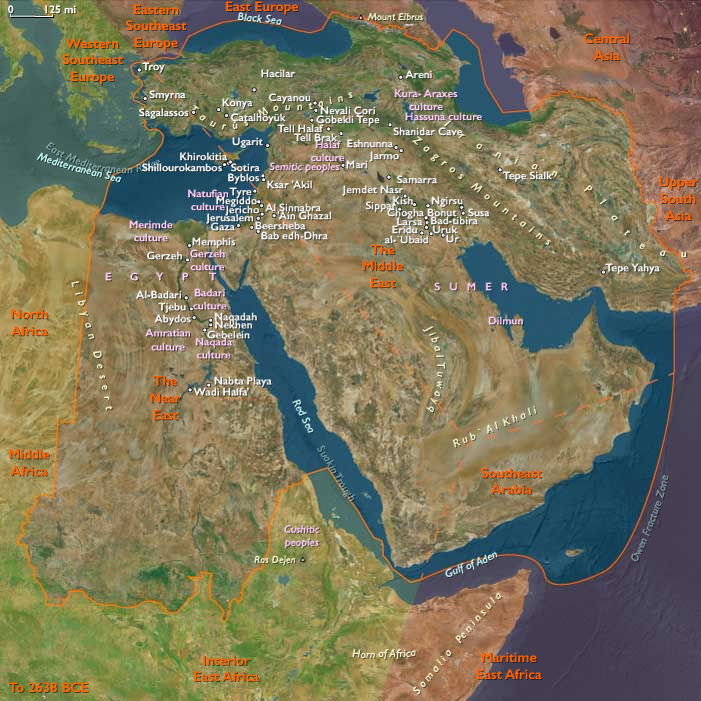
- East Europe
- Northeast Europe
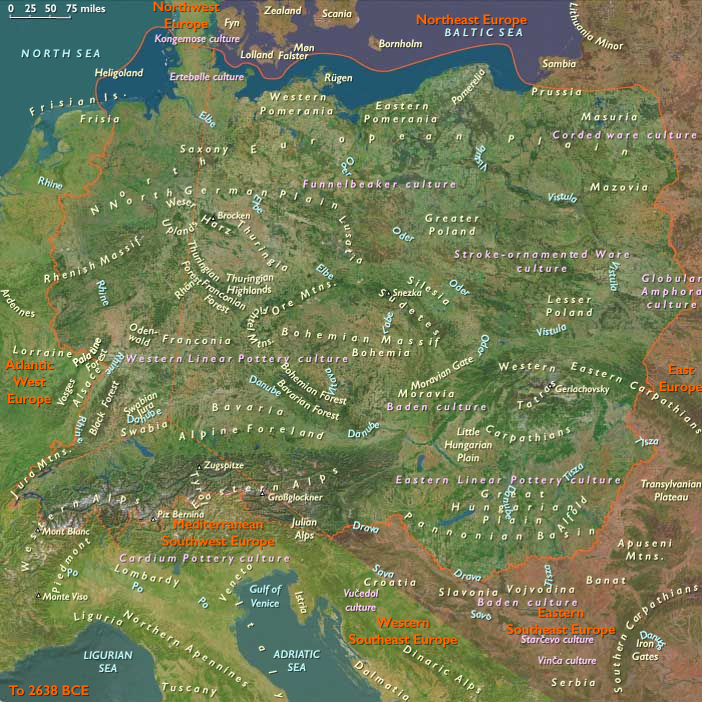
- East Central Europe
- Middle East
- Upper South Asia
- Near East
- Western Southeast Europe
- South Central Europe
- Mediterranean West Europe
- Atlantic West Europe
- West Central Europe



Years: 3933BCE - 3790BCE
Topics
Commodoties
Subjects
Regions
Subregions
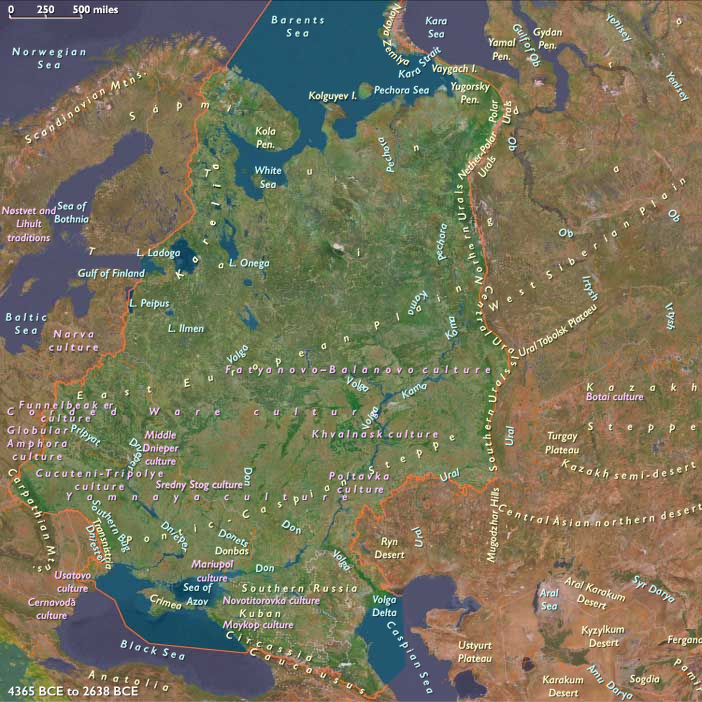
- East Europe
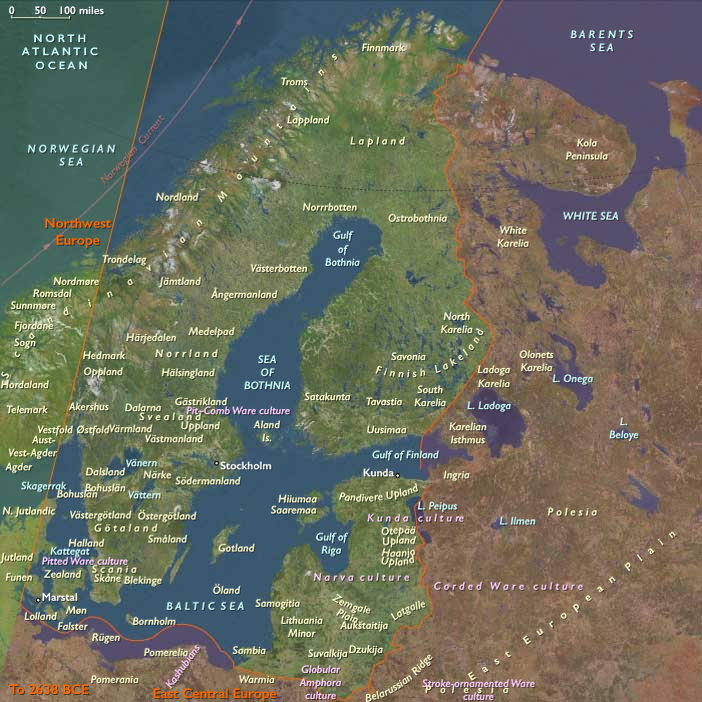
- Northeast Europe
- East Central Europe
- Middle East
- Upper South Asia
- Near East
- Western Southeast Europe
- South Central Europe
- Mediterranean West Europe
- Atlantic West Europe
- West Central Europe