
Neolithic culture thrives along the Danube at …
Years: 5517BCE - 5374BCE
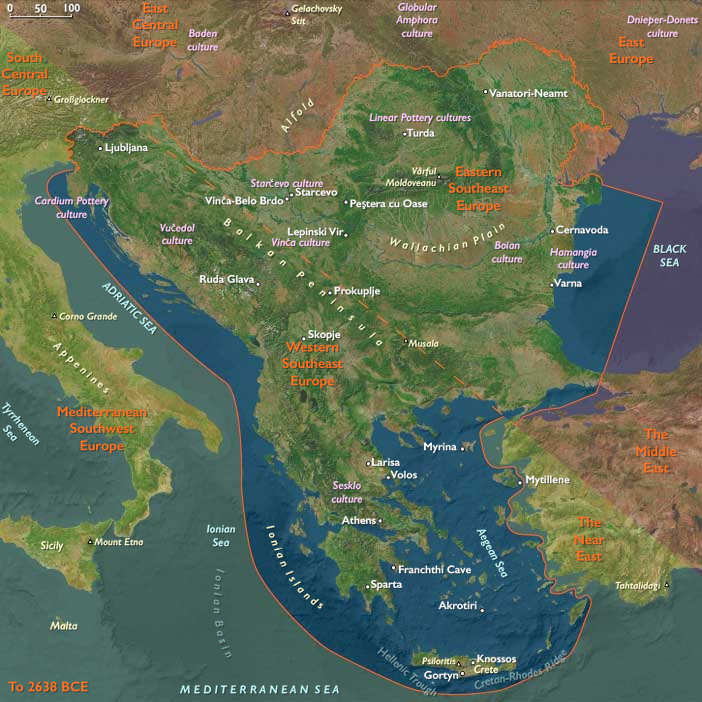
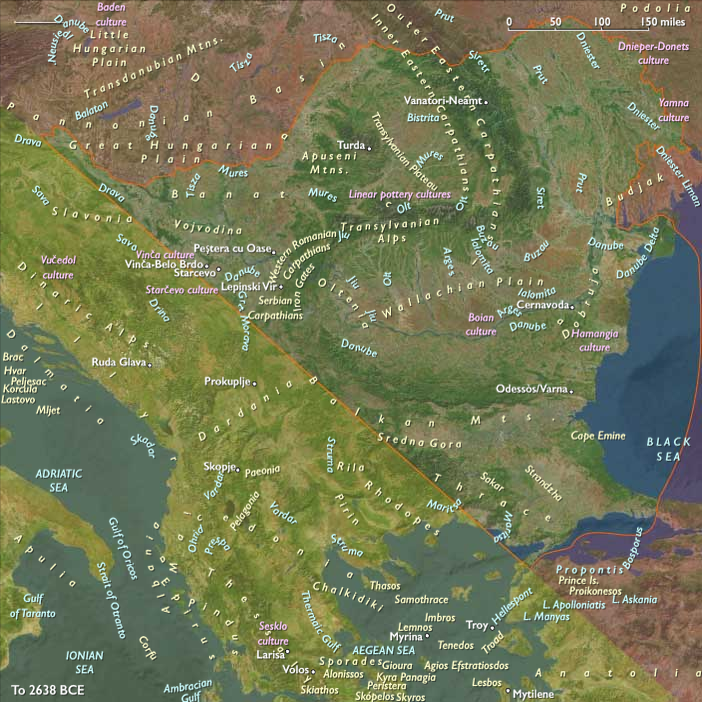
Neolithic culture thrives along the Danube at such sites as Starcevo, located on the north bank of the Danube in Vojvodina, opposite Belgrade, Serbia.
It represents the earliest settled farming society in the area, although hunting and gathering still provided a significant portion of the inhabitants' diet.
The pottery is usually coarse but finer fluted and painted vessels later emerged.
A type of bone spatula, perhaps for scooping flour, is a distinctive artifact.
The Korös is a similar culture in Hungary named after the River Korös with a closely related culture that also used footed vessels but fewer painted ones.
Both have given their names to the wider culture of the region in that period.
Parallel and closely related cultures also include the Karanovo culture in Bulgaria, Cris in Romania and the pre-Sesklo in Greece.
Locations
Groups
Topics
Commodoties
Subjects
Regions
Subregions
Related Events
Showing 10 events out of 69026 total
Years: 5517BCE - 5374BCE
Locations
Groups
Topics
Commodoties
Subjects
Regions
Subregions