
Near East (CE 4–15): Roman Consolidation and …
Years: 4 - 15
Near East (CE 4–15): Roman Consolidation and Jewish Unrest
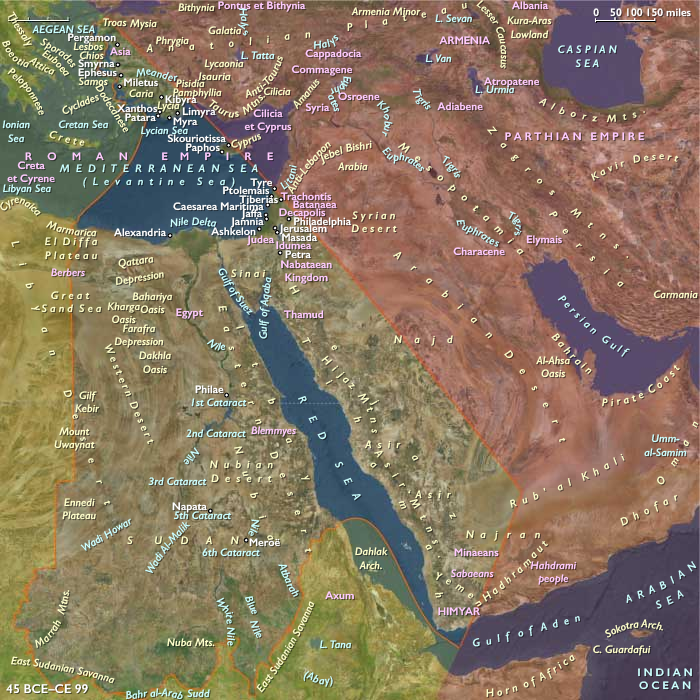
With the division of Herod the Great’s kingdom following his death, Judea, Samaria, and Idumea continue under the contentious rule of his son, Herod Archelaus. Archelaus, however, proves unpopular and ineffective, marked by increasing civil unrest and tension with Rome. In CE 6, Augustus Caesar decisively intervenes, removing Archelaus from power and annexing his territories into the Roman province of Iudaea under direct governance by Roman prefects.
This direct Roman control provokes widespread Jewish resentment, manifesting in increased political and religious tensions. The census conducted in Judea for taxation and administrative purposes—ordered by Publius Sulpicius Quirinius, the governor of Syria—further inflames local dissatisfaction, sparking a notable rebellion led by Judas of Galilee around CE 6. Though suppressed by Roman forces, this rebellion sows the seeds of lasting unrest and gives rise to the Zealot movement, an ardently anti-Roman faction that will profoundly shape Jewish-Roman relations in subsequent decades.
Meanwhile, other regions once ruled by Herod's heirs, such as Galilee and Perea under Herod Antipas, and the northeastern tetrarchy under Philip the Tetrarch, experience relatively stable rule under their respective client kings, who maintain local autonomy under Roman patronage.
Egypt, now firmly embedded as a vital Roman province, continues to provide essential grain supplies, maintaining the stability of Rome's burgeoning empire. Alexandria thrives culturally and economically, a vibrant center of Hellenistic learning integrated into Rome's administrative structure.
Legacy of the Era
The period CE 4 to 15 significantly reshapes Roman-Jewish relations, establishing direct Roman governance in Judea and laying the groundwork for persistent political and religious tensions. The unrest and emerging zealotry set the stage for the major rebellions of the mid-first century, profoundly influencing the cultural and political dynamics of the region.
People
- Augustus
- Herod Antipas
- Herod Archelaus
- Herod the Great
- Judas of Galilee
- Philip the Tetrarch
- Publius Sulpicius Quirinius
Groups
Topics
Commodoties
Subjects
Regions

Subregions
Years: 4 - 15
People
- Augustus
- Herod Antipas
- Herod Archelaus
- Herod the Great
- Judas of Galilee
- Philip the Tetrarch
- Publius Sulpicius Quirinius
Groups
Topics
Commodoties
Subjects
Regions
Subregions