
Near East (964 – 1107 CE): Fatimid …
Years: 964 - 1107
Near East (964 – 1107 CE): Fatimid Cairo, Tyre’s Fatimid Haven, Nubian Kingdoms, and the Ionian–Seljuk Frontier
Geographic and Environmental Context
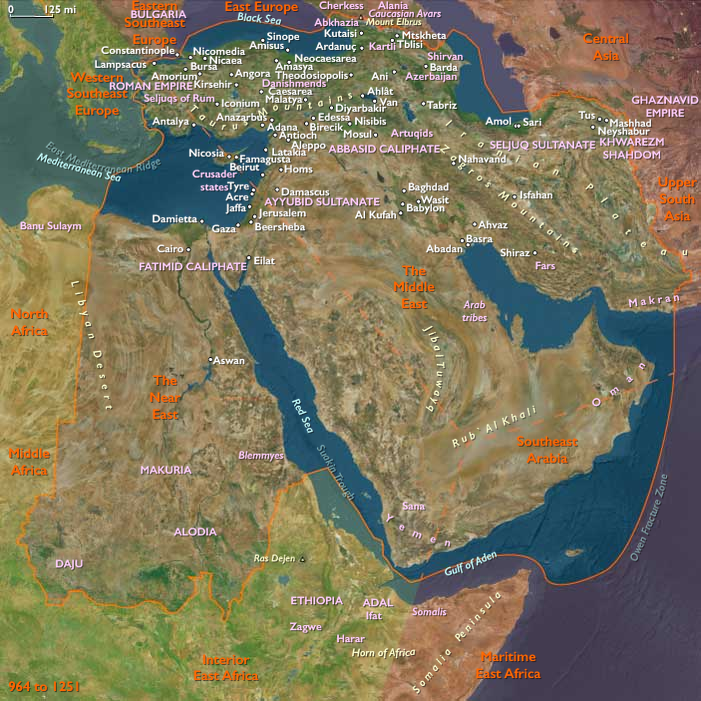
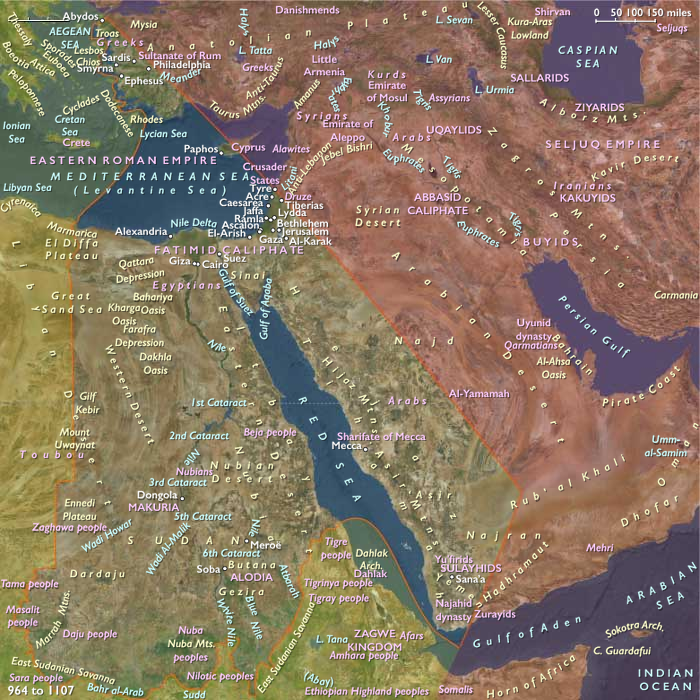
The Near East includes Israel, Egypt, Sudan, western Saudi Arabia, western Yemen, most of Jordan, southwestern Cyprus, and western Turkey (Aeolia, Ionia, Doria, Lydia, Caria, Lycia, and the Troad), plus Tyre in extreme southwest Lebanon.
-
Anchors: the Nile Valley (Egypt–Sudan), the southern Levant (with Tyre as the Near East’s only Levantine polity), the Hejaz and western Yemen along Red Sea corridors, southwestern Cyprus, and the western Anatolian littoral (Aegean coast).
Climate and Environmental Shifts
-
The Medieval Warm Period (c. 950–1250) modestly lengthened growing seasons in the Nile Delta and western Anatolian valleys.
-
Nile flood variability climaxed in the 1060s crisis, stressing Egyptian agriculture until canal repairs and policy reforms restored stability.
-
Red Sea monsoon windows underpinned regular sailing between Yemen and Egypt.
Societies and Political Developments
-
Egypt (Ikhshidids → Fatimids):
-
Semi-autonomous Ikhshidid rule ended when the Fatimids conquered Egypt in 969, founding Cairo and the mosque–university of al-Azhar (970).
-
Fatimid viziers (notably Badr al-Jamālī in the 1070s) restructured army and finance after mid-11th-century turmoil and the flood-famine crisis.
-
-
Sudan (Nubia):
-
Christian Makuria and Alodia remained independent; the Baqt treaty with Egypt regulated peace and trade across the frontier.
-
-
Southern Levant (Tyre):
-
Tyre prospered as a Fatimid-aligned port and glass/textile center. After the First Crusade (1099) seized Jerusalem and coastal towns, Tyre remained Fatimid through 1107, serving as Egypt’s last reliable Levantine outlet in this age.
-
-
Western Arabia (Hejaz):
-
Mecca and Medina recognized caliphal prestige; practical control fluctuated, but Hajj caravans and Red Sea traffic tied the Hejaz to Cairo.
-
-
Western Yemen:
-
Dynasties cycled along the Tihāma and highlands: Ziyadids (819–1018), Yufirids (847–997), Najahids (1022–1158) in Zabid, and the Fatimid-aligned Sulayhids (1047–1138).
-
Queen Arwa al-Sulayḥī (from 1067) governed from Jibla, extending administrative reach and facilitating Red Sea commerce under Fatimid daʿwa.
-
-
Southwestern Cyprus:
-
Reconquered and held by Byzantium from 965, operating as a naval and provisioning theme.
-
-
Western Anatolia (Aegean littoral):
-
A Byzantine coastal heartland until the Seljuk victory at Manzikert (1071). Turkish emirates penetrated the interior; the Smyrna-based naval strongman Tzachas (1080s) challenged Byzantine control at sea.
-
Alexios I Komnenos (r. 1081–1118) launched coastal recovery; by 1107, Ionian and Carian cities remained contested but largely within the Byzantine maritime system.
-
Economy and Trade
-
Egypt: Nile agrarian surpluses (grain, flax, sugar) fed Cairo, a clearinghouse linking Maghreb, Levant, Yemen, and India.
-
Red Sea–Indian Ocean: western Yemen’s ports (Zabid, Aden) funneled spices, aromatics, textiles, and Indian goods north to Aydhab and Qūṣ for Cairo.
-
Tyre: exported fine glassware, dyed textiles, and acted as a brokerage point between Fatimid Egypt, Byzantium, and, after 1099, nearby Crusader markets.
-
Western Anatolia: shipped timber, wine, oil, and manufactures through Ionian harbors; war intermittently disrupted inland routes, not the coastal arteries.
-
Nubia: exchanged ivory, gold, and slaves for Egyptian textiles and grain.
-
Monetary flows: Fatimid dīnārs dominated eastern Mediterranean gold circuits; Byzantine nomismata and copper issues circulated in Anatolia and Cyprus.
Subsistence and Technology
-
Irrigation: Fatimid administrators dredged canals and repaired barrages after the 1060s failures; in Yemen, terrace farming and sāqiya wheels sustained highland fields.
-
Education & law: Cairo’s al-Azhar matured into a major institution; madrasas proliferated under Seljuks in Iraq/Iran and influenced Syria.
-
Military–fiscal: Fatimids balanced mercenary corps with land grants; Seljuks institutionalized iqṭāʿ to fund cavalry.
-
Shipbuilding: Red Sea and eastern Mediterranean fleets used lateen-rigged merchantmen and galleys for convoy and patrol.
Movement and Interaction Corridors
-
Nile corridor: moved grain and people between Upper Egypt, Fustat–Cairo, and Alexandria.
-
Red Sea lanes: Aden/Zabid ⇄ Aydhab/Qūṣ ⇄ Cairo, integrating Yemen–India traffic with the Nile economy.
-
Aegean coast: Byzantine and, episodically, Turkish squadrons contested Smyrna–Ephesus approaches; southwestern Cyprus supported patrols.
-
Pilgrimage routes: Hajj caravans crossed the Hejaz; Coptic and Nubian pilgrimages linked Upper Egypt and Nubia.
-
Tyre’s roadstead: remained Egypt’s Levantine lifeline after 1099.
Belief and Symbolism
-
Fatimid Ismaʿilism: Cairo’s court ceremonial and missionary daʿwa articulated caliphal legitimacy.
-
Sunni revival: in the Seljuk sphere, Nizām al-Mulk’s network of madrasas bolstered Sunni jurisprudence.
-
Christianity: Nubian kingdoms maintained church networks; Byzantine Orthodoxy thrived in western Anatolia and Cyprus.
-
Judaism: Egyptian and Tyrian Jewish communities animated long-distance trade and scholarship.
Adaptation and Resilience
-
Hydraulic recovery in Egypt after the 1060s famine restored food security and state revenue.
-
Maritime redundancy: when inland Levant fell to Crusaders (1099), Tyre’s continued Fatimid allegiance preserved a critical outlet for Egyptian trade to the Aegean.
-
Frontier flexibility: Byzantium shifted from interior defense to coastal control; Seljuk iqṭāʿ financed cavalry in a volatile interior.
-
Hejaz–Yemen nexus: pilgrimage and monsoon schedules stabilized Red Sea commerce despite political flux.
Long-Term Significance
By 1107 CE, the Near East was a polycentric network:
-
Fatimid Cairo dominated Nile–Red Sea exchange and Islamic learning.
-
Tyre—still Fatimid—served as Egypt’s last Levantine hinge after the First Crusade.
-
Nubia endured as a Christian buffer south of Egypt.
-
Western Anatolia stood as a militarized shore between Byzantine recovery and Seljuk advance, with southwestern Cyprus securing sea-lanes.
-
Western Yemen under Sulayhid guidance (and Queen Arwa) kept the incense-and-India trade flowing to Egypt.
These strands bound Nile, Levant, Hejaz–Yemen, Cyprus, and Ionian Anatolia into a resilient system—one that would frame 12th-century struggles among Fatimids, Crusaders, and Seljuks, even as commerce and learning continued to knit the region together.
People
Groups
- Egyptians
- Nubians
- Arab people
- Jews
- Makuria, Kingdom of
- Christianity, Chalcedonian
- Coptic Orthodox Church of Alexandria
- Alodia, or Alwa (Subah, or Soba), Kingdom of
- Islam
- Filastin (Caliphal Palestine)
- Egypt in the Middle Ages
- Muslims, Sunni
- Muslims, Shi'a
- Syrian people
- Ismailism
- Ziyadid dynasty
- Yufirids
- Roman Empire, Eastern: Macedonian dynasty
- Qarmatians
- Abbasid Caliphate (Baghdad)
- Idrisid Caliphate (Fatimid dynasty overlordship)
- Ikhshidid dynasty
- Ziyarid dynasty
- Ifriqiya, Fatimid Caliphate of
- Amalfi, Duchy of
- Fatimid Caliphate
- Pisa, (first) Republic of
- Najahids
- Seljuq Empire (Neyshabur)
- Seljuq Empire (Rayy)
- Yemen, Sulaihid State of
- Seljuq Empire (Isfahan)
- Roman Empire, Eastern: Non-dynastic and Comnenid dynasty
- Roman Empire, Eastern: Doukid dynasty
- Filastin (Seljuq Palestine)
- Amalfi, Duchy of
- Damascus, Seljuq Emirate of
- Aleppo, Seljuq Emirate of
- Roman Empire, Eastern: Komnenos dynasty, restored
- Jerusalem, Latin Kingdom of
Topics
- Medieval Warm Period (MWP) or Medieval Climate Optimum
- Mustansirite Hardship
- Manzikert, Battle of
- Crusade, First
- Crusades, The
Commodoties
- Glass
- Domestic animals
- Oils, gums, resins, and waxes
- Grains and produce
- Textiles
- Strategic metals
- Salt
- Sweeteners
- Beer, wine, and spirits
- Lumber
- Money
- Aroma compounds
- Spices
Subjects
Regions
Subregions
Years: 964 - 1107
People
Groups
- Egyptians
- Nubians
- Arab people
- Jews
- Makuria, Kingdom of
- Christianity, Chalcedonian
- Coptic Orthodox Church of Alexandria
- Alodia, or Alwa (Subah, or Soba), Kingdom of
- Islam
- Filastin (Caliphal Palestine)
- Egypt in the Middle Ages
- Muslims, Sunni
- Muslims, Shi'a
- Syrian people
- Ismailism
- Ziyadid dynasty
- Yufirids
- Roman Empire, Eastern: Macedonian dynasty
- Qarmatians
- Abbasid Caliphate (Baghdad)
- Idrisid Caliphate (Fatimid dynasty overlordship)
- Ikhshidid dynasty
- Ziyarid dynasty
- Ifriqiya, Fatimid Caliphate of
- Amalfi, Duchy of
- Fatimid Caliphate
- Pisa, (first) Republic of
- Najahids
- Seljuq Empire (Neyshabur)
- Seljuq Empire (Rayy)
- Yemen, Sulaihid State of
- Seljuq Empire (Isfahan)
- Roman Empire, Eastern: Non-dynastic and Comnenid dynasty
- Roman Empire, Eastern: Doukid dynasty
- Filastin (Seljuq Palestine)
- Amalfi, Duchy of
- Damascus, Seljuq Emirate of
- Aleppo, Seljuq Emirate of
- Roman Empire, Eastern: Komnenos dynasty, restored
- Jerusalem, Latin Kingdom of
Topics
- Medieval Warm Period (MWP) or Medieval Climate Optimum
- Mustansirite Hardship
- Manzikert, Battle of
- Crusade, First
- Crusades, The
Commodoties
- Glass
- Domestic animals
- Oils, gums, resins, and waxes
- Grains and produce
- Textiles
- Strategic metals
- Salt
- Sweeteners
- Beer, wine, and spirits
- Lumber
- Money
- Aroma compounds
- Spices
Subjects
Regions
Subregions