
Near East (69–58 BCE): Jewish Expansion and …
Years: 69BCE - 58BCE
Near East (69–58 BCE): Jewish Expansion and Roman Ascendancy
Between 69 and 58 BCE, Jewish influence notably expands, both within Palestine and throughout the Diaspora. Scholarly estimates suggest the Jewish population reaches substantial proportions during this era, ranging from around seven hundred thousand to possibly five million in Palestine, with an additional two to five million in the Diaspora. These numbers reflect not only natural population growth but also a significant increase in proselytes to Judaism, drawn by the ethical rigor and spiritual distinctiveness of Jewish practices.
Under Hasmonean rule, particularly since the conquests of John Hyrcanus (134–104 BCE), the region of Edom (Idumea) had been subdued, with its inhabitants compelled to adopt Judaism. The integration of Edomites into Judean society proves successful, and by the reign of Alexander Jannaeus, Edomite figures rise to prominent political positions. Antipater, son of Antipas, governor of Edom, emerges as a pivotal political figure and advisor to Hyrcanus II, forging influential ties with the expanding Roman Republic.
Rome's direct involvement in the region becomes decisive in 63 BCE, when Roman forces under Pompey the Greatintervene in Judean internal conflicts. This Roman intervention marks the effective end of Jewish independence, as Judea becomes subject to Roman oversight, a status from which it does not recover throughout Roman imperial rule.
Legacy of the Era
The period from 69 to 58 BCE signifies a turning point, marked by the considerable growth of the Jewish population and the critical introduction of Roman political dominance. The alliances and accommodations forged during this time decisively shape Judea's subsequent history, laying the foundation for its transformation into a significant, albeit contested, province within the expansive Roman world.
People
Groups
Subjects
Regions
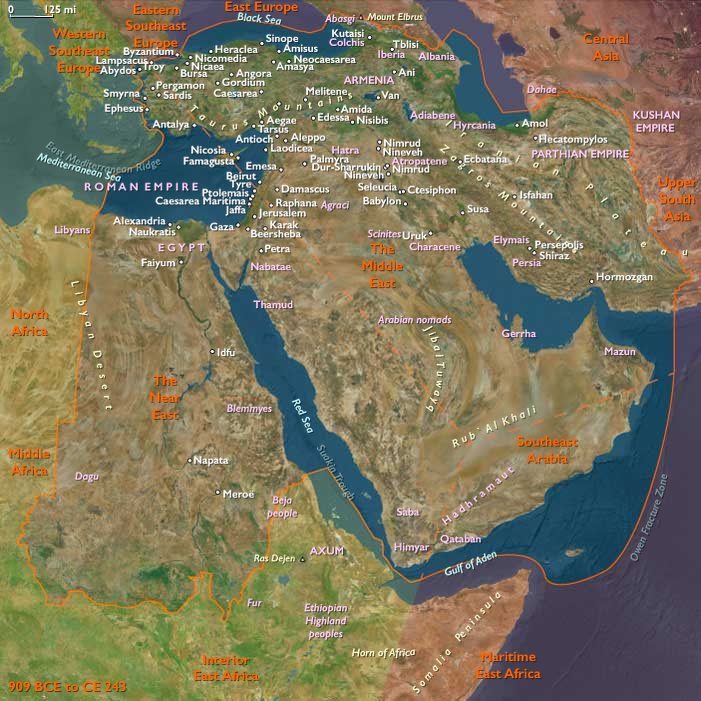
Subregions
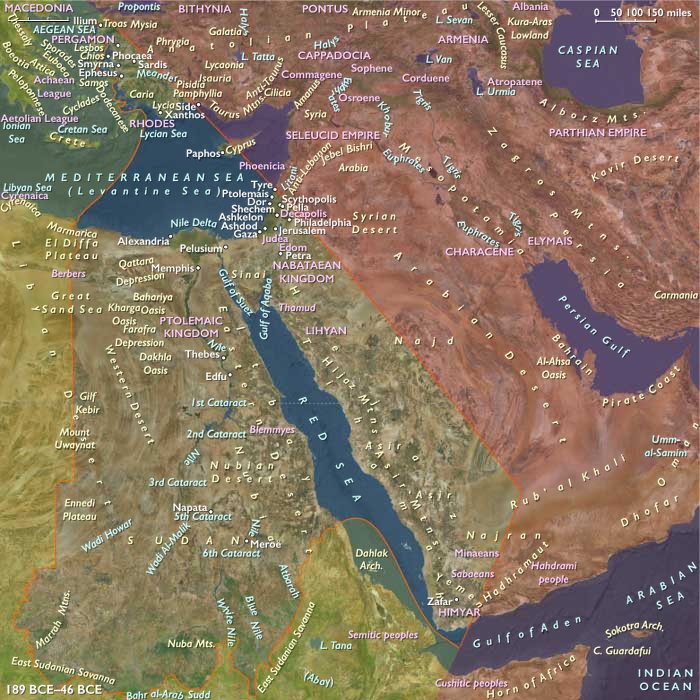
Related Events
Filter results
Showing 10 events out of 62659 total
The Pannonian Boii attested in later sources, contrary to the interpretation of the classical writers, are not simply the remnants of those who had fled from Italy, but rather another division of the tribe, which had settled there much earlier.
The burial rites of the Italian Boii show many similarities with contemporary Bohemia, such as inhumation, which was uncommon with the other Cisalpine Gauls, or the absence of the typically western Celtic torcs.
This makes it much more likely that the Cisalpine Boii had actually originated from Bohemia rather than the other way round.
Having migrated to Italy from north of the Alps, some of the defeated Celts simply moved back to their kinsfolk.
Other parts of the Boii had remained closer to their traditional home, and settled in the Slovak and Hungarian lowlands by the Danube and the Mura, with a center at Bratislava.
Around 60 BCE, they clash with the rising power of the Dacians under their king Burebista and are defeated.
The Middle East: 69–58 BCE
Roman Expansion and the Subjugation of the Caucasus
Between 69 and 58 BCE, Rome continues its assertive expansion into the Near East, notably through General Pompey the Great, who significantly reshapes the region's political landscape following the prolonged Third Mithridatic War (73–63 BCE).
In 65 BCE, Pompey undertakes the Georgian campaign as a direct consequence of Rome's victory in the Mithridatic Wars. Having successfully subdued the Kingdom of Pontus and significantly weakened the Kingdom of Armenia, Pompey directs Roman ambitions toward the strategic kingdoms of the Caucasus. Rome's interests lie particularly in the Caucasian Iberian Kingdom, ruled by King Artag (Artoces), who had supported Pontus against Rome. Pompey's predecessor, Lucius Licinius Lucullus, had conducted earlier military campaigns from 74 to 66 BCE, laying critical groundwork for Pompey's subsequent success.
Pompey's decisive victory against the Armenians and Pontians in 66 BCE forces the resilient Mithridates VI into exile in Colchis. Following this, Roman attention intensifies toward Iberia (Caucasian Iberia) and neighboring Albania. After initial resistance, King Artag eventually capitulates, submitting to Rome by delivering his children as hostages and agreeing to a treaty that reduces Iberia to a vassal status, henceforth becoming a "friend and ally" of Rome.
Pompey next advances towards Colchis, systematically subduing key fortresses and local tribes through a combination of tactical diplomacy and military might. Upon reaching the port of Phasis, Pompey coordinates with the Roman fleet, instructing them to pursue and capture Mithridates VI, effectively neutralizing the threat from this persistent adversary. With the subjugation of these strategic territories completed, Pompey prepares to return triumphantly to Rome, having significantly solidified Roman influence throughout the Near East and the Caucasus region.
This period, therefore, from 69 to 58 BCE, marks a critical phase in the expansion and consolidation of Roman power in the Middle East, dramatically altering the regional balance of power and laying the foundations for sustained Roman hegemony.
Pompey's Georgian campaign, which takes place in 65 BCE, is a consequence of the Mithridatic Wars.
Rome seeks to expand its borders and establish itself as a hegemon in West Asia.
After mostly subjugating the Kingdom of Pontus and the Kingdom of Armenia, the Romans turn to the Caucasian Iberian Kingdom, whose king Artag, or Artoces, is an ally of Pontus.
Roman General Lucullus has led the campaigns from 74 BCE to 66 BCE, when the Roman Senate determines that he is to be succeeded by Pompey.
This same year, Pompey effectively defeats the Armenians and Pontians, with their king Mithridates escaping to Colchis.
After this, Roman attentions became increasingly focused on Iberia and Albania.
Artag eventually submits, gives his children as hostages, and signs a peace, under which the Kingdom of Iberia is to be a friend and ally of the Roman Republic as a vassal.
Pompey next heads for Colchis, subjugating the main fortresses and various local peoples on the way with both cunning diplomacy and the use of force.
He meets up with the Roman Fleet in Phasis and commands them to capture Mithridates, while he returns to Rome.
Rome has gradually incorporated Greek territory into its empire over a period of about two hundred and fifty years.
The Greek and Roman worlds each will change significantly because of the resultant interaction.
The Romans bring order to the region, and their inventive genius will produce lasting monuments.
Among the fragile Hellenistic kingdoms, Macedonia is now a mere province of Rome, Ptolemaic Egypt is a Roman client state, and the formerly mighty Seleucid empire is now confined to the provinces of Syria and eastern Cilicia, and even those are under tenuous control in 64 BCE, when the Romans finally conquer the kingdom.
Proselytes to Judaism, though not constituting a class, have become increasingly numerous both in Palestine and especially in the Diaspora (the Jews living beyond Palestine).
Scholarly estimates of the Jewish population of this age range from seven hundred thousand to five million in Palestine and from two million to five million in the Diaspora, with the prevailing opinion being that about one-tenth of the population of the Mediterranean world at the beginning of the Christian Era was Jewish.
Such numbers represent a considerable increase from previous eras and must have included large numbers of proselytes.
During the time of the Hasmonean ruler John Hyrcanus (134-104 BCE), Judea had conquered Edom (Idumea) and forced the Edomites to convert to Judaism.
The Edomites had been gradually integrated into the Judean nation, and some of them have reached high ranking positions.
In the days of Alexander Jannaeus, an Edomite named Antipas had been appointed governor of Edom.
His son Antipater, father of Herod the Great, is the chief adviser to Hasmonean Hyrcanus II and manages to establish a good relationship with the Roman Republic, who at this time (63 BCE) extends its influence over the region, following the conquest of Syria and intervention in a civil war in Judea.
The Jews soon lose their independence to Rome, never to regain it while the Romans maintain their empire.
Mediterranean Southwest Europe (69–58 BCE): Conspiracy and Political Crisis in the Late Republic
The era 69–58 BCE is characterized by escalating political tensions, a significant conspiracy against the Roman state, and the continuing fragility of Republican governance.
Catilinarian Conspiracy (63 BCE)
The most notable event of this period is the Second Catilinarian Conspiracy, led by the disgruntled senator Lucius Sergius Catilina, known commonly as Catiline. Frustrated by repeated political setbacks, Catiline assembles a diverse coalition, including indebted aristocrats, disaffected veterans, and dissatisfied plebeians. The conspiracy aims to overthrow the existing senatorial elite and redistribute political and economic power.
In 63 BCE, Catiline's plot is dramatically exposed by the renowned orator and consul, Marcus Tullius Cicero, whose powerful denunciations before the Senate (the "Catilinarian Orations") force Catiline to flee Rome. Cicero's actions lead to the arrest and execution of several co-conspirators, effectively quelling the immediate threat but simultaneously deepening political divisions within the Republic.
Political Repercussions
The suppression of the Catilinarian Conspiracy heightens the polarization between the optimates, who support the existing power structure, and the populares, who advocate broader reforms and challenge senatorial dominance. Cicero, initially hailed as a savior of the Republic, later faces criticism and hostility for his severe treatment of Roman citizens without a formal trial.
The lingering tensions from this episode contribute to the ongoing erosion of the Republican framework, setting the stage for the ascendancy of powerful military figures such as Julius Caesar and Pompey.
Cultural and Artistic Developments
Despite political turmoil, Roman culture continues to flourish. Architectural innovations persist, particularly in urban centers, reflecting continued Hellenistic influence and Roman adaptation. The era witnesses ongoing enhancements to public buildings, temples, and monuments, reinforcing Rome's cultural and architectural prestige in the Mediterranean world.
Legacy of the Era
The period 69–58 BCE underscores critical vulnerabilities within the Roman Republic, emphasizing the precarious balance between senatorial authority and popular dissent. The Catilinarian Conspiracy serves as a vivid illustration of internal strife and foreshadows greater upheavals to come, ultimately paving the way for the rise of autocratic rule and the final collapse of Republican governance.
The second Catilinarian conspiracy is a supposed plot, devised by Roman senator Lucius Sergius Catilina, known in English as Catiline, with the help of a group of aristocrats and disaffected veterans, to overthrow the Roman Republic, and in particular the power of the aristocratic Senate.
Cicero’s exposure of the plot in 63 BCE forces Catiline to flee from Rome.
North Africa (69–58 BCE)
Roman Provincial Consolidation, Numidian Stability, Mauretanian Expansion, Cyrenaic Continuity, and Berber Resilience
Roman Administration and Economic Prosperity
Between 69 and 58 BCE, Rome further consolidates its provincial governance of Africa Proconsularis, enhancing administrative efficiency and economic stability. Infrastructure developments, including advanced road networks and agricultural improvements, significantly boost productivity and commercial activity in prominent urban centers such as Utica. The region's deeper integration into Roman economic and administrative systems strengthens North Africa’s position within the broader Mediterranean framework.
Numidia: Stable Governance Under Roman Oversight
Numidia continues to navigate its status under Roman supervision, successfully balancing autonomy with obligations imposed by Rome. During this era, Numidia maintains agricultural productivity and economic activity, contributing robustly to regional trade. Effective governance ensures internal stability and prevents significant disruption, demonstrating Numidia’s adaptability within the expanding Roman provincial system.
Mauretania: Diplomatic Expansion and Economic Growth
Under new leadership following Bocchus I, Mauretania further solidifies diplomatic and commercial ties with Rome, experiencing a period of notable economic growth. The kingdom strategically leverages its geographic position along Mediterranean trade routes, expanding its influence and strengthening its regional economy through increased trade and diplomatic alliances.
Cyrenaica: Continued Economic Prosperity and Cultural Influence
Cyrenaica maintains robust economic health and cultural prominence under stable Ptolemaic rule. The Greek Pentapolis—Cyrene, Barce (Al Marj), Euhesperides (Benghazi), Teuchira (Tukrah), and Apollonia (Susah)—remains prosperous, sustaining vigorous trade in grain, wine, wool, livestock, and the esteemed medicinal herb Silphium.
Cyrene continues its celebrated tradition as a vibrant center of learning, attracting prominent scholars, philosophers, and medical experts from across the Hellenistic world. Its academic institutions, medical centers, and cultural landmarks reinforce its influential role in Mediterranean intellectual and cultural networks.
Berber Communities: Sustained Economic Integration and Cultural Continuity
Berber populations remain deeply integrated into the region’s economic dynamics, effectively participating in Roman and broader Mediterranean trade networks. Coastal economic hubs, notably Oea (Tripoli), continue to flourish, generating prosperity that indirectly benefits inland Berber tribes.
Inland Berber communities sustain traditional governance structures and cultural practices, maintaining autonomy while benefiting economically from coastal commerce. This interaction ensures sustained regional stability, reinforcing Berber cultural resilience and economic viability.
Dynamic Cultural Exchange and Religious Syncretism
Interactions among Berber, Roman, and Greek communities continue enriching regional traditions in pottery, textiles, metalwork, and broader artisanal production. Religious syncretism remains a vibrant aspect of regional life, harmoniously merging indigenous Berber customs with Roman, Greek, and Phoenician religious traditions, enhancing North Africa’s rich and diverse cultural landscape.
Stable Foundations for Continued Regional Prosperity
By 58 BCE, North Africa demonstrates ongoing stability and economic vitality through strengthened Roman administration, effective Numidian governance, expanding Mauretanian diplomatic and commercial influence, sustained Cyrenaic prosperity, and enduring Berber economic integration and cultural continuity. These combined elements firmly anchor North Africa’s continuing importance within the broader Mediterranean geopolitical context.
Atlantic Southwest Europe (69–58 BCE): Prelude to Full Roman Integration and Persistent Northern Resistance
Between 69 and 58 BCE, Atlantic Southwest Europe—encompassing northern and central Portugal, Galicia, Asturias, Cantabria, and northern Spain south of the Franco-Spanish border (43.05548° N, 1.22924° W)—approached a critical juncture marked by near-complete Roman stabilization of Lusitanian and southern tribal territories. However, northern tribes, including the Gallaeci, Astures, Cantabri, and the Vascones, continued their resilient autonomy, effectively resisting Roman incursions. Economic integration into Mediterranean markets intensified further, sustained by the deeply embedded practice of slavery. Despite increased Roman influence, regional cultural identities remained notably robust, setting the stage for the final Roman campaigns of conquest.
Political and Military Developments
Increasing Roman Stability and Administrative Control
-
Roman provincial authority became deeply established in Lusitanian territories, securing internal stability through fortified military posts, effective governance structures, strategic diplomacy with tribal elites, and expanding road networks that strengthened administrative reach.
-
Cooperative relationships between Roman officials and local tribal elites significantly reduced resistance in southern and central regions, paving the way for stable provincial integration.
Ongoing Northern Tribal Resistance and Autonomy
-
Northern tribes—Gallaeci, Astures, and Cantabri—persisted in their defensive autonomy, maintaining fortified settlements and effective military resistance. Their successful defensive tactics deterred Roman incursions, preserving regional independence and shaping future Roman strategic considerations.
-
The Vascones continued successfully preserving territorial and cultural autonomy, maintaining cautious diplomatic neutrality that allowed sustained independence and internal stability.
Diplomatic Accommodation and Tribal Reorganization
-
Tribes such as the Lusitanians, Vettones, and Vaccaei continued adapting diplomatically to Roman governance. Tribal elites increasingly collaborated with Roman authorities to preserve internal autonomy, secure economic advantages, and ensure regional stability, signaling deeper provincial integration.
Economic and Technological Developments
Intensified Mediterranean Economic Integration
-
Economic connections with Roman-dominated Mediterranean markets became more extensive. Atlantic Southwest European tribes exported metals, agricultural produce, timber, salt, textiles, and notably slaves, and imported luxury goods, fine ceramics, sophisticated iron products, wine, and olive oil.
-
Tribal elites benefited substantially, reinforcing internal social stratification, economic specialization, and dependency on Roman commerce.
Continued Centrality of Slavery
-
Slavery remained foundational to regional economies, extensively employed in mining operations (silver, copper, tin), agricultural estates, domestic labor, and artisanal production. Slaves remained vital commodities within Mediterranean trade, reinforcing regional economic integration and societal hierarchies.
Advances in Metallurgical Technology
-
Iron metallurgy and artisanal production advanced further, significantly enhancing agricultural productivity, military effectiveness, and economic specialization. Skilled artisans from Lusitanian, Vettones, and Gallaeci communities produced finely crafted iron weapons, armor, tools, and decorative objects, integrating indigenous traditions with Mediterranean styles.
Cultural and Religious Developments
Cultural Fusion and Artistic Resilience
-
Material culture continued reflecting a dynamic blend of indigenous Iberian traditions, Celtic motifs, and increasingly pervasive Roman influences. Regional artistic expressions—elaborate metalwork, decorative jewelry, pottery designs, ceremonial weaponry, and household objects—highlighted robust cultural identities and pride.
-
Tribal cultures, especially among Lusitanians, Gallaeci, Astures, Cantabri, and Vascones, remained distinctive and resilient, asserting local identities amid growing Roman integration.
Persistent Ritual Complexity and Religious Identity
-
Ritual practices continued blending indigenous Iberian, Celtic, and Roman religious traditions. Sacred sites, ceremonial landscapes, and communal rituals persisted prominently, reinforcing tribal solidarity, cultural continuity, and regional identities.
-
Ancestral rites, warrior ceremonies, and communal festivals persisted, strengthening social cohesion, resistance memory, and cultural autonomy amidst increasing Roman authority.
Notable Tribal Groups and Settlements
-
Lusitanians: Further adapted diplomatically to Roman governance, preserving substantial local autonomy while continuing occasional localized resistance.
-
Vettones and Vaccaei: Strategically accommodated Roman governance, maintaining territorial integrity, regional economic prosperity, and internal autonomy.
-
Gallaeci, Astures, and Cantabri: Strengthened defensive resistance strategies, preserving extensive regional autonomy, setting the stage for future Roman confrontations.
-
Vascones: Retained effective diplomatic neutrality, maintaining cultural identity, societal stability, and territorial autonomy.
Long-Term Significance and Legacy
Between 69 and 58 BCE, Atlantic Southwest Europe:
-
Marked a critical period of increasing Roman provincial stability in Lusitanian and southern tribal territories, laying foundations for full Roman integration and cultural assimilation processes.
-
Demonstrated persistent tribal resistance and autonomy in northern regions, significantly shaping future historical dynamics, particularly the final military confrontations between Rome and resistant tribal groups.
-
Solidified economic dependency on Mediterranean trade networks, firmly entrenching slavery within regional economic and societal structures.
This era decisively shaped regional historical developments, positioning Atlantic Southwest Europe on the threshold of the final phase of Roman conquest, integration, and cultural transformation.
Atlantic West Europe (69–58 BCE): Approaching Conquest and Heightened Tensions
Between 69 and 58 BCE, Atlantic West Europe—comprising Aquitaine, northern and central Gaul, Alsace, and the Low Countries—entered a critical period characterized by escalating internal tensions, intensified Roman diplomatic interventions, and rapid socioeconomic transformations. These years directly preceded Julius Caesar’s Gallic campaigns, profoundly shaping regional political landscapes and alliances.
Political and Military Developments
Intensified Inter-Tribal Conflict
-
Arverni-Aedui Rivalries Peak: Competition between these powerful tribes reached new intensity, marked by frequent clashes and diplomatic maneuvering as both sought to solidify dominance over pivotal trade and territorial routes.
-
Belgae Tribes Strengthen Defenses: Anticipating external threats and internal rivalries with tribes such as the Remi, Suessiones, and eastern neighbors like the Treveri, Mediomatrici, and increasingly, the Eburones, tribes including the Nervii, Bellovaci, and allies significantly strengthened fortifications, increased military preparedness, and forged tighter regional coalitions.
-
Veneti Naval Supremacy Contested: Continued coastal skirmishes reflected persistent challenges to Veneti maritime dominance, notably from neighboring tribes like the Namnetes, Coriosolites, and southern competitors such as the Pictones and Santones.
Expanded Roman Political Influence
-
Roman diplomatic efforts intensified markedly, driven by economic motivations and strategic preparations for more direct intervention. Delegations from Massalia and Roman intermediaries increasingly influenced tribal alliances and regional political structures.
-
Mediterranean settlements in southern Gaul actively maneuvered within tribal politics, leveraging economic dependency to shape alliances favorable to Roman interests.
Economic and Social Developments
Peak Economic Activity and Trade
-
Trade networks expanded vigorously, responding to robust Mediterranean demand for regional commodities, notably precious metals (gold, silver, tin), agricultural products, livestock, timber, textiles, and slaves. The slave trade continued as a cornerstone economic activity, further enriching tribal elites.
-
Wealth accumulation from trade fostered pronounced social stratification, empowering elites to exert substantial political and economic influence within their tribes and beyond.
Rapid Urban Expansion
-
Prominent oppida including Bibracte, Lutetia, Cenabum, and Gergovia experienced substantial growth, showcasing enhanced fortifications, bustling marketplaces, specialized artisanal sectors, and complex administrative structures.
-
Infrastructure advancements such as road networks, fortified river ports, bridges, and trade depots significantly enhanced internal connectivity and regional integration into Mediterranean commercial networks.
Cultural and Religious Developments
Pinnacle of La Tène Cultural Expression
-
La Tène cultural traditions thrived, exemplified by increasingly intricate metalwork, luxurious pottery, sophisticated weaponry, and fine jewelry, deeply influenced by Mediterranean artistic and cultural exchange.
-
Elite burials increasingly reflected social hierarchies, displaying rich Mediterranean luxury imports—wine amphorae, elaborate jewelry, refined textiles—signifying profound cultural integration and cosmopolitan status among regional leaders.
Elevated Influence of Druidic Institutions
-
Druids continued to expand their authoritative role, acting as influential mediators and religious leaders in tribal and diplomatic affairs, significantly impacting regional stability and inter-tribal cooperation.
-
Ritual and religious sanctuaries emerged prominently as essential centers for political diplomacy, cultural exchange, and communal religious ceremonies, reinforcing regional cohesion and collective identity.
Notable Tribal Powers and Settlements
-
Arverni: Continued asserting substantial economic and political influence despite intensifying competition, solidifying their strategic position within central Gaul.
-
Aedui: Effectively leveraged diplomatic skills and control of critical trade routes, enhancing regional influence amid ongoing conflicts.
-
Veneti: Successfully maintained maritime dominance despite persistent rivalries, preserving significant economic control along the Atlantic coast.
-
Belgae (Bellovaci, Nervii): Strengthened territorial defenses and deepened alliances, effectively preparing against anticipated external pressures and internal rivalries.
Long-Term Significance and Legacy
Between 69 and 58 BCE, Atlantic West Europe:
-
Approached a tipping point marked by intensified Roman diplomatic interventions and escalating internal tribal tensions, setting a definitive stage for Caesar’s subsequent military campaigns.
-
Experienced vigorous economic growth, advanced urbanization, and increased cultural sophistication, significantly shaping regional social structures and cultural identities.
-
Reinforced tribal cohesion and strategic defensive preparations in anticipation of external conflict, demonstrating clear foresight of impending challenges.
This pivotal decade directly foreshadowed the transformative Roman conquest of Gaul, positioning Atlantic West Europe on the cusp of profound political, cultural, and economic changes.
Years: 69BCE - 58BCE
People
Groups
Subjects
Regions
Subregions