
Near East (705–694 BCE): Rebellion, Revival, and …
Years: 705BCE - 694BCE
Near East (705–694 BCE): Rebellion, Revival, and Imperial Consolidation
Assyrian Domination and Regional Revolts
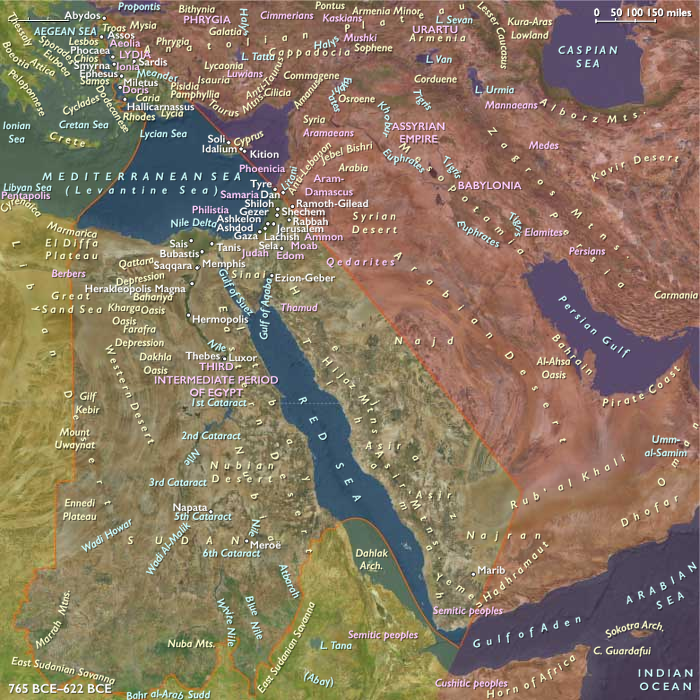
The death of Assyrian king Sargon II in 705 BCE triggers widespread rebellion across the Near East against Assyrian dominance. Hezekiah, king of Judah, emerges prominently in these revolts, aiming to free Judah from Assyrian suzerainty. Allied with city-states such as Ashkelon and Ekron and backed by Egypt, Hezekiah fortifies Jerusalem, notably constructing the Siloam tunnel to ensure water supply during sieges. However, the Assyrian King Sennacherib invades Judah in 701 BCE, seizing numerous fortified cities, including Lachish and Jaffa. Jerusalem narrowly avoids capture, reportedly due to a devastating plague among Assyrian forces, an event later ascribed in Hebrew scriptures to divine intervention.
Cultural Resurgence and New Settlements
Around 700 BCE, the Troas region, previously abandoned, experiences renewed Greek colonization by settlers from Mytilene on Lesbos, who establish Ilion (Troy VIII). Concurrently, Milesian Greeks, with approval from Gyges of Lydia, establish Abydos at a strategic location on the Asian side of the Hellespont, opposite Sestus, enhancing both trade and geopolitical positioning.
Cypriot Urban Development
Cyprus undergoes significant urban and economic growth, epitomized by Idalium (modern Dali, Nicosia District), a prominent city renowned for its copper trade since the third millennium BCE. Listed prominently in Assyrian records from Sargon II and Esarhaddon, Idalium and other Cypriot cities become integral to Assyrian trade networks, reflecting Cyprus's deep integration into broader regional dynamics.
Prophetic Voices Amid Turmoil
During Hezekiah's second rebellion (705–701 BCE), the Judahite prophet Isaiah renews his warnings, emphasizing themes of sin, impending judgment, and eventual deliverance. Isaiah’s messages, which form the core of the first part of the "Book of Isaiah," highlight the complex interaction between political actions and religious beliefs, shaping Judah's identity amid the imperial threats.
Legacy of the Era
The period from 705 to 694 BCE is marked by resistance to Assyrian hegemony, strategic urban developments, and significant religious and cultural advancements. Hezekiah's persistent quest for autonomy, despite setbacks, symbolizes Judah’s enduring resilience, while the cultural revival seen in Troy and Abydos underscores wider patterns of regional renewal and increased connectivity.
People
Groups
Topics
Commodoties
Subjects
Regions
Subregions
Years: 705BCE - 694BCE
People
Groups
Topics
Commodoties
Subjects
Regions
Subregions