
Near East (45–34 BCE): Roman-Parthian Rivalry and …
Years: 45BCE - 34BCE
Near East (45–34 BCE): Roman-Parthian Rivalry and Jewish Turmoil
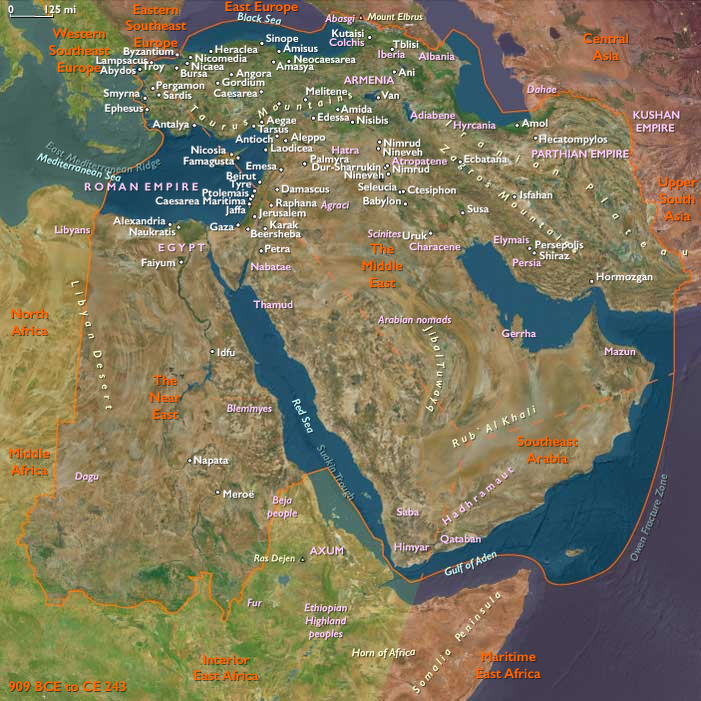
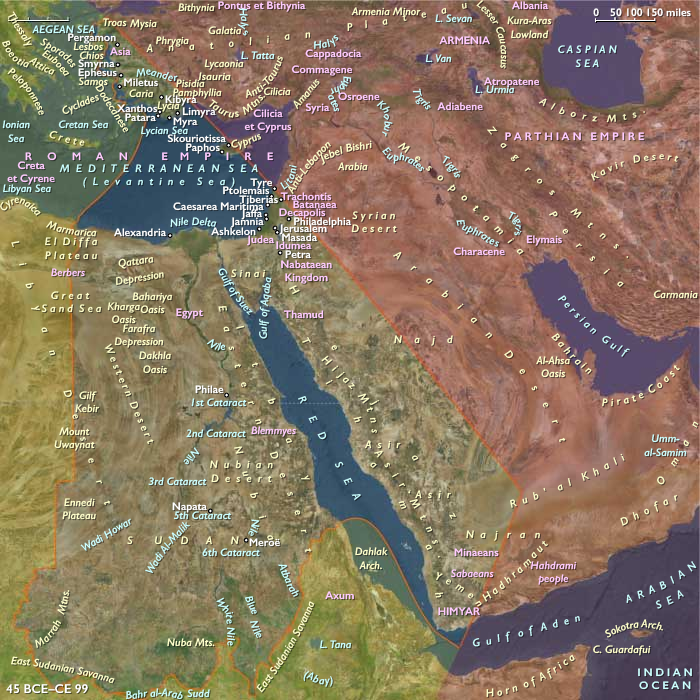
In 44 BCE, following his victory in the Roman civil war, Julius Caesar planned a campaign against the Parthian Empire to avenge Rome’s earlier defeat at the Battle of Carrhae. However, Caesar’s assassination prevented these ambitions from being realized. In the resulting power vacuum, Parthia took advantage by attacking Roman-controlled territories, notably Syria and the client kingdom of Judea. The Judean high priest and Roman ally, Hyrcanus II, was captured and mutilated by the pro-Parthian Hasmonean claimant Antigonus, effectively ending his ability to serve as high priest.
The Parthians, allied with Quintus Labienus, penetrated deep into western Anatolia, defeating the Roman general Decidius Saxa. The Roman Republic, under the command of Publius Ventidius Bassus, responded decisively, driving the invaders out and stabilizing the region. In 37 BCE, Herod, son-in-law of Hyrcanus, returned to Judea with the backing of Mark Antony, a triumvir and ally of Egyptian queen Cleopatra VII, successfully recapturing Jerusalem and establishing himself as the client king.
Antony then launched an ambitious campaign against Parthia itself, funded by Egyptian resources. His invasion of Atropatene (modern Iranian Azerbaijan) in 36 BCE ended disastrously at Praaspa, resulting in severe Roman losses during the harsh winter retreat. Despite this, Antony successfully invaded and subdued Armenia two years later. On returning to Alexandria in 34 BCE, Antony held a lavish mock triumph, publicly severing his alliance with Octavian, thereby setting the stage for the impending Roman civil war.
Legacy of the Era
The era from 45 to 34 BCE significantly intensified Roman-Parthian rivalry and reshaped the political landscape of the Near East, notably in Judea. The decisive actions of Roman commanders, coupled with the strategic maneuverings of local rulers like Herod, established new power dynamics, laying the groundwork for the lasting Roman dominance and profoundly influencing the cultural and political trajectories of the region.
People
- Antigonus II Mattathias
- Augustus
- Cleopatra VII
- Herod the Great
- Hyrcanus II
- Julius Caesar
- Lucius Decidius Saxa
- Mark Antony
- Publius Ventidius Bassus
- Quintus Labienus
Groups
- Roman Republic
- Atropatene, (Media) Kingdom of
- Greeks, Hellenistic
- Egypt, Ptolemaic Kingdom of
- Parthian Empire
- Armenia, Kingdom of Greater
- Judea, Roman client kingdom of
Topics
Subjects
Regions
Subregions
Years: 45BCE - 34BCE
People
- Antigonus II Mattathias
- Augustus
- Cleopatra VII
- Herod the Great
- Hyrcanus II
- Julius Caesar
- Lucius Decidius Saxa
- Mark Antony
- Publius Ventidius Bassus
- Quintus Labienus
Groups
- Roman Republic
- Atropatene, (Media) Kingdom of
- Greeks, Hellenistic
- Egypt, Ptolemaic Kingdom of
- Parthian Empire
- Armenia, Kingdom of Greater
- Judea, Roman client kingdom of
Topics
Subjects
Regions
Subregions