
Near East (820 – 963 CE): Fragmented …
Years: 820 - 963
Near East (820 – 963 CE): Fragmented Caliphate, Autonomous Dynasties, and Christian Strongholds
Geographic and Environmental Context
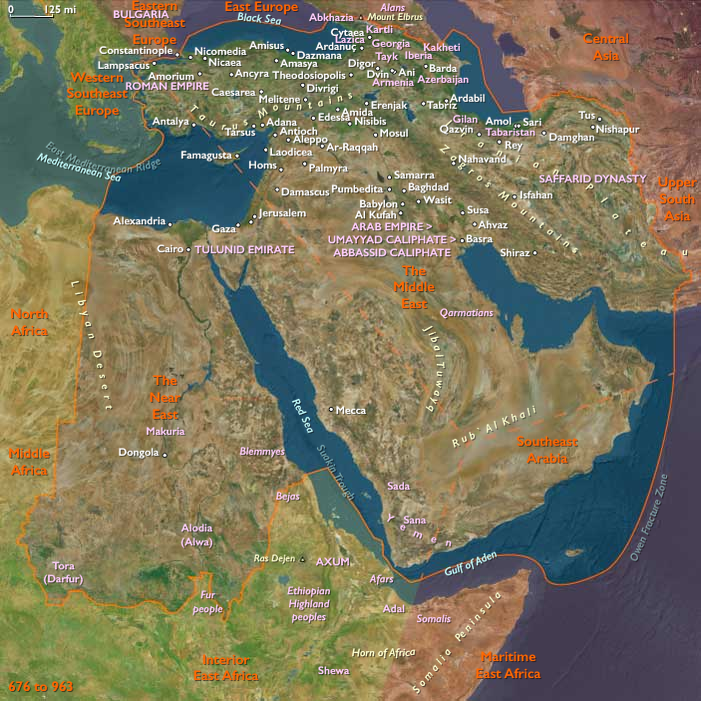
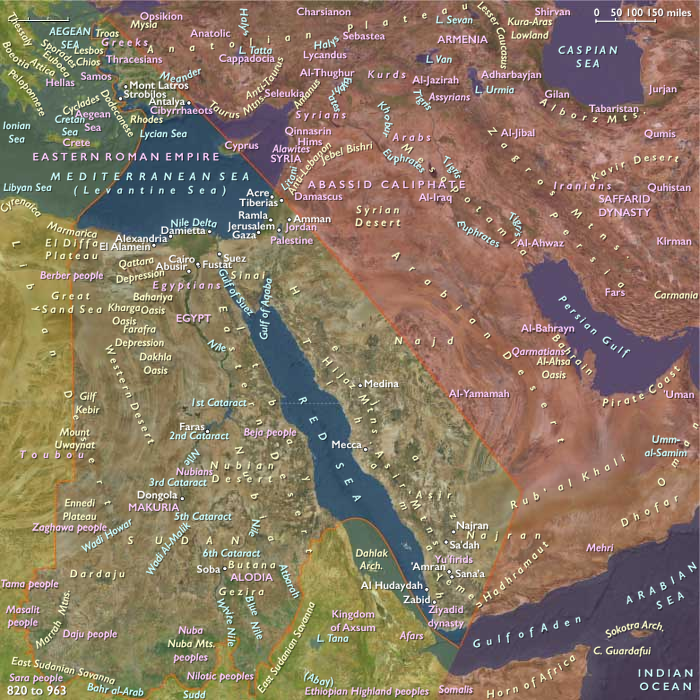
The Near East includes Israel, Egypt, Sudan, western Saudi Arabia, western Yemen, most of Jordan, southwestern Cyprus, and western Turkey (Aeolia, Ionia, Doria, Lydia, Caria, Lycia, and the Troad).
-
Egypt and the Nile Valley remained the agricultural backbone, linked to the Red Sea and Mediterranean.
-
Levantine coasts (Tyre, Acre, Caesarea) connected the interior to maritime trade.
-
Western Arabia and Yemen provided pilgrimage routes and Red Sea harbors.
-
Western Turkey (Anatolian coast) featured Greek-founded cities, harbors, and fertile valleys, contested between Byzantines and Muslim raiders.
-
Sudan was a transition to Nubian and Sahelian worlds, linked to the Nile.
Climate and Environmental Shifts
-
The Eastern Mediterranean climate supported cereals, olives, and vines in coastal and Anatolian zones.
-
The Nile floods continued to sustain Egypt, though fluctuations periodically strained revenue.
-
Arabian and Yemeni highlands offered terrace farming; arid interiors depended on oases and caravan routes.
Societies and Political Developments
-
Egypt:
-
The Abbasid caliphs appointed governors, but local autonomy grew.
-
In 868, Ahmad ibn Tulun established the Tulunid dynasty in Egypt and Syria, marking a major step toward independence.
-
Ibn Tulun built mosques and reformed tax systems; his dynasty endured until Fatimid conquest in 969.
-
-
Levant:
-
Abbasid rule was nominal; Tulunid and later Ikhshidid governors administered.
-
Coastal cities retained prosperity, with Tyre particularly flourishing in glass and textile production.
-
-
Western Arabia and Yemen:
-
The Abbasids remained custodians of Mecca and Medina, but real control was tenuous.
-
Zaydi imams rose in northern Yemen by the 9th century, establishing durable religious-political authority.
-
-
Sudan/Nubia:
-
The Christian kingdoms of Makuria and Alodia remained strong, resisting Arab expansion south of Egypt.
-
The Baqt treaty with Muslim Egypt ensured trade and peace, exchanging slaves for goods.
-
-
Western Turkey (Anatolia):
-
The Byzantine Empire contested Arab raiding from Cilicia and western Anatolia.
-
Coastal cities (Ephesus, Smyrna, Miletus) remained under Byzantine authority, though exposed to conflict.
-
-
Southwestern Cyprus:
-
Divided between Byzantine and Abbasid influence, occasionally serving as a shared province (condominium) and raiding base.
-
Economy and Trade
-
Egypt: Nile agriculture (wheat, barley, flax) supported urban markets; Alexandria remained a hub for Mediterranean commerce.
-
Levantine coasts: exported glass, sugar, textiles, and ceramics; imported spices and metals.
-
Arabia/Yemen: incense, aromatics, and horses moved via Red Sea ports to Egypt and Syria.
-
Western Turkey: Byzantine Anatolia produced olives, vines, and grain, and shipped timber and metals.
-
Nubia/Sudan: ivory, gold, slaves, and ostrich feathers moved northward in exchange for textiles and wheat.
Subsistence and Technology
-
Irrigation and terrace systems in Yemen and Egypt maximized water management.
-
Cisterns and aqueducts in Anatolia sustained towns through dry seasons.
-
Shipbuilding: Red Sea and Mediterranean craft carried goods between ports.
-
Craft industries: Egyptian linen, Levantine glass, Yemeni aromatics, and Anatolian wines.
Movement and Interaction Corridors
-
Nile River: Egypt’s transport backbone, linking Upper Egypt to Alexandria.
-
Red Sea routes: ports in Arabia and Yemen tied the Indian Ocean to Egypt.
-
Caravan tracks: Mecca–Medina pilgrim routes and incense roads across Yemen.
-
Levantine coastlines: maritime links between Tyre, Cyprus, and Anatolia.
-
Western Anatolian roads: tied Greek-founded cities to Constantinople and Byzantine networks.
Belief and Symbolism
-
Islam: Abbasid legitimacy endured, but local rulers (Tulunids, Zaydis) combined religious and political authority.
-
Christianity: Nubia (Makuria, Alodia) remained deeply Christian, resisting Islamic advance. Byzantine Christianity thrived in western Anatolia and Cyprus.
-
Judaism: Jewish communities in Egypt and the Levant participated actively in trade.
-
Pilgrimage: Mecca and Medina drew pilgrims from across the Islamic world.
Adaptation and Resilience
-
Local autonomy (Tulunids in Egypt, Zaydis in Yemen) allowed adaptation to weakening Abbasid central control.
-
Trade redundancy: Mediterranean ports, Red Sea lanes, and caravans provided alternative routes when conflict flared.
-
Religious pluralism: Christians in Nubia and Byzantium, Muslims in Arabia and Egypt, Jews across cities — created overlapping networks of survival and resilience.
Long-Term Significance
By 963 CE, the Near East had become a mosaic of autonomous powers:
-
Tulunid Egypt had broken away from Baghdad.
-
Zaydi Yemen established a long-lived religious state.
-
Makuria and Alodia kept Christian Nubia independent.
-
Byzantines held western Anatolia against Muslim raids.
-
Levantine and Red Sea trade continued to knit the region into global exchanges.
This laid the foundations for the Fatimid conquest of Egypt (969), the growing significance of Nubian Christianity, and the sharpening of Byzantine–Islamic frontiers in Anatolia and Cyprus.
People
Groups
- Egyptians
- Nubians
- Arab people
- Jews
- Christians, Armenian Apostolic Orthodox
- Makuria, Kingdom of
- Christians, Maronite
- Christianity, Chalcedonian
- Coptic Orthodox Church of Alexandria
- Alodia, or Alwa (Subah, or Soba), Kingdom of
- Roman Empire, Eastern: Heraclian dynasty
- Islam
- Egypt in the Middle Ages
- Muslims, Sunni
- Muslims, Shi'a
- Syrian people
- Abbasid Caliphate (Baghdad)
- Roman Empire, Eastern: Non-dynastic
- Ziyadid dynasty
- Roman Empire, Eastern: Phrygian or Armorian dynasty
- Abbasid Caliphate (Samarra)
- Roman Empire, Eastern: Macedonian dynasty
- Tulunids
- Abbasid Caliphate (Baghdad)
- Ifriqiya, Fatimid Caliphate of
- Idrisid Caliphate (Fatimid dynasty overlordship)
- Ziyarid dynasty
- Ikhshidid dynasty
- Ziyarid dynasty
- Ifriqiya, Fatimid Caliphate of
Topics
Commodoties
- Hides and feathers
- Gem materials
- Glass
- Domestic animals
- Grains and produce
- Textiles
- Ceramics
- Strategic metals
- Slaves
- Sweeteners
- Beer, wine, and spirits
- Lumber
- Aroma compounds
- Spices
Subjects
Regions
Subregions
Years: 820 - 963
People
Groups
- Egyptians
- Nubians
- Arab people
- Jews
- Christians, Armenian Apostolic Orthodox
- Makuria, Kingdom of
- Christians, Maronite
- Christianity, Chalcedonian
- Coptic Orthodox Church of Alexandria
- Alodia, or Alwa (Subah, or Soba), Kingdom of
- Roman Empire, Eastern: Heraclian dynasty
- Islam
- Egypt in the Middle Ages
- Muslims, Sunni
- Muslims, Shi'a
- Syrian people
- Abbasid Caliphate (Baghdad)
- Roman Empire, Eastern: Non-dynastic
- Ziyadid dynasty
- Roman Empire, Eastern: Phrygian or Armorian dynasty
- Abbasid Caliphate (Samarra)
- Roman Empire, Eastern: Macedonian dynasty
- Tulunids
- Abbasid Caliphate (Baghdad)
- Ifriqiya, Fatimid Caliphate of
- Idrisid Caliphate (Fatimid dynasty overlordship)
- Ziyarid dynasty
- Ikhshidid dynasty
- Ziyarid dynasty
- Ifriqiya, Fatimid Caliphate of
Topics
Commodoties
- Hides and feathers
- Gem materials
- Glass
- Domestic animals
- Grains and produce
- Textiles
- Ceramics
- Strategic metals
- Slaves
- Sweeteners
- Beer, wine, and spirits
- Lumber
- Aroma compounds
- Spices
Subjects
Regions
Subregions