
Near East (585–574 BCE): Babylonian Captivity and …
Years: 585BCE - 574BCE
Near East (585–574 BCE): Babylonian Captivity and Shifts in Settlement Patterns
Judah under Babylonian Rule
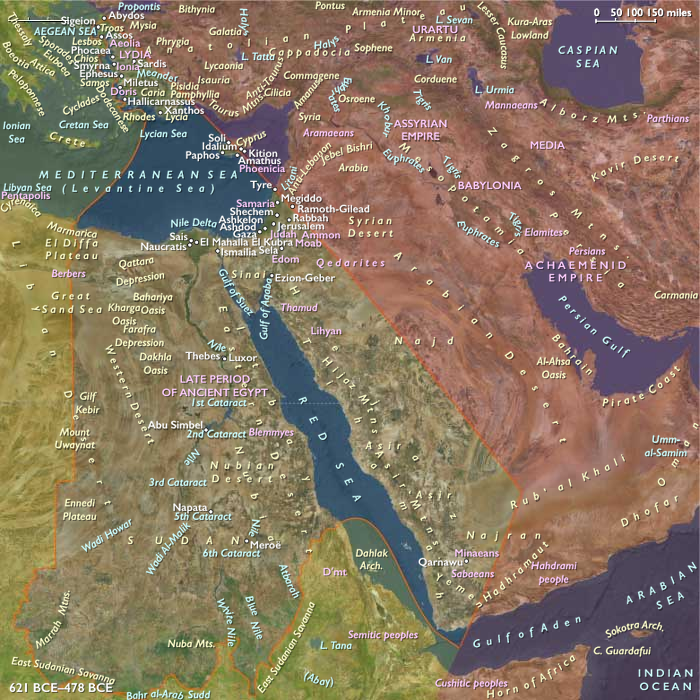
Following the devastating Babylonian conquest, Judah no longer exists as an independent kingdom but becomes a mere province of the expansive Babylonian Empire. King Nebuchadnezzar II enforces another mass deportation of Judah’s population to Babylonia in 582 BCE, significantly intensifying the demographic shift initiated by earlier deportations. Only the poorest inhabitants—estimated at about twenty thousand—remain in Judah, struggling to sustain themselves in a ravaged landscape. This mass deportation, profoundly impacting Hebrew identity, religious practice, and community structure, inaugurates the epoch traditionally known in Jewish history as the Babylonian Captivity.
Demographic Changes in Hebron and Edomite Settlement
Concurrent with the broader depopulation of Judah, cities such as Hebron, historically significant and densely inhabited, experience severe demographic declines. Following the destruction of the First Temple and subsequent exile of Judahite inhabitants, Hebron is largely emptied of its traditional population. The conventional historical narrative, though notably lacking clear archaeological corroboration, suggests that displaced Edomites, fleeing pressures from Arab incursions, begin settling in areas vacated by the Judahites. This presumed Edomite migration reshapes the ethnic and cultural landscape of Hebron and surrounding regions, laying foundations for future demographic and cultural transformations in southern Palestine.
Legacy of the Era
The era of 585–574 BCE firmly entrenches Judah’s identity as a dispersed community, with the cultural and religious legacy of the Hebrew people evolving distinctly under conditions of exile. This period fundamentally alters the region's population dynamics, as older urban and agrarian structures are disrupted or abandoned. The displacement and subsequent reshaping of communities—epitomized by the contentious historical understanding of Hebron’s Edomite settlement—underscore the ongoing complexity of cultural interactions and migrations in the Near East during this transformative era.
People
Groups
Topics
Commodoties
Subjects
Regions
Subregions
Related Events
Showing 10 events out of 65910 total
Years: 585BCE - 574BCE
People
Groups
Topics
Commodoties
Subjects
Regions
Subregions