
Near East (189–46 BCE): Roman Expansion, Jewish …
Years: 189BCE - 46BCE
Near East (189–46 BCE): Roman Expansion, Jewish Struggles, and Cultural Flourishing
In 189 BCE, the Near East enters an era marked by the inception of the Greco-Roman world, with the Roman Republic increasingly dominating the eastern Mediterranean Basin. Having defeated the Seleucid king Antiochus III, Rome rewards its allies, particularly Pergamon and Rhodes, with territories, despite previously claiming a policy of "liberation of the Greeks." The Romans, under consul Gnaeus Manlius Vulso, subsequently launch an unauthorized campaign against the Galatian tribes of central Anatolia, decisively defeating them at Mount Olympus and near Ankara in 189 BCE. Although Vulso faces political backlash in Rome for acting without Senate approval, he is eventually cleared and granted a triumph.
Egyptian Instability and Seleucid Decline (177–154 BCE)
Between 177 and 166 BCE, Egypt under young Ptolemy VI Philometor experiences internal turmoil, with regents Eulaeus and Lenaeus provoking the Sixth Syrian War against Seleucid king Antiochus IV Epiphanes. The war briefly places Egypt under Seleucid influence until Roman envoy Gaius Popilius Laenas famously forces Antiochus to withdraw at Eleusis in 168 BCE. Meanwhile, Antiochus IV's aggressive Hellenization policies in Judea ignite the Maccabean Revolt in 165 BCE, led by the priestly Hasmonean family from Modiin. By 164 BCE, Jewish rebels successfully retake Jerusalem, cleanse the Temple, and reestablish traditional worship, initiating Hasmonean autonomy.
From 153 to 140 BCE, the region of modern Jordan thrives under the waning Seleucid and Ptolemaic influence, marked by the rise of the Nabataeans, who extend their kingdom from their capital at Petra, dominating regional trade. Greek influence continues to permeate the region, reflected in city names such as Philadelphia (Amman) and Gerasa (Jarash). Meanwhile, the pharaonic tradition persists among rulers at Meroë, who erect pyramids and stelae to record their achievements, utilizing a new Meroitic script.
Hasmonean Expansion and Hellenistic Influence (141–106 BCE)
By 141 BCE, the Hasmonean rulers secure substantial autonomy for Judea from the declining Seleucid Empire. Under rulers like John Hyrcanus (134–104 BCE), the Hasmoneans expand territorially, notably annexing Edom (Idumea), whose inhabitants adopt Judaism. Hellenistic cultural influence is evident, exemplified by iconic sculptures like the Venus de Milo, attributed to Alexandros of Antioch, created between 130 and 100 BCE.
In southern Arabia, the powerful Himyarite kingdom emerges around 115 BCE, capitalizing on the decline of the inland Sabaean kingdom. The Himyarites establish their center at Zafar, extending their influence from southern Yemen to the Persian Gulf region.
Roman Dominance, Cultural Exchange, and Jewish Population Growth (105–46 BCE)
From 105 BCE onward, Roman political involvement in the Near East intensifies. In 63 BCE, the Roman general Pompey decisively intervenes in Judean affairs, ending Jewish independence. Prominent Jewish figures like Antipater, father of Herod the Great, emerge as pivotal mediators between Judea and Rome. Pompey organizes the Decapolis, a league of ten self-governing Greek cities including Amman, Jarash, and Gadara (modern Umm Qays) to protect Greek interests from Jewish encroachment.
Between 69 and 58 BCE, the Jewish population grows significantly, both in Palestine and throughout the Diaspora. Estimates suggest millions of Jews and proselytes practicing Judaism across the Mediterranean world. Technological advancements, such as glassblowing, likely discovered in Phoenicia around 50 BCE, revolutionize glassware production and trade.
The Wisdom of Solomon, a Greek text by an Alexandrian Jew, emphasizes Jewish religious commitment and showcases extensive Hellenistic influence on Jewish literature, philosophy, and religious thought during this period.
Legacy of the Age
The age from 189 to 46 BCE profoundly reshapes the Near East through the consolidation of Roman dominance, the dynamic rise and territorial expansion of Hasmonean Judea, significant demographic growth among Jewish populations, and notable cultural and technological advancements. These developments lay foundations for further Roman imperial integration, foster dynamic cultural exchanges, and leave enduring legacies influencing subsequent regional histories.
People
- Alexandros of Antioch
- Antiochus III the Great
- Antiochus IV Epiphanes
- Antipater the Idumaean
- Gnaeus Manlius Vulso
- Herod the Great
- John Hyrcanus
- Pompey
- Ptolemy VI Philometor
Groups
- Phoenicians
- Edomites, Kingdom of the
- Arab people
- Kush, Kingdom of
- Rhodes, City-States of
- Sheba, or Saba, Kingdom of
- Roman Republic
- Jews
- Greeks, Hellenistic
- Nabataean Kingdom
- Egypt, Ptolemaic Kingdom of
- Pergamon (Pergamum), Kingdom of
- Galatia, Kingdom of
- Seleucid Empire
- Hasmonean dynasty
- Himyarite Kingdom
- Hasmonean dynasty
Topics
Commodoties
Subjects
Regions
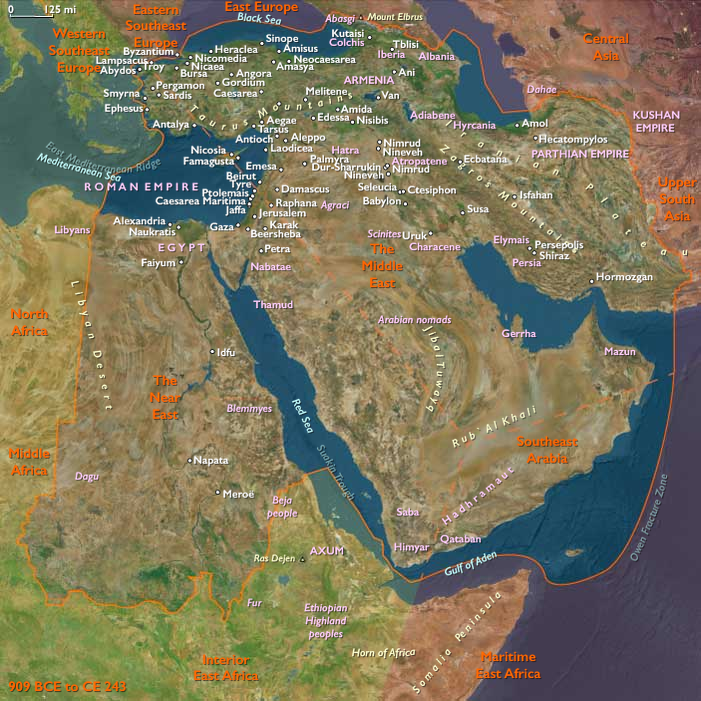
Subregions
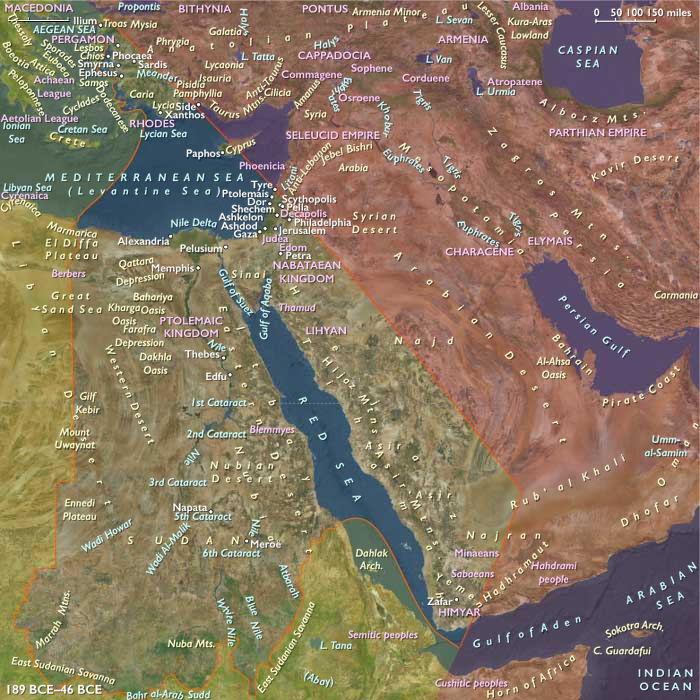
Related Events
Showing 10 events out of 63449 total
Years: 189BCE - 46BCE
People
- Alexandros of Antioch
- Antiochus III the Great
- Antiochus IV Epiphanes
- Antipater the Idumaean
- Gnaeus Manlius Vulso
- Herod the Great
- John Hyrcanus
- Pompey
- Ptolemy VI Philometor
Groups
- Phoenicians
- Edomites, Kingdom of the
- Arab people
- Kush, Kingdom of
- Rhodes, City-States of
- Sheba, or Saba, Kingdom of
- Roman Republic
- Jews
- Greeks, Hellenistic
- Nabataean Kingdom
- Egypt, Ptolemaic Kingdom of
- Pergamon (Pergamum), Kingdom of
- Galatia, Kingdom of
- Seleucid Empire
- Hasmonean dynasty
- Himyarite Kingdom
- Hasmonean dynasty
Topics
Commodoties
Subjects
Regions
Subregions