
Near East (549–538 BCE): Persian Expansion and …
Years: 549BCE - 538BCE
Near East (549–538 BCE): Persian Expansion and Greek Displacement
Croesus, Cyrus, and the Fall of Lydia
Lydia, under King Croesus, initially appears poised for continued prominence. Seeking to limit the expanding Persian influence and avenge the deposition of his Median brother-in-law, Astyages, Croesus consults the oracle of Delphi, which cryptically proclaims that attacking Cyrus the Great will result in "a great empire" falling. Mistaking this prophecy as favoring Lydia, Croesus crosses the Halys River to confront Cyrus in 547 BCE. After an inconclusive battle, Croesus retreats to Sardis, presuming the fighting season concluded. Cyrus, employing innovative tactics including skilled mounted archers, swiftly marches against Sardis and captures it within two weeks. Croesus's "great empire" collapses, and he is taken prisoner, his life reportedly spared by Cyrus who appoints him an advisor at the Persian court until his death around 546 BCE.
Revolt in Lydia and Persian Consolidation
Following Croesus’s defeat, Pactyes, a Lydian entrusted with transferring the royal treasury to Persia, instigates an uprising in Sardis. Cyrus dispatches the commander Mazares, who swiftly subdues the revolting cities, including Magnesia and Priene, and captures Pactyas—who likely faces execution after extradition. Upon Mazares’s sudden death, Cyrus sends his general Harpagus to complete the conquest of Asia Minor. Harpagus extends Persian control over Lycia, Cilicia, and Phoenicia, notably capturing the Lycian stronghold of Xanthos around 540 BCE. Facing inevitable defeat, the Xanthians resort to mass suicide, destroying their city rather than submitting.
Phocaean Exodus and Greek Colonization
The Ionian city of Phocaea, renowned for its extensive maritime voyages, particularly in the Adriatic, Spain, and the western Mediterranean, faces Persian siege around 545 BCE. Rather than submit, most Phocaeans abandon their homeland, scattering to colonies such as Alalia in Corsica and Massalia (modern-day Marseille) in France, with some eventually founding Elea in Magna Graecia (southern Italy) around 540 BCE. This exodus highlights the significant displacement caused by Persian expansion into Ionian territories.
Persian Domination of Ionia and Caria
The Persian conquest dramatically reshapes the political landscape of Anatolia. While Miletus strategically aligns with Persia, other Ionian cities, including Ephesus, fiercely resist but ultimately succumb around 546 BCE. Cyrus imposes Persian-friendly tyrants to maintain order and swiftly incorporates Ionia into his expanding empire. Similarly, Caria, a culturally mixed region comprising Ionian cities such as Myus and Priene, falls under Persian rule, reflecting the broader consolidation of Persian authority over Anatolia.
Submission of Cnidus, Halicarnassus, and Chios
In southwestern Anatolia, the city of Cnidus unsuccessfully attempts to resist Persian advances by transforming its peninsula into an island. Unable to achieve this, Cnidus submits shortly after 546 BCE. Likewise, Halicarnassus, previously a member of the Doric Hexapolis, comes under Persian control around 540 BCE, as does the strategically significant island of Chios. These submissions further solidify Persian dominance across the Aegean region.
Cultural Displacement and Xenophanes of Colophon
The Persian conquest prompts significant cultural and intellectual displacement. Xenophanes of Colophon, a prominent poet and philosopher, becomes a wandering minstrel in response to the Persian takeover of Ionia, exemplifying the broader disruptions caused by Persian hegemony.
Legacy of the Era
The decade between 549 and 538 BCE is characterized by rapid Persian territorial expansion and profound geopolitical shifts. The fall of Lydia and subjugation of Ionia under Persian rule displaces Greek populations and reshapes cultural dynamics across the region. This period lays crucial groundwork for subsequent Greek-Persian conflicts, significantly influencing the historical trajectory of the Near East.
People
Groups
- Carians
- Phoenicians
- Tyre, Kingdom of (Phoenicia)
- Ionians
- Lydia, Kingdom of
- Lycia
- Priene, Greek City-State of
- Miletus (Ionian Greek) city-state of
- Colophon, Greek City-state of
- Cyprus, Classical
- Ephesus (Ionian Greek) city-state of
- Chios, City-State of
- Knidos, City-State of
- Magnesia on the Maeander, Greek City-State of
- Halicarnassus, Greek City-State of
- Phocaea (Ionian Greek) city-state of
- Massalia (Ionian Greek) city-state of
- Achaemenid Empire
- Phoenicia, Achaemenid
Topics
- Greek colonization
- Persian Conquests of 559-509 BCE
- Persian Revolt
- Persian-Lydian War of 547-546 BCE
Commodoties
Subjects
Regions
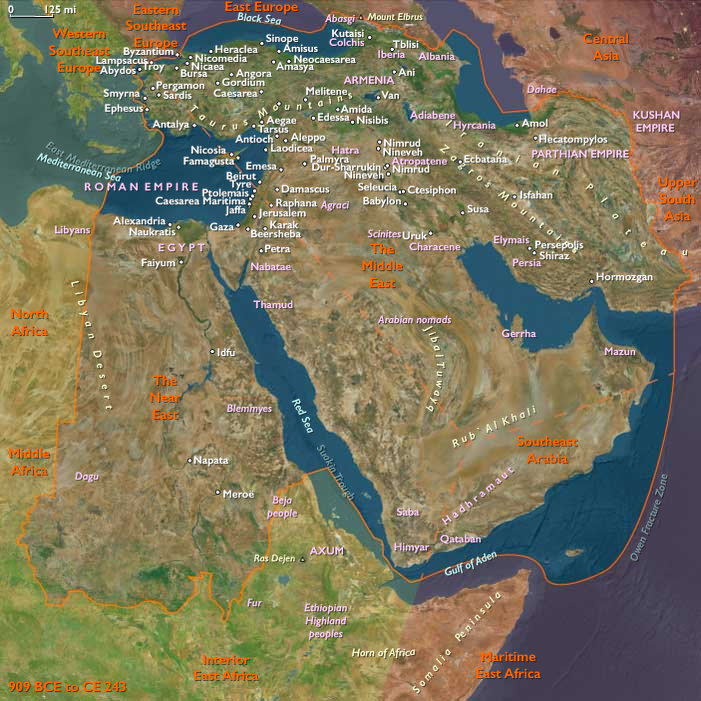
Subregions
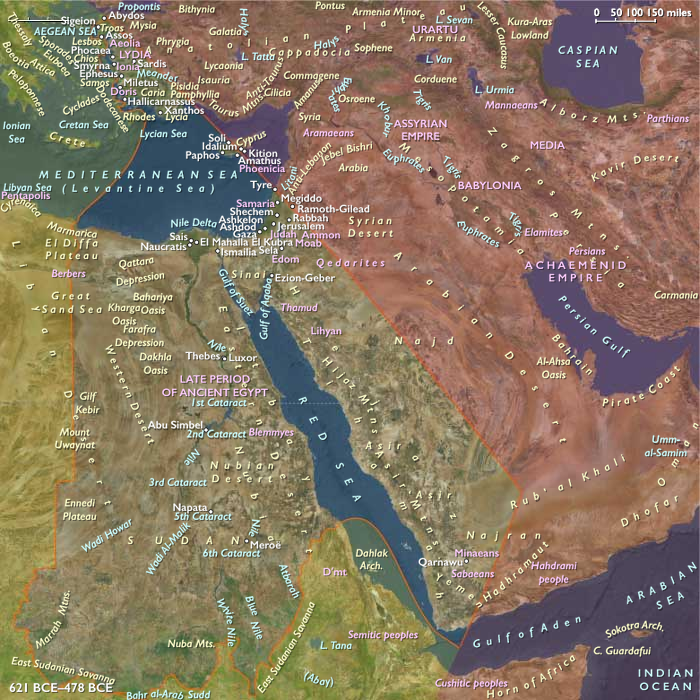
Related Events
Showing 10 events out of 70 total
Years: 549BCE - 538BCE
People
Groups
- Carians
- Phoenicians
- Tyre, Kingdom of (Phoenicia)
- Ionians
- Lydia, Kingdom of
- Lycia
- Priene, Greek City-State of
- Miletus (Ionian Greek) city-state of
- Colophon, Greek City-state of
- Cyprus, Classical
- Ephesus (Ionian Greek) city-state of
- Chios, City-State of
- Knidos, City-State of
- Magnesia on the Maeander, Greek City-State of
- Halicarnassus, Greek City-State of
- Phocaea (Ionian Greek) city-state of
- Massalia (Ionian Greek) city-state of
- Achaemenid Empire
- Phoenicia, Achaemenid
Topics
- Greek colonization
- Persian Conquests of 559-509 BCE
- Persian Revolt
- Persian-Lydian War of 547-546 BCE
Commodoties
Subjects
Regions
Subregions