
Near East (568–579 CE): Political Shifts and …
Years: 568 - 579
Near East (568–579 CE): Political Shifts and Environmental Challenges
Between 568 and 579 CE, significant political shifts and environmental challenges reshape the Near East, marking transitions in regional power and stability.
Abraha's Expedition and the Year of the Elephant
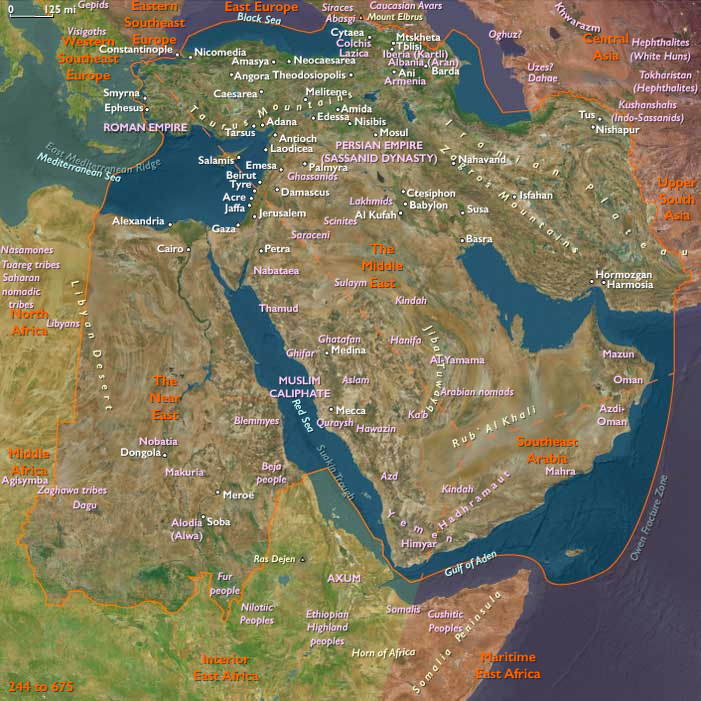
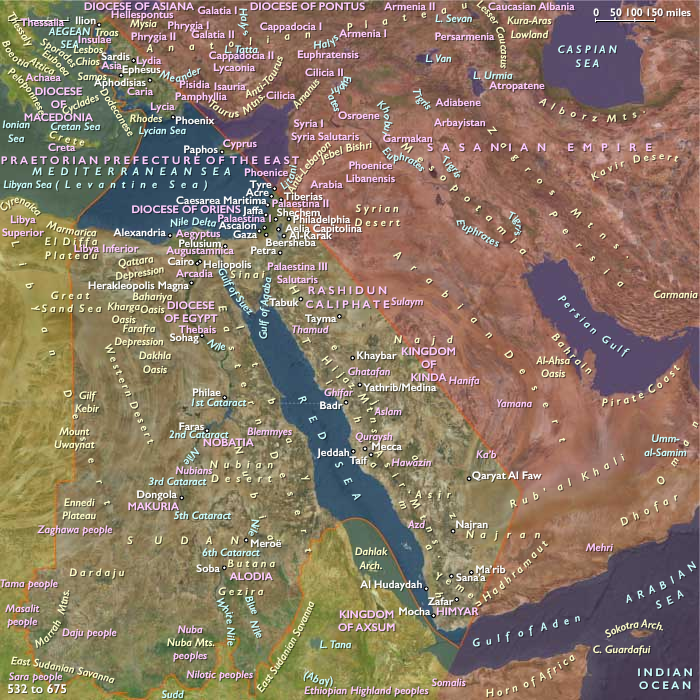
In 570 CE, the self-proclaimed king of Himyar, Abraha, leads a notable military campaign northward against the city of Mecca, famously known as the Year of the Elephant. His forces, supported by elephants, fail to capture Mecca—a defeat later attributed by Islamic tradition to divine intervention. This event coincides with the birth year of the Prophet Muhammad, making it a landmark year in regional historical narratives. Recent archaeological findings suggest the actual year of Abraha’s campaign might have been 568 or 569 CE, aligning closely with broader geopolitical shifts in southern Arabia.
Collapse of the Ma'rib Dam
A pivotal environmental event occurs around 570–575 CE with the rupture of the great Ma'rib Dam in southern Arabia. This ancient structure, about fifty feet high and nearly two thousand feet long, has for over a millennium sustained extensive irrigation across the agriculturally rich Wadi Dhana basin. Its failure results in severe economic and social disruptions, symbolically marking the end of the Yemeni empires' historical prominence and destabilizing the once-prosperous agricultural region.
Persian Expansion into Yemen
Amid these disruptions, Persian influence expands into southern Arabia. King Khosrow I sends an expedition to South Arabia, successfully conquering Yemen and establishing a military base. This strategic move aims to control the vital sea trade routes connecting the region with the East, further altering the regional balance of power and commercial dynamics.
Regional Consequences
The environmental and political turbulence of this period notably weakens southern Arabian states, facilitating shifts in regional influence and the rise of new centers of power. These developments set the stage for subsequent cultural and religious transformations, including the eventual emergence of Islam in the following decades.
Legacy of the Era
The era from 568 to 579 CE significantly alters the Near Eastern geopolitical and environmental landscapes. Abraha’s military campaign underscores political ambitions and religious tensions, while the collapse of the Ma'rib Dam and Persian expansion into Yemen highlight the profound impacts of environmental change and imperial ambitions on historical trajectories, laying groundwork for major historical transitions in the region.
People
Groups
- Persian Empire, Sassanid, or Sasanid
- Christianity, Chalcedonian
- Himyar
- Egypt, Eastern Roman (Byzantine)
Topics
Subjects
Regions
Subregions
Related Events
Showing 10 events out of 57489 total
Years: 568 - 579
People
Groups
- Persian Empire, Sassanid, or Sasanid
- Christianity, Chalcedonian
- Himyar
- Egypt, Eastern Roman (Byzantine)
Topics
Subjects
Regions
Subregions