
Near East (556–567 CE): Christian Expansion and …
Years: 556 - 567
Near East (556–567 CE): Christian Expansion and Cultural Assertions
Between 556 and 567 CE, the Near East continues to experience significant developments in political, religious, and cultural domains, particularly marked by notable efforts in religious assertion and architectural achievements.
Abraha's Cathedral at San‘a'
During this era, Abraha, the self-proclaimed king of Himyar in southern Arabia, undertakes a significant religious and political project by constructing a grand Christian cathedral in San‘a'. According to Islamic tradition, this ambitious architectural endeavor is part of Abraha's broader effort to promote Christianity in the region, reflecting both religious zeal and political ambition. The cathedral becomes a prominent symbol of Christianity's presence in southern Arabia, signifying shifting dynamics and cultural interactions.
Religious Influence in Makuria
The kingdom of Makuria, with its capital at Old Dongola along the Nile, continues to flourish as a prominent Christian state. Makuria's ongoing construction of religious edifices reinforces its distinct identity, bolstering the kingdom’s spiritual and cultural authority within Nubia and its connections to the broader Christian Mediterranean world.
Jerusalem as a Spiritual Hub
In Jerusalem, the city's importance as a center for Christian pilgrimage and religious scholarship remains prominent. The infrastructure established in previous decades under Emperor Justinian, particularly the restored Church of the Holy Sepulchre, continues to attract pilgrims and scholars. The city sustains its role as a vibrant hub for theological dialogue, monasticism, and spiritual devotion.
Legacy of the Era
The period from 556 to 567 CE highlights ongoing religious and cultural assertions within the Near East. Abraha’s cathedral symbolizes Christianity’s penetration into new regions, while Makuria and Jerusalem solidify their roles as influential centers of Christian culture and spirituality, underscoring the dynamic interplay of politics, religion, and architecture in shaping regional identity.
People
Groups
- Makuria, Kingdom of
- Palaestina Salutaris (Roman province)
- Palaestina Secunda (Roman province)
- Palaestina Prima (Roman province)
- Christianity, Chalcedonian
- Himyar
- Egypt, Eastern Roman (Byzantine)
Subjects
Regions
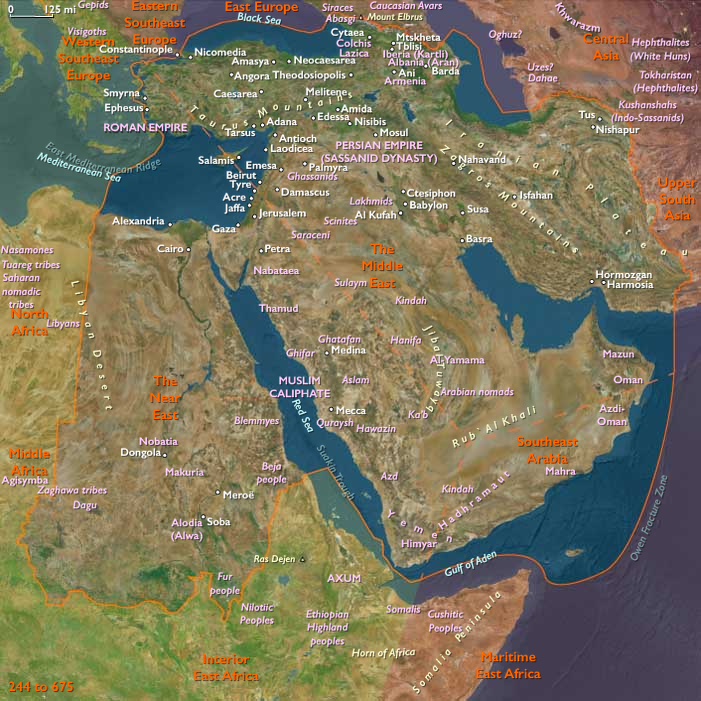
Subregions
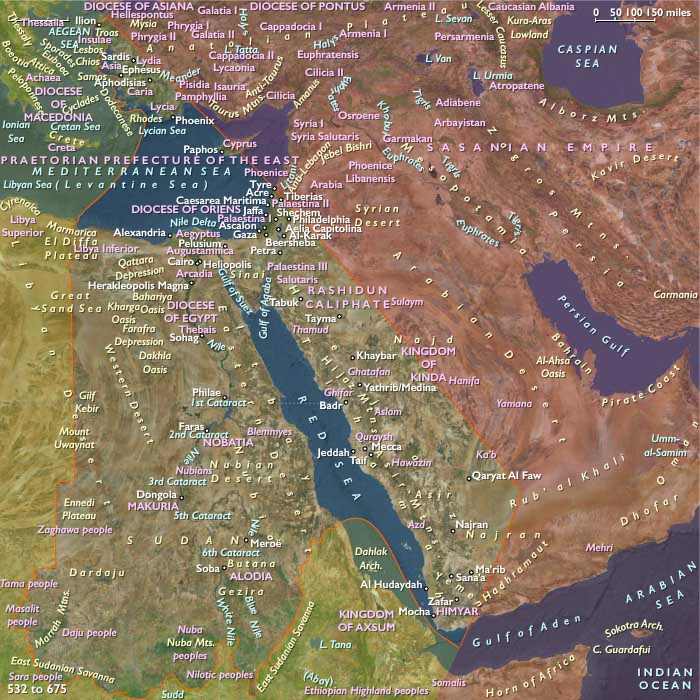
Years: 556 - 567
People
Groups
- Makuria, Kingdom of
- Palaestina Salutaris (Roman province)
- Palaestina Secunda (Roman province)
- Palaestina Prima (Roman province)
- Christianity, Chalcedonian
- Himyar
- Egypt, Eastern Roman (Byzantine)
Subjects
Regions
Subregions