
Near East (466–454 BCE): Egyptian Revolt, Judahite …
Years: 465BCE - 454BCE
Near East (466–454 BCE): Egyptian Revolt, Judahite Resettlement, and Religious Reformation
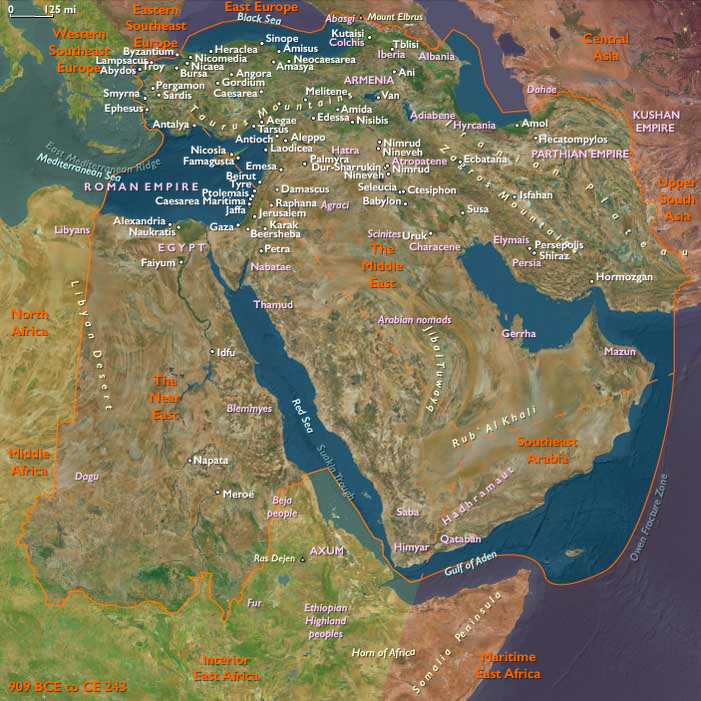
Between 466 and 453 BCE, the Near East experiences notable political upheaval, strategic setbacks, and significant cultural developments. Central to the period is a major revolt by Egypt against Persian rule, sparking a prolonged six-year conflict. Initially hopeful, Egyptian resistance soon escalates into a broader international struggle when Athens diverts military resources originally intended for an assault on Cyprus to support the Egyptian insurgents. The Athenian decision results in disastrous losses, including a substantial portion of their naval fleet and possibly as many as fifty thousand soldiers, severely weakening their strategic capabilities in the eastern Mediterranean.
Meanwhile, in Palestine, returning Judahites from the Babylonian exile continue their intensive efforts at resettlement and reconstruction. Bethlehem is among the key towns repopulated during this period, symbolizing a broader renewal of Judahite communal and religious identity. Amidst these significant demographic shifts, the Persian court sends the influential scribe Ezra to Jerusalem in 458 BCE (though alternative chronologies place his arrival in either 428 or 397 BCE). Ezra's mission, as recorded in biblical tradition, is to reinforce adherence to religious law and to address controversial intermarriages with non-Judahites, an effort aimed at solidifying community cohesion and religious purity.
These developments collectively highlight a complex regional dynamic characterized by resistance to Persian authority, international entanglements, and a determined cultural and religious revival within Judahite society. The Near East thus continues to be shaped profoundly by the interplay of political power struggles and the assertion of local identities across Egypt, Palestine, and the broader eastern Mediterranean region.
Groups
- Cyprus, Classical
- Egypt (Ancient), Late Period of
- Judahites
- Achaemenid Empire
- Athenian Empire (Delian League)
Subjects
Regions
Subregions

Years: 465BCE - 454BCE
Groups
- Cyprus, Classical
- Egypt (Ancient), Late Period of
- Judahites
- Achaemenid Empire
- Athenian Empire (Delian League)
Subjects
Regions
Subregions