
Near East (345–334 BCE): Cultural Milestones and …
Years: 345BCE - 334BCE
Near East (345–334 BCE): Cultural Milestones and Continued Persian Authority
From 345 to 334 BCE, the Near East sees continued cultural development under ongoing Persian hegemony, punctuated by significant artistic achievements and regional political stability.
In southwestern Anatolia, cultural expression reaches a celebrated pinnacle with the creation of the famed Aphrodite of Cnidus, sculpted by Praxiteles. Renowned for its groundbreaking portrayal of the nude female form, this statue depicts the goddess Aphrodite preparing for her ritual purification, modest yet elegantly poised. Rejected by the initial patrons in Kos for its boldness, the sculpture finds acclaim and a permanent home in Knidos, becoming one of antiquity's most admired and replicated masterpieces. Its fame underscores the vibrant cultural and artistic life thriving within the Persian-controlled Greek cities.
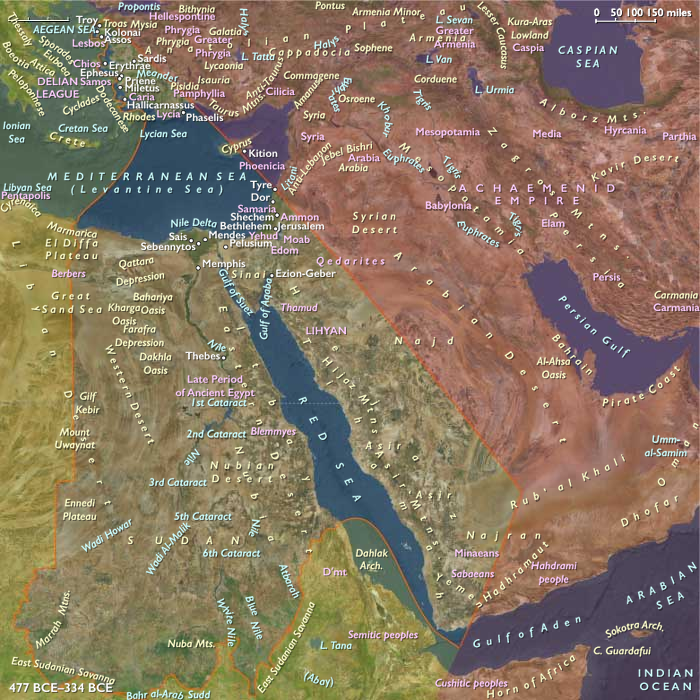
Meanwhile, Persian authority remains consistent yet occasionally strained in Yehud, where Jerusalem continues as the religious and administrative center under the high priests. The emphasis on religious purity and adherence to the Torah keeps the Jewish community distinct within the Persian empire, reinforcing their cultural identity amidst broader regional influences.
Egypt remains a region of tenuous Persian control, its administration marked by ongoing local resistance and dissatisfaction, despite attempts to integrate the region more effectively into imperial governance. This resistance highlights Egypt’s enduring quest for autonomy and self-governance, despite significant Persian military and administrative pressure.
By 334 BCE, the Near East stands as a mosaic of Persian political dominance, Greek cultural flourishing, and local identities fiercely maintained, setting the stage for the profound changes that will follow Alexander the Great's imminent arrival.
People
Groups
- Kos, (Greek) city-state of
- Egypt (Ancient), Late Period of
- Yehud Medinata
- Achaemenid, or First Persian, Empire
- Jews
Subjects
Regions
Subregions
Related Events
Showing 10 events out of 64632 total
Years: 345BCE - 334BCE
People
Groups
- Kos, (Greek) city-state of
- Egypt (Ancient), Late Period of
- Yehud Medinata
- Achaemenid, or First Persian, Empire
- Jews
Subjects
Regions
Subregions