
Near East (297–286 BCE): Seleucid-Ptolemaic Rivalry and …
Years: 297BCE - 286BCE
Near East (297–286 BCE): Seleucid-Ptolemaic Rivalry and the Hellenization of Palestine
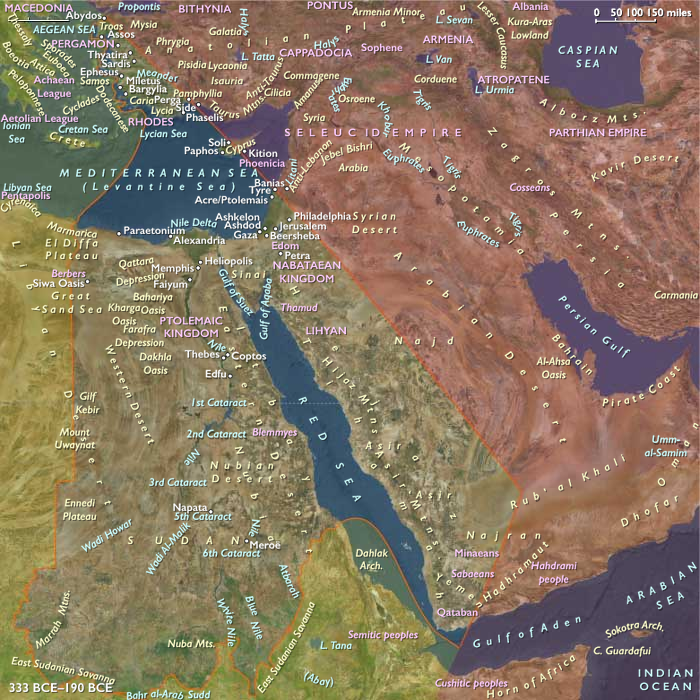
Following the demise of Antigonus Monophthalmus at Ipsus in 301 BCE, the former members of the victorious coalition allocate all of Syria, including the strategically significant region of southern Syria (Palestine), to Seleucus I Nicator. This arrangement ignites enduring tensions and recurring conflicts between the Seleucid and Ptolemaic dynasties, each striving for dominance over the vital territory.
Among the contested cities is Ashqelon, increasingly known by its Hellenized name, Ascalon, a title it retains throughout subsequent eras, notably during the period of the Crusades. Other cities similarly adopt Hellenized names, such as Ashdod, which becomes known as Azotus, and Ekron, now referred to as Akkaron or Accaron.
The cultural transformation across these cities underscores the broader process of Hellenization that characterizes the period, as Greek culture, language, and administrative practices increasingly permeate the local populations. This era thus witnesses Palestine becoming a central theater of geopolitical rivalry, with each Hellenistic power aiming to secure strategic dominance through both military and cultural means.
People
Groups
- Lysimachus, Kingdom of
- Egypt, Alexandrine
- Greeks, Hellenistic
- Seleucus, Kingdom of
- Macedon, Antigonid Kingdom of
Topics
Subjects
Regions
Subregions
Related Events
Showing 10 events out of 64111 total
Years: 297BCE - 286BCE
People
Groups
- Lysimachus, Kingdom of
- Egypt, Alexandrine
- Greeks, Hellenistic
- Seleucus, Kingdom of
- Macedon, Antigonid Kingdom of
Topics
Subjects
Regions
Subregions