
Near East (237–226 BCE): The Rise of …
Years: 237BCE - 226BCE
Near East (237–226 BCE): The Rise of Attalid Pergamon and the Decline of Seleucid Control
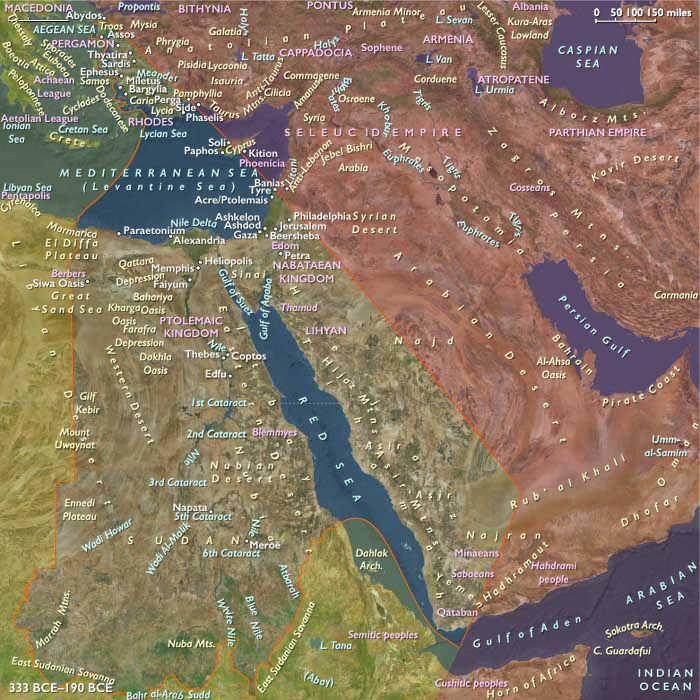
During this era, Attalus I of Pergamon, originally a vassal and distant relative of the Seleucid rulers, consolidates his authority in western Anatolia, emerging as a formidable power in the region. A capable military leader and shrewd politician, Attalus significantly enhances Pergamon’s prestige by defeating the Galatians, the Celtic peoples inhabiting central Anatolia. To commemorate this victory, Attalus likely commissions the famous Hellenistic sculpture known as The Dying Gaul (also called The Dying Galatian), originally crafted in bronze around 230–220 BCE and later preserved in Roman marble copies.
Pergamon’s position is challenged again shortly after, when the Galatians ally with Antiochus Hierax, ruler of Seleucid Asia Minor and younger brother of Seleucus II Callinicus. Attalus decisively defeats this coalition at the Battle of Aphrodisium, then secures further victories against Antiochus Hierax alone—first near Sardis in 228 BCE, and later at the decisive battle along the Harpasus River in Caria.
As a result of these campaigns, Attalus gains control over all Seleucid territories in Asia Minor north of the Taurus Mountains. Despite repeated efforts by the Seleucid heir, Seleucus III Ceraunus, to reclaim these regions, Pergamon maintains its hold. Seleucus III’s military campaigns culminate disastrously in 223 BCE when he is assassinated by his own soldiers. Subsequently, his successor Antiochus III the Great appoints Achaeus as governor of Seleucid territories north of the Taurus. Initially loyal, Achaeus soon recaptures all lost territories and declares himself king, further fragmenting Seleucid authority.
Meanwhile, in southern Syria, the Hellenistic cultural influence deepens. The tombs of Hellenized Sidonian military settlers at Marisa in Edom (Idumaea) showcase frescoes depicting vibrant hunting scenes, reflecting the widespread embrace of Greek customs and aesthetics among non-Greek populations across the Near East.
People
- Achaeus
- Antiochus Hierax
- Antiochus III the Great
- Attalus I
- Laodice I
- Ptolemy II Philadelphus
- Ptolemy III Euergetes
- Seleucus II Callinicus
- Seleucus III Ceraunus
Groups
- Edomites, Kingdom of the
- Jews
- Greeks, Hellenistic
- Egypt, Ptolemaic Kingdom of
- Seleucid Kingdom
- Galatia, Kingdom of
Topics
Subjects
Regions
Subregions
Related Events
Showing 10 events out of 63786 total
Years: 237BCE - 226BCE
People
- Achaeus
- Antiochus Hierax
- Antiochus III the Great
- Attalus I
- Laodice I
- Ptolemy II Philadelphus
- Ptolemy III Euergetes
- Seleucus II Callinicus
- Seleucus III Ceraunus
Groups
- Edomites, Kingdom of the
- Jews
- Greeks, Hellenistic
- Egypt, Ptolemaic Kingdom of
- Seleucid Kingdom
- Galatia, Kingdom of
Topics
Subjects
Regions
Subregions