
Near East (213–202 BCE): Egyptian Instability and …
Years: 213BCE - 202BCE
Near East (213–202 BCE): Egyptian Instability and Hellenistic Opportunism
In the early years of this era, native Egyptians, empowered by their decisive role in the victory at the Battle of Raphia (217 BCE), become increasingly aware of their potential strength. Emboldened, they initiate a rebellion against their Hellenistic overlords. Polybius, the contemporary historian, describes this uprising as guerrilla warfare, marking a significant escalation in Egyptian resistance and highlighting the tenuous grip of the Ptolemaic dynasty over Egypt.
Meanwhile, court intrigue intensifies around the death of Ptolemy IV Philopator in 205 BCE and the accession of his young successor, Ptolemy V Epiphanes (205–180 BCE). According to Polybius, a clique led by the influential minister Sosibius consolidates power by announcing the young king’s accession and the sudden deaths of his parents, simultaneously banishing all prominent rivals from Egypt.
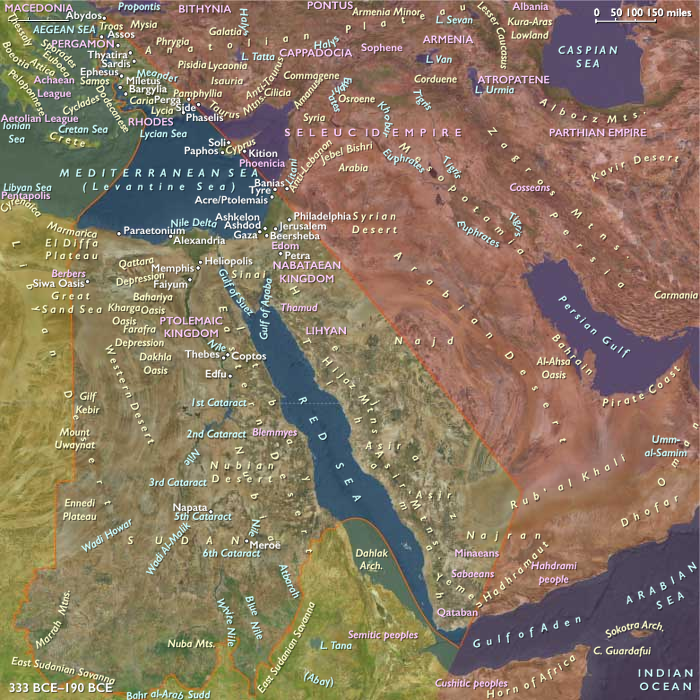
Recognizing Egypt's internal vulnerability, the rulers of Macedon and the Seleucid Empire, centered in Syria, secretly agree to exploit the situation, conspiring to partition Egypt’s valuable territories in Asia Minor and the Aegean region. This opportunistic alliance foreshadows further instability, as Egypt’s neighbors seek advantage from its weakened condition.
People
- Achaeus
- Antiochus III the Great
- Attalus I
- Berenice II
- Laodice I
- Ptolemy IV Philopator
- Ptolemy V Epiphanes
- Sosibius
Groups
- Egyptians
- Greeks, Hellenistic
- Macedon, Antigonid Kingdom of
- Egypt, Ptolemaic Kingdom of
- Seleucid Empire
Topics
Subjects
Regions
Subregions
Years: 213BCE - 202BCE
People
- Achaeus
- Antiochus III the Great
- Attalus I
- Berenice II
- Laodice I
- Ptolemy IV Philopator
- Ptolemy V Epiphanes
- Sosibius
Groups
- Egyptians
- Greeks, Hellenistic
- Macedon, Antigonid Kingdom of
- Egypt, Ptolemaic Kingdom of
- Seleucid Empire
Topics
Subjects
Regions
Subregions