
Near East (220–231 CE): Revival and Reconfiguration …
Years: 220 - 231
Near East (220–231 CE): Revival and Reconfiguration of Jewish Life
During this era, the Roman Near East continues its complex relationship with Jewish communities, reflecting both periods of persecution and renewed tolerance. Earlier, during the Jewish War (68 CE), Vespasian had inflicted devastation upon the settlement of Betaris in Idumea. According to Josephus, Vespasian's forces killed over ten thousand residents, enslaved more than a thousand, and scattered the remaining population, leaving the mountainous region ravaged. Further destruction occurred during the Bar Kokhba Revolt (132–135 CE).
Yet by the early third century, the Romans had rebuilt and renamed the city Eleutheropolis, meaning "City of the Free," marking a symbolic shift from its tragic past. Coins minted during the reign of Septimius Severus bear the date January 1, 200, commemorating the founding of Eleutheropolis. Strategically located where seven roads intersect, Eleutheropolis rapidly becomes one of the most significant urban centers in Roman Palestine. Its centrality is highlighted by Eusebius, who later, in his Onomasticon, will use the city's milestones as a reference point to measure distances to other towns.
Meanwhile, Jewish intellectual life experiences significant shifts. Although many Jews had remained in Babylonfollowing the destruction of the Second Temple (70 CE), the beginning of the third century sees an upsurge in Jewish scholarship and religious activity there. This shift is exacerbated by the gradual weakening of Judaea under continuous Roman military demands and heavy taxation from the client rulers based in Palmyra in south-central Syria. Such financial oppression leaves Judaea impoverished, greatly diminishing local support for its traditional schools of learning. Consequently, scholars increasingly relocate their academies to more prosperous and stable environments.
The period of rule under Roman Emperor Alexander Severus (222–235 CE) marks a notable improvement in conditions for the Jews. Severus' comparatively tolerant policies include the reinstatement of several Jewish rights previously curtailed, most notably granting permission for Jews to resume visits to Jerusalem.
Legacy of the Era
From 220 to 231 CE, the Near East witnesses a meaningful reconfiguration of Jewish communal life, marked by both the revival of historically significant urban centers like Eleutheropolis and the critical shift of Jewish scholarly prominence towards Babylon. This era sets a lasting precedent for the diasporic vitality and adaptability of Jewish culture amid continuing Roman dominion.
People
Groups
- Jews
- Roman Empire (Rome): Flavian dynasty
- Syria Palæstina, Roman province of (Judea, Samaria, and Idumea)
Topics
Subjects
Regions
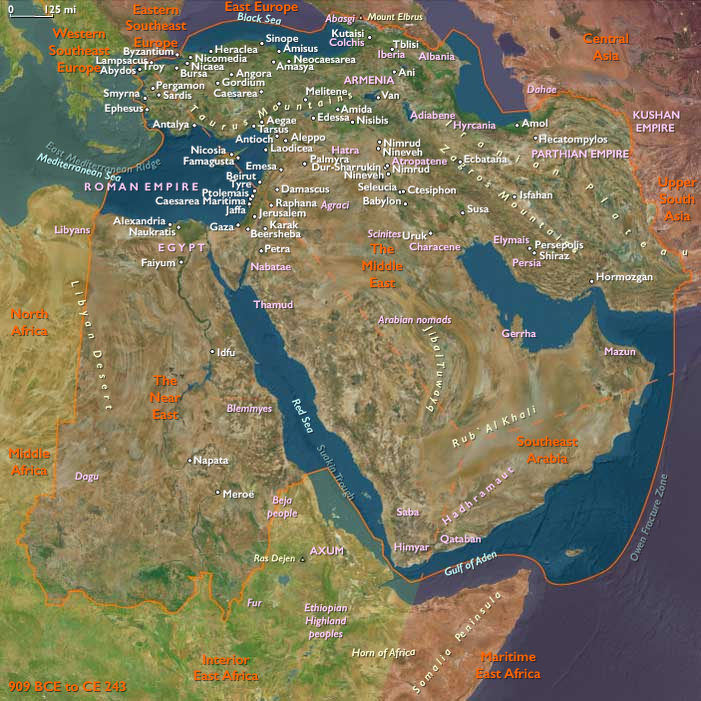
Subregions
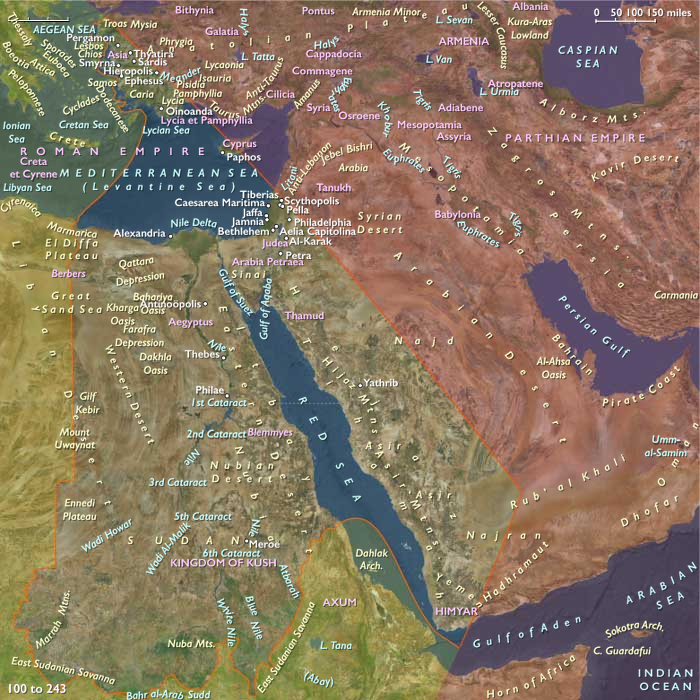
Related Events
Showing 10 events out of 60673 total
Years: 220 - 231
People
Groups
- Jews
- Roman Empire (Rome): Flavian dynasty
- Syria Palæstina, Roman province of (Judea, Samaria, and Idumea)
Topics
Subjects
Regions
Subregions