
Near East (153–142 BCE): Prosperity, Cultural Influence, …
Years: 153BCE - 142BCE
Near East (153–142 BCE): Prosperity, Cultural Influence, and Rising Powers
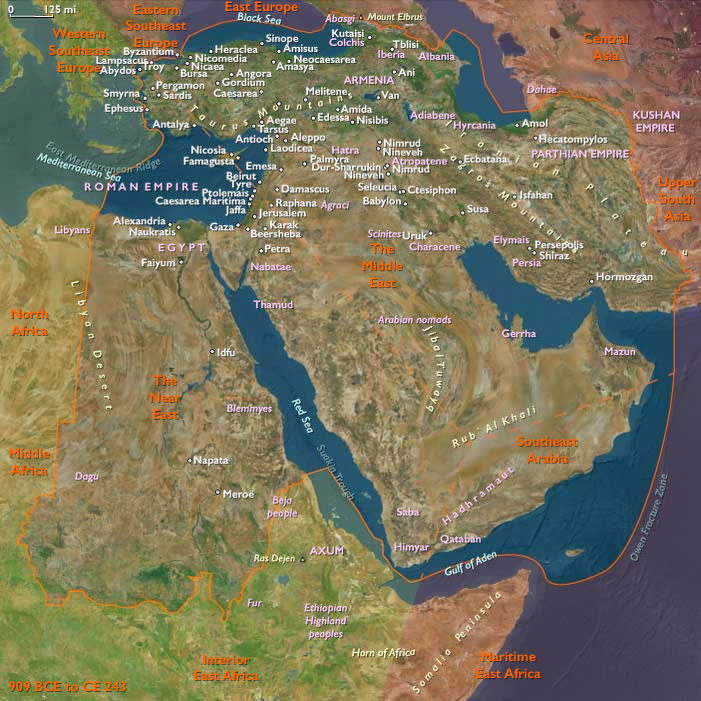
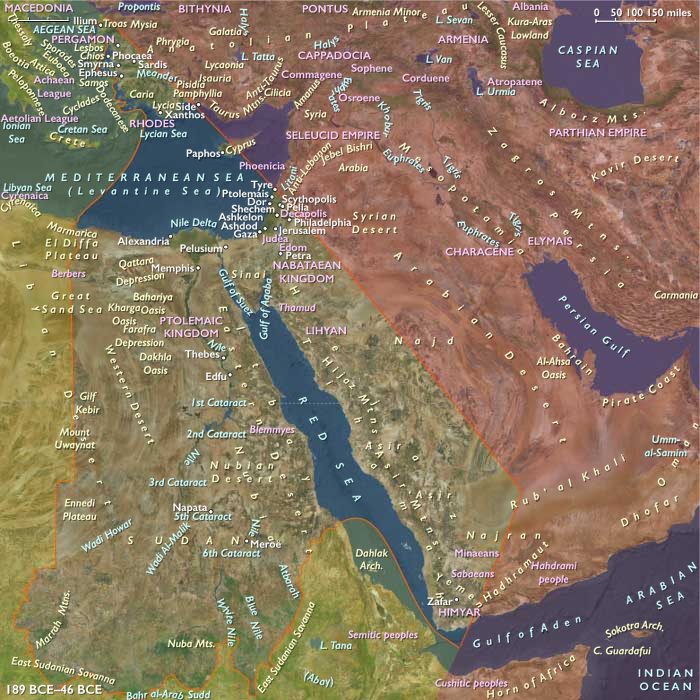
The era from 153 to 140 BCE witnesses significant economic and political developments in the Near East. The region corresponding to present-day Jordan experiences notable prosperity under Hellenistic influences, especially those of the Seleucid and Ptolemaic dynasties. Enhanced trade routes and urban growth mark this period, exemplified by new and revitalized cities. Among these are Philadelphia—the Greek-renamed Rabbath Ammon—and Gerasa, also known as Antioch-on-the-Chrysorrhoas (modern Jarash).
During this time, northern Jordan occasionally falls under Jewish control as persistent conflicts between the Jewish Maccabees and the Seleucids unfold. Concurrently, the Arab Nabataeans strengthen significantly, extending their kingdom's influence to the north, east, and possibly south along the eastern coast of the Red Sea. This expansion occurs as Seleucid dominance wanes, positioning the Nabataeans as crucial intermediaries in the spice trade and fostering their prominence as skilled potters, metalworkers, stonemasons, and architects.
In the intellectual sphere, this era features prominent cultural exchanges exemplified by Dionysius Thrax, a distinguished Hellenistic grammarian initially trained in Alexandria and later teaching on Rhodes around 144 BCE. Although scholarly debate surrounds the precise authorship of the influential work The Art of Grammar, traditionally attributed to Dionysius, it remains significant as the first comprehensive grammatical treatise on the Greek language. Its systematic approach to morphology, though lacking syntactical analysis, will later profoundly impact linguistic studies, influencing early Christian scholarship through translations into Armenian and Syriac.
Legacy of the Era
The period from 153 to 142 BCE underscores a transition in the Near East marked by increased Hellenistic influence and the emergence of regional powers such as the Nabataeans. The cultural synthesis, economic prosperity, and intellectual achievements of this era lay the groundwork for subsequent developments, shaping the Near East’s enduring historical and cultural identity.
People
Groups
Topics
Subjects
Regions
Subregions
Related Events
Showing 10 events out of 63173 total
Years: 153BCE - 142BCE
People
Groups
Topics
Subjects
Regions
Subregions