
Near East (232–243 CE): The Crisis Begins …
Years: 232 - 243
Near East (232–243 CE): The Crisis Begins
The Near East enters a turbulent period beginning in 235 CE, marking the start of the Crisis of the Third Century, characterized by internal instability, external pressures, and economic disruption throughout the Roman Empire. Following the assassination of Emperor Severus Alexander in 235, Rome plunges into a prolonged period of military anarchy, civil wars, and economic decline. The empire experiences rapid succession of emperors, undermining centralized control and leaving provinces vulnerable.
Roman Administration and Decline
The administrative structure of the Roman Near East, previously a stabilizing force, begins to weaken significantly during this era. Economic exploitation, heavy taxation, and the demands of continuous warfare strain the region, exacerbating the social and economic divisions particularly noticeable in provinces like Egypt and Syria Palestina. The urbanized and Hellenized populations continue to hold advantages over rural, native communities, but even urban centers start to feel the pressures of instability.
Jewish Communities and Continued Scholarship
Despite these pressures, Jewish intellectual activity remains resilient, particularly in Galilee. The scholarly work that had flourished earlier continues, centered around the compilation and analysis of the Mishnah under the guidance of leaders such as Judah ha-Nasi. This resilient intellectual tradition ensures that Jewish identity and scholarship survive despite external turmoil and ongoing Roman persecution.
Christianity Amidst Instability
Christian communities across the Near East face fluctuating periods of persecution and tolerance as Roman authorities struggle to maintain control. The Christian presence remains particularly strong in Egypt, despite earlier edicts like those of Septimius Severus, which had banned new conversions. By the mid-third century, the Coptic Church continues to solidify its cultural and religious identity despite official hostility and administrative neglect from Rome.
Roman Influence in Jordan and Arabia
In the Roman province of Arabia, former Nabataean territories, including key cities like Petra, continue to integrate into the empire’s extensive network, although prosperity diminishes with the wider instability of the Roman state. Nevertheless, the established infrastructure and Hellenized culture ensure some continuity, even as Roman authority wavers.
Rome’s Southern Strategy and Meroë
The kingdom of Kush, particularly around Meroë, remains strategically significant to Rome as a buffer against southern incursions. Rome’s support for the Nobatae, a militarized local group, continues despite its internal problems, underscoring the continued Roman reliance on regional proxies to maintain frontier stability.
Technological and Cultural Legacies
Technological advancements like cast glass windows, first developed in Alexandria, symbolize continued innovation despite broader imperial disruptions. Likewise, the transition from Greek to Latin administration accelerates following the 212 CE grant of Roman citizenship to Egyptians, further illustrating shifting cultural dynamics amid imperial crisis.
Legacy of the Era
This era initiates a period of significant instability for the Near East, characterized by weakening Roman governance, economic strain, and intensified cultural resilience among Jewish and Christian communities. Despite these challenges, intellectual scholarship and regional adaptations ensure cultural continuity, leaving a lasting legacy that influences subsequent historical developments.
People
Groups
- Egyptians
- Arab people
- Kush, Kingdom of
- Meroë, Kingdom of
- Jews
- Greeks, Hellenistic
- Nabataean Kingdom
- Egypt (Roman province)
- Arabia Petraea
- Christians, Early
- Roman Empire (Rome): Flavian dynasty
- Syria Palæstina, Roman province of (Judea, Samaria, and Idumea)
- Arabia Petraea (Roman province)
Topics
Subjects
Regions
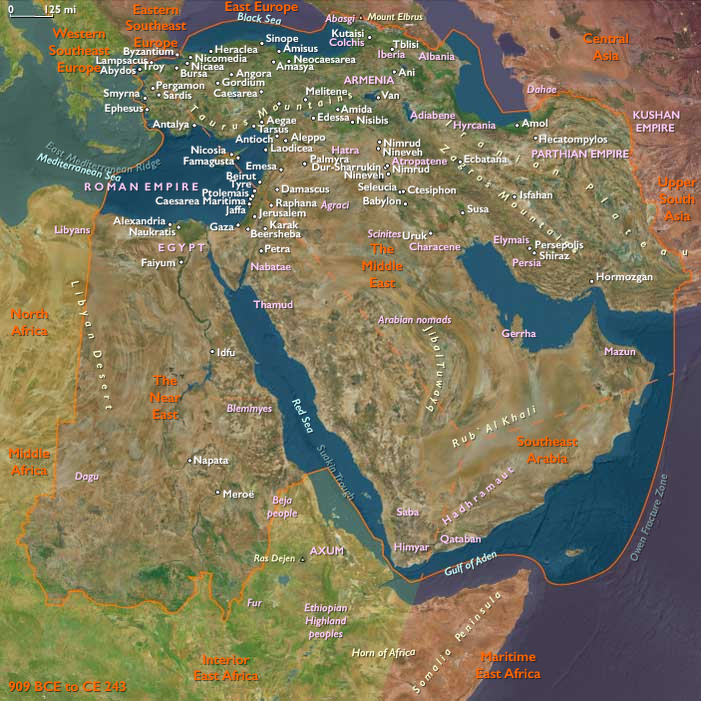
Subregions
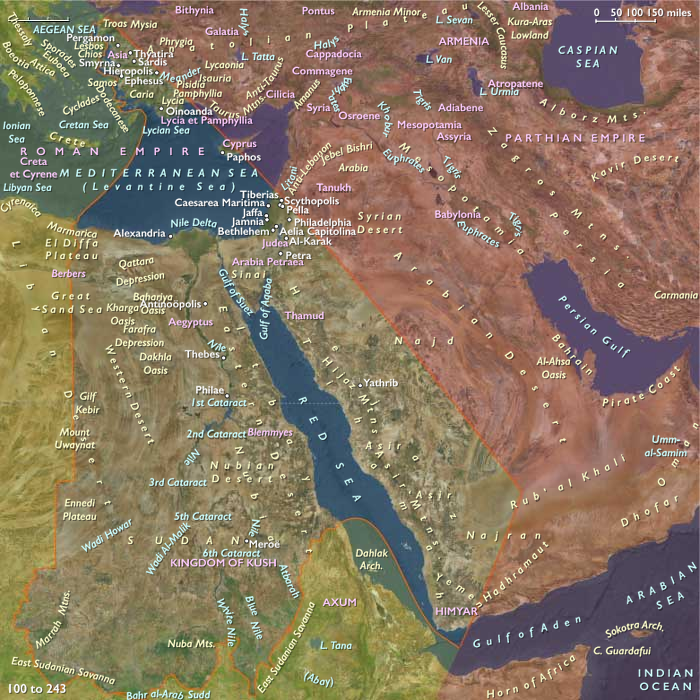
Related Events
Showing 10 events out of 60585 total
Years: 232 - 243
People
Groups
- Egyptians
- Arab people
- Kush, Kingdom of
- Meroë, Kingdom of
- Jews
- Greeks, Hellenistic
- Nabataean Kingdom
- Egypt (Roman province)
- Arabia Petraea
- Christians, Early
- Roman Empire (Rome): Flavian dynasty
- Syria Palæstina, Roman province of (Judea, Samaria, and Idumea)
- Arabia Petraea (Roman province)
Topics
Subjects
Regions
Subregions