
Filters:
The Navarrese Struggle for Stability and Ferdinand …
Years: 1508 - 1508
The Navarrese Struggle for Stability and Ferdinand II’s Influence (1507–1508)
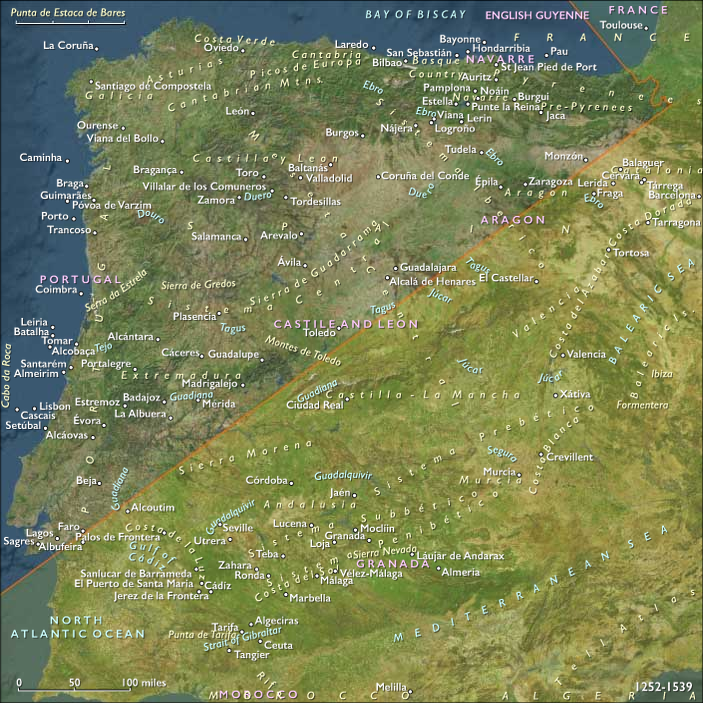
Since the mid-15th century, Navarre had been plagued by internal instability, with two major warring factions—the Beaumonts and the Agramonts—constantly vying for power. This instability made Navarre a target for external meddling, particularly from Castile and Aragon under Ferdinand II.
Navarre’s Political Factions and the Castilian Protectorate (1476–1507)
- The Beaumonts (aligned with Castile) and the Agramonts (aligned with France) had been locked in a power struggle.
- In 1476, Ferdinand II of Aragon effectively turned Navarre into a Castilian protectorate, using a mix of alliances and military influence.
- However, from 1482 to 1492, Ferdinand and Isabella were preoccupied with the conquest of Granada, temporarily shifting focus away from Navarre.
- After the fall of Granada (1492) and the death of Isabella I (1504), Ferdinand renewed his pressure on Navarre.
Ferdinand’s Marriage and Renewed Claims on Navarre (1506–1507)
- In 1506, Ferdinand married Germaine of Foix, daughter of John of Foix, Viscount of Narbonne, a claimant to the Navarrese throne.
- This move strengthened Ferdinand’s claim to Navarre through any potential heirs and was meant to undermine his son-in-law, Philip I of Castile.
- By 1507, Ferdinand had regained control of Castile as regent, allowing him to focus once again on Navarre.
The Rebellion of the Count of Lerín and Cesare Borgia’s Death (1507)
- In 1507, Louis de Beaumont, Count of Lerín, Ferdinand’s key ally in Navarre, revolted along with other Beaumont faction lords.
- The ruling monarchs of Navarre, Catherine I and John III of Albret, refused to negotiate with the rebels, declaring that no pardon would be granted to the Count of Lerín.
- During the Battle of Viana (1507), Cesare Borgia, the famous Italian condottiero, fighting for John III of Navarre, was killed by Beaumont knights.
The Defeat of the Beaumont Rebellion (1508)
- After a year-long standoff, in 1508, the Navarrese crown launched an offensive against the Count of Lerín.
- Lerín was occupied, and Louis de Beaumont suffered a severe defeat.
- This marked a temporary victory for the Navarrese monarchy against Ferdinand’s Castilian-backed allies.
Conclusion: The Path to Castilian Annexation
- Despite this victory, Navarre’s independence remained fragile, as Ferdinand continued to seek control over the kingdom.
- By 1512, Castile would invade Navarre outright, completing its annexation under Ferdinand II.
- The conflicts of 1507–1508 were a precursor to the final conquest, demonstrating Navarre’s vulnerability to both internal division and external pressures.
The Count of Lerín’s rebellion and Cesare Borgia’s death in 1507 were key moments in the larger struggle between Navarre and Castile, ultimately leading to Navarre’s downfall and absorption into the Spanish Crown.
Locations
People
- Catherine of Navarre
- Fadrique Álvarez de Toledo
- Ferdinand II of Aragon
- Germaine of Foix
- John III of Navarre
Groups
Topics
Commodoties
Subjects
Regions
Subregions
Years: 1508 - 1508
Locations
People
- Catherine of Navarre
- Fadrique Álvarez de Toledo
- Ferdinand II of Aragon
- Germaine of Foix
- John III of Navarre
Groups
Topics
Commodoties
Subjects
Regions
Subregions