
Filters:
The ʻAi Noa (Hawaiian: literally free eating), …
Years: 1819 - 1819
October
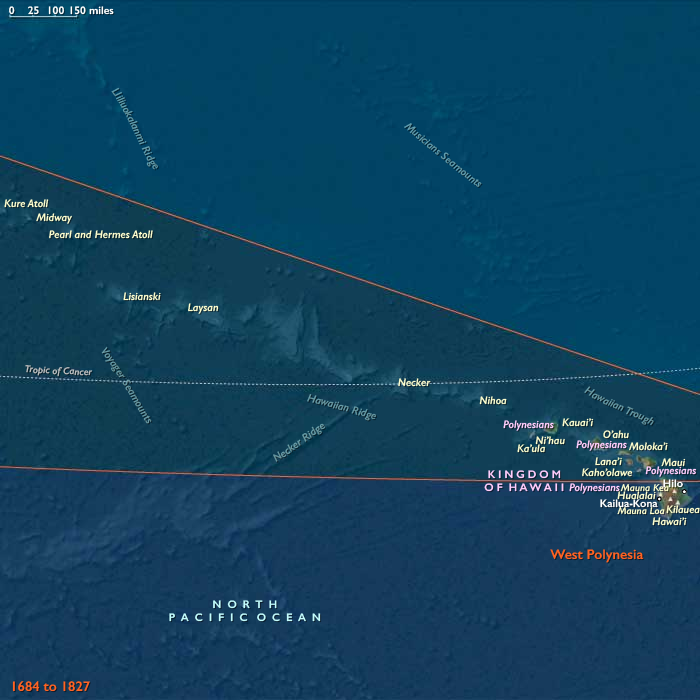
The ʻAi Noa (Hawaiian: literally free eating), is a period of taboo-breaking that convulses the Hawaiian Islands in October 1819.
Women are allowed to eat forbidden food and to eat with men; the priests are no longer to offer human sacrifices; the many prohibitions surrounding the high chiefs were relaxed.
Kamehameha I, the conqueror of the islands, had just died; his son Liholiho succeeds him (and will later be known as King Kamehameha II), coming to power amid scenes of grief and license.
The usually strict rules of the Hawaiian religion and social system, known as kapu, are in abeyance during the usual mourning period.
Women eat pork and bananas; people have sexual intercourse with whomever they please; routine life is completely overthrown.
When a new high chief comes to power, he usually re-imposes the kapu.
Liholiho does attempt to reestablish the kapu, but he is opposed by his mother, Keōpūolani, and the other wives of Kamehameha, notably Kaʻahumanu, the powerful Maui woman chief.
He takes refuge in his canoe and after sailing about aimlessly for two days on the west coast of the Big Island of Hawaiʻi, he lands and eats the feast of dog meat (ordinarily reserved for women) that the women chiefs had prepared for him.
Messengers are then sent over the islands announcing that eating is free and the kapu has fallen.
The downfall of the old religion will be further hastened by the arrival of Christian missionaries a few months later.
Women are allowed to eat forbidden food and to eat with men; the priests are no longer to offer human sacrifices; the many prohibitions surrounding the high chiefs were relaxed.
Kamehameha I, the conqueror of the islands, had just died; his son Liholiho succeeds him (and will later be known as King Kamehameha II), coming to power amid scenes of grief and license.
The usually strict rules of the Hawaiian religion and social system, known as kapu, are in abeyance during the usual mourning period.
Women eat pork and bananas; people have sexual intercourse with whomever they please; routine life is completely overthrown.
When a new high chief comes to power, he usually re-imposes the kapu.
Liholiho does attempt to reestablish the kapu, but he is opposed by his mother, Keōpūolani, and the other wives of Kamehameha, notably Kaʻahumanu, the powerful Maui woman chief.
He takes refuge in his canoe and after sailing about aimlessly for two days on the west coast of the Big Island of Hawaiʻi, he lands and eats the feast of dog meat (ordinarily reserved for women) that the women chiefs had prepared for him.
Messengers are then sent over the islands announcing that eating is free and the kapu has fallen.
The downfall of the old religion will be further hastened by the arrival of Christian missionaries a few months later.
Locations
People
Groups
Subjects
Regions
Subregions
Years: 1819 - 1819
October
Locations
People
Groups
Subjects
Regions
Subregions